 | | Maxine Joselow | | | Good morning and welcome to The Climate 202! We hope you survived the rollout of President Biden's budget plan yesterday without too much swearing and grumbling. In related news: | Biden wants record $11 billion in climate aid to poor nations. Congress may not deliver before COP27. | 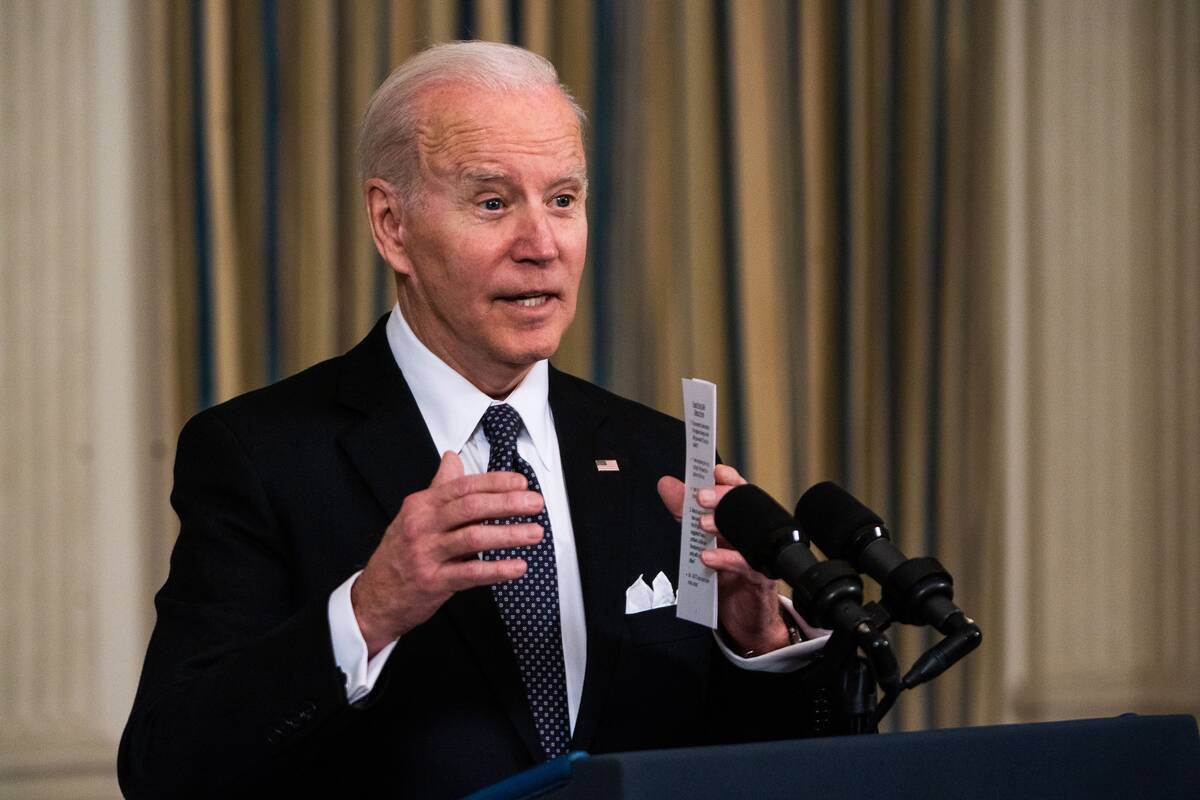 President Biden takes questions at the White House on March 28. (Demetrius Freeman/The Washington Post) | | | President Biden requested more than $11 billion to help developing countries adapt to the ravages of climate change and build greener economies in his $5.8 trillion budget plan released Monday. But it's unclear whether Congress will deliver anywhere near that amount — and failure to do so could undercut progress at the crucial next round of United Nations climate talks. The details: The White House budget, which represents an opening offer in broader negotiations with Congress, calls for more than $11 billion in international climate finance for the fiscal year that begins in October. | - That marks a steep increase from the roughly $2.7 billion that Biden requested last year, as well as the roughly $1 billion that lawmakers approved last year.
- It comes after Biden pledged last fall to quadruple the U.S. annual contribution to international climate finance to $11.4 billion by fiscal year 2024.
- Out of more than $11 billion total, approximately $1.6 billion would go to the Green Climate Fund, which finances climate mitigation and adaptation projects in developing countries, according to a White House fact sheet.
| | As a messaging tool, the request signals that the Biden administration prioritizes the need to help poor nations cope with rising seas, stronger storms and other disasters fueled by rising global temperatures. In practice, however, Congress has a long history of whittling down the numbers in budget requests from presidents of both parties. "The executive [branch] proposes; the legislative [branch] disposes," Sen. Brian Schatz (D-Hawaii) told reporters on Monday. "That's totally the way it works." | | Sen. John Barrasso (Wyo.), the top Republican on the Energy and Natural Resources Committee, signaled that the White House may struggle to find 10 GOP votes in the Senate for sending climate finance to other countries amid record inflation at home. "President Biden's budget is another pipe dream of liberal activism and climate extremism," Barrasso said in a statement. "It spends too much, borrows too much and taxes too much." | | If Congress fails to deliver significant climate finance for developing nations, the United States could lose credibility at the next U.N. climate conference in Egypt in November, known as COP27, said Sen. Sheldon Whitehouse (D-R.I.), one of the most vocal climate hawks on Capitol Hill. "It's very important to our credibility," Whitehouse told reporters on Monday, adding that if U.S. negotiators show up to COP27 with little climate finance to offer other countries, "then we look like jerks." Already, U.S. credibility on global warming is teetering. While Biden campaigned on an ambitious climate plan, his signature climate legislation remains stalled in the Senate, despite signs of a potential revival of negotiations with holdout Sen. Joe Manchin III (D-W.Va.). Complicating matters, the midterm elections fall on the second day of COP27. If Republicans regain control of one or both chambers of Congress in the midterms, that would signal to the rest of the world that U.S. politicians won't pass either international climate finance or domestic climate legislation, said Alden Meyer, a senior associate at E3G, a European think tank. "If that occurs, the assumption would be that the Republicans would have no real interest in negotiating anything with the administration until they took power in January," Meyer said in a phone interview yesterday. | | Many developing countries have released little carbon dioxide into the atmosphere, yet they are most vulnerable to the effects of the climate crisis. A recent report by the U.N. Intergovernmental Panel on Climate Change made clear that these inequities will persist as the world warms. | | The report found that under the worst-case scenario for global temperature rise, Africa — which is historically responsible for less than 3 percent of global greenhouse gas emissions — would see a 118-fold increase in exposure to extreme heat. By contrast, heat exposure in Europe would increase only fourfold. In the face of this grim future, many climate activists from developing countries have urged the United States and other wealthy nations to make good on their long-overdue promise to provide $100 billion annually in international climate finance. Mohamed Adow, director of Power Shift Africa, a Nairobi-based climate and energy think tank, doubled down on those calls after the release of the White House budget proposal. "As the richest country in the world, and the biggest historic polluter, the USA has a responsibility to lead the way on climate change," Adow said in an email. "The world needs that leadership to keep the international momentum on climate change from stalling." | Biden's budget would also increase funding at environmental agencies |  House Appropriations Chair Rosa L. DeLauro (D-Conn.) at the Capitol last year. (Anna Moneymaker/Getty Images) | | | While the White House budget does not mention any of the more ambitious environmental proposals from the stalled Build Back Better bill, it does call for more spending across federal agencies on climate change and clean energy, E&E News's George Cahlink reports. Here are some of the topline numbers: | - The Environmental Protection Agency's proposed budget for the next fiscal year is $11.9 billion, a 25 percent increase over current spending of $9.5 billion. However, Biden offered a similar proposal last year that Congress scaled back to a 3 percent increase.
- The Energy Department would receive $48.2 billion, a 7 percent boost over current spending.
- The Interior Department would receive $17.5 billion, a 24 percent increase over current spending.
| | House Appropriations Chair Rosa L. DeLauro (D-Conn.) touted many concepts in the budget proposal, including Biden's willingness to "confront climate change," but also acknowledged that compromises would be coming. "We must work together to get our spending bills over the finish line — no one chamber or party can do it alone," she said. | | |  | Agency alert | | Commerce Dept. to consider new solar tariffs, worrying industry | 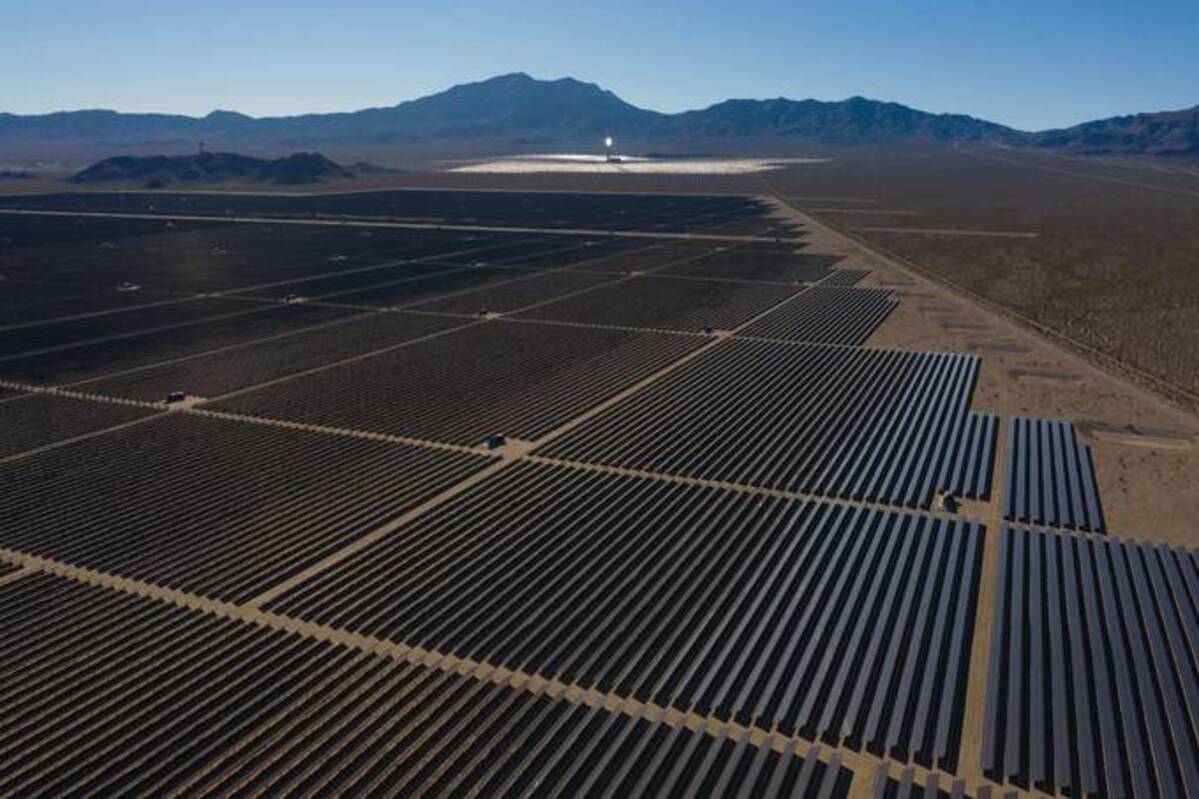 First Solar panels at the Desert Stateline facility in the Mojave Desert. (Bing Guan/Bloomberg News) | | | The Commerce Department on Monday opened an investigation into whether to impose new tariffs on Southeast Asian manufacturers of solar panels, a move that would raise prices for project developers, our colleague Anna Phillips reports for The Climate 202. The inquiry, which began at the request of San Jose-based manufacturer Auxin Solar, is expected to take several months. Its focus is on allegations made by Auxin that Chinese solar companies have moved some of their production to Cambodia, Malaysia, Thailand and Vietnam to avoid U.S. tariffs imposed on Chinese solar imports. The investigation alone could be catastrophic for the industry, American Clean Power Association CEO Heather Zichal said on a call with reporters on Monday, adding that developers who move forward with projects now could face significantly higher costs later if new tariffs are imposed. That financial risk could lead utility companies to cancel or postpone projects and force solar companies to lay off employees. According to the group, imported solar panels from these four countries account for about 80 percent of the panels expected to be used in American projects this year. "The pain is immediate," Zichal said. "This decision effectively freezes development in the U.S. solar industry." | | |  | Extreme events | | Global warming is threatening salmon in the deep Pacific |  Alexei Pinchuk, a professor of biological oceanography at the University of Alaska, packs up his cabin on a National Oceanic and Atmospheric Administration ship following a research expedition focused on understanding salmon and their ecosystems. (Leah Nash for The Washington Post) | | | Salmon in the Pacific Ocean face dramatically different fates as global warming shifts ocean conditions, driving erratic booms and busts in fish populations when they travel the high seas each fall, The Washington Post's Joshua Partlow reports. "Salmon will go out, in what we think is a really good ocean, and then it collapses," said Laurie Weitkamp, a fisheries biologist with the National Oceanographic and Atmospheric Administration based in Oregon. "They don't come back." While the pressures salmon endure in their home rivers or on the coast are well documented, less is known about what they face on the high seas, where several salmon species go for years before returning to spawn. Weitkamp said that many salmon are dying there as marine heat waves and other effects of climate change alter the ecosystem. A research expedition using ships from the United States, Canada and Russia is trying to understand what happens to salmon at this stage. The Russian invasion of Ukraine, however, has disrupted that international effort. | | |  | International climate | | German chancellor resists Russian oil embargo | 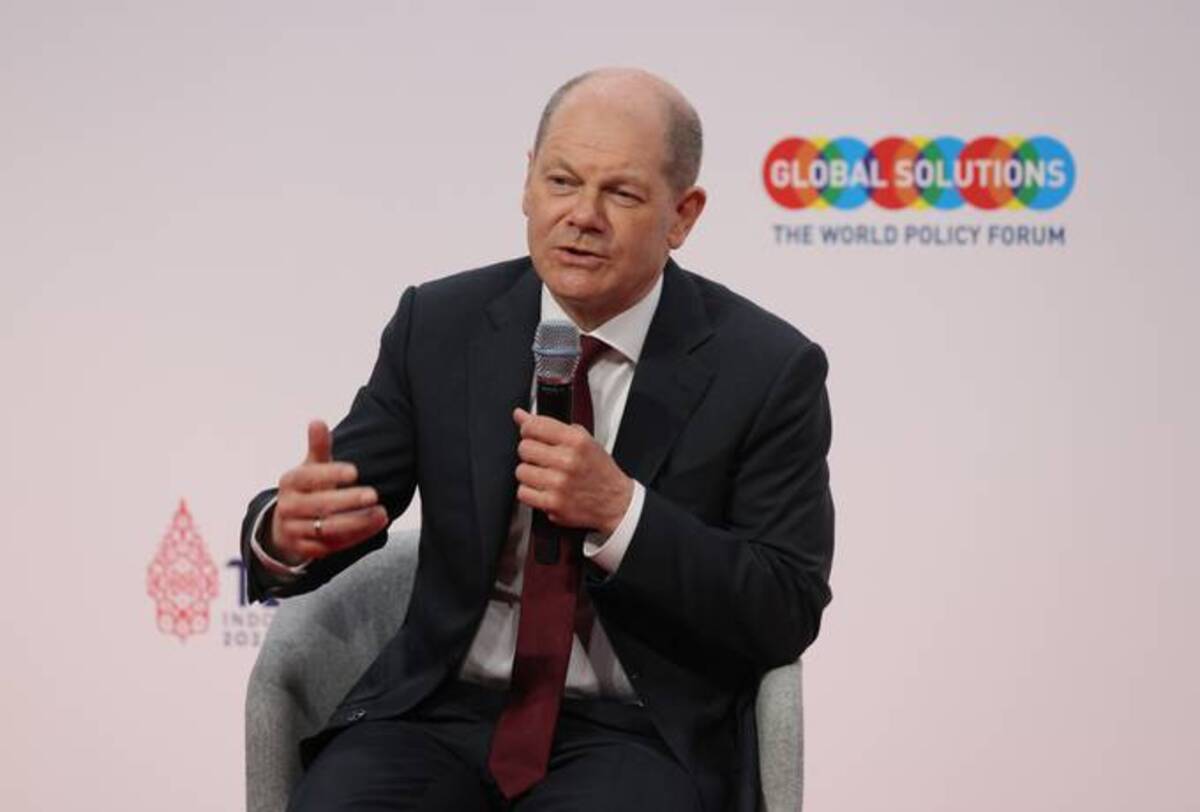 German Chancellor Olaf Scholz speaks at the 2022 Global Solutions summit in Berlin, Germany, 28 March 2022. (Photo by SEAN GALLUP/POOL/EPA-EFE/Shutterstock) | | | German Chancellor Olaf Scholz has insisted on a gradual approach to weaning his country off Russian oil and gas imports, citing the potential for economic carnage, The Post's Isaac Stanley-Becker reports. Germany depends on Russia for about 55 percent of its natural gas and 35 percent of its oil. Proponents of a Russian oil embargo argue that it's essential to act quickly to deny the Kremlin financing for its war in Ukraine. In February, Scholz suspended the certification process for the Nord Stream 2 gas pipeline, a move the United States had urged for years. But the chancellor has ruled out an immediate boycott, claiming it would plunge Europe into a recession and threaten "hundreds of thousands of jobs." | | |  | Climate solutions | | Heat pumps cut electricity use in half, reduce greenhouse emissions |  Vice President Harris and Secretary of Energy Jennifer Granholm listen to a presentation on heat pumps last year in New York. (Mary Altaffer/AP) | | | In recent months, climate advocates and the Biden administration have advocated for heat pumps as a tool to combat climate change while reducing Europe's dependence on Russian energy. Depending on where you live, heat pumps could help you reduce your electricity consumption and carbon footprint, Brenda Richardson reports for The Post. Unlike furnaces, heat pumps don't generate heat to warm a home. Instead, they transfer heat from the outdoors to inside your home. Thus, heat pumps are far more energy efficient than furnaces, reducing electricity use for heating by 50 percent, according to the Energy Department. Experts say that heat pumps work best in moderate climates, while the technology is less efficient in areas where subfreezing temperatures are common. Heat pumps can also be useful in Sun Belt states like Arizona, where some areas do not have natural gas lines. | | |  | Viral | | | The author and political pundit Anand Giridharadas had a hot take on Will Smith slapping Chris Rock at the Oscars that you won't want to miss. Just kidding, it was the IPCC report. We love to see it. 😂 |  | | | | | |  | On the Hill | | | |  | Environmental justice | | | |  | Climate in the courts | | | |  | Corporate commitments | | | |  | Ask a climate reporter | | | |  | The power grid | | | |  | Pressure points | | |