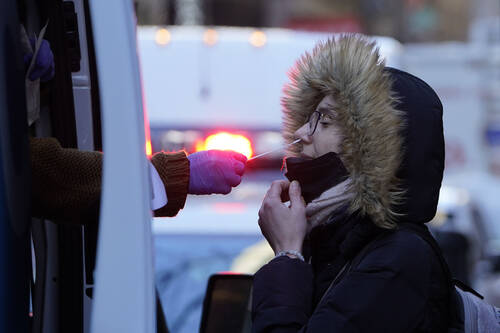
| A lot of readers wrote in with their concern that another surge of coronavirus infections could be on its way. Indeed, the omicron subvariant, BA.2, is driving a new wave across Europe, and there are signs the United States could be next. My latest column is on how Americans should think about BA.2. I believe that most individuals won't face much disruption even if we do see a rise in cases here. Those vaccinated and boosted remain well-protected against severe illness, and people with recent omicron infection — an estimated 45 percent of the country — are unlikely to become reinfected. But there are some groups of people who should be concerned. How can immunocompromised people and individuals with underlying medical conditions prepare for the possible BA.2 surge? Here are five questions to consider: First, what is your actual risk for severe illness? Individuals who are moderately or severely immunocompromised are clearly at higher risk for severe illness due to covid-19. People who are medically frail such that any respiratory illness could land them in the hospital are also susceptible to the coronavirus. On the other hand, many other underlying conditions, especially if they are well-controlled, might not make you high-risk. Speak with your physician about your specific risk based on your medical circumstances. Second, do you have easy access to tests? At-home antigen tests should now be plentiful. I recommend stocking up on them while you can, before a surge comes and restricts the supply again. Everyone should have at least two tests per member of your household; people at higher risk should have more. You should have enough tests so that you do not have to ration tests if you develop symptoms or are exposed to someone with covid-19. Depending on your medical circumstances and your preferred level of caution, you should also consider asking people who are gathering indoors with you to take a rapid test before seeing you. Having tests on hand can also help for this purpose, as not all guests have their own supply. Third, should you get another booster shot? The Centers for Disease Control and Prevention recommends fourth doses for people who are moderately or severely immunocompromised. Pfizer and Moderna are both applying for broader use of fourth doses, and I think it's likely that the Food and Drug Administration and CDC will soon change their guidance so that other high-risk groups can access the additional booster. The FDA's advisory committee of experts meets April 6 to discuss boosters, and a decision could be forthcoming not long after. Fourth, are you eligible for Evusheld? Evusheld is a preventive therapy for those who cannot mount a sufficient antibody response after vaccination. It reduces the rate of hospitalization and death by about 90 percent in vulnerable groups and lasts for at least six months. There aren't nearly enough doses of Evusheld for all who are eligible, but there are also reports that as much as 80 percent of available supplies are sitting in storage, unused. The federal government has a tool to locate therapeutics near you. Speak with your physician about how to access it. Your local or state health department might be able to assist, too. Fifth, what is your care plan if you are diagnosed with covid-19? Monoclonal antibodies, antiviral pills and remdesivir are all treatments that, when taken early in the course of illness, reduce the likelihood of progression to severe disease. Early diagnosis depends on prompt testing. This is another reason that rapid at-home tests are so important. In your area, is a formal PCR test required for these treatments, too? If so, are there urgent care centers or pharmacies that offer the tests, including after hours and on weekends? Which treatments can you take, and how easy is it to find them? The antiviral pill Paxlovid is very effective, but is in limited supply and also has interactions with multiple common medications. Have a plan with your physician so that you know what treatments you would receive and how to access them if you contract covid-19. The potential BA.2 wave will likely not be the last surge we face. Vulnerable individuals need to have a plan to prevent and treat covid-19, which will also allow them to resume the activities they most value. | 




 Email
Email