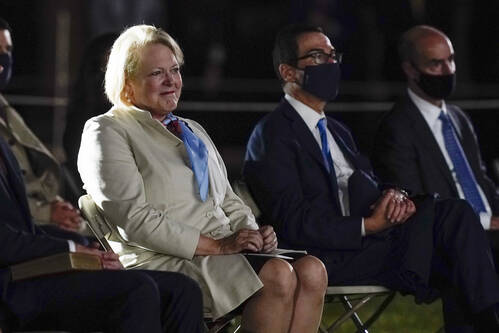
| After this week, President Biden and Democrats are one step closer to confirming the first Black woman to the Supreme Court. But Judge Ketanji Brown Jackson's nomination was very contentious — as Supreme Court nominations are these days. Here's what happened, what's coming next, and why it matters. A week of hearings, in 30 secondsJackson's confirmation consisted of days of hearings before the Senate Judiciary Committee. The major theme of questioning by Republicans was Jackson's record sentencing child-porn offenders. There is no evidence Jackson has sentenced child-porn offenders any differently than other judges, including Republican-supported ones, as Fact Checker Glenn Kessler explained in detail here and here. But while Jackson pushed back forcefully on the attacks and Democrats decried them as "unfair," headlines connecting Jackson to child-porn cases dominated her confirmation hearing, drowning out the rest of her lengthy record as a judge and public defender. A Republican operative told me that the party hopes this will fold right into their midterm strategy of alleging Democrats are soft on crime. Meanwhile, Republicans' attempts to tie her to the liberal notion that America is inherently racist had major racial overtones, as Dan Balz wrote. What happens nextThe Senate committee that grilled Jackson and then the entire Senate still need to vote on whether to confirm her. Here's the process, visualized. That could take a few weeks. She can get on the court with only Democratic votes, but it could be one of the narrowest confirmations in history — albeit in line with how narrowly President Donald Trump's three nominees got confirmed. (Brett M. Kavanaugh got 50 votes; none to spare.) By comparison, liberal icon Ruth Bader Ginsburg got on the court with 96 votes. Conservative icon Antonin Scalia got 98 votes. That's just the way Supreme Court confirmations go these days; they're partisan battles like everything else. What to take away from all thisBarring anything extraordinary, Jackson will be on the Supreme Court. But her presence won't change the political makeup of the court; it will still lean heavily conservative, 6-3. And she won't be on the court when it decides this summer whether to roll back long-standing abortion protections that could allow Republican states to ban abortion. Jackson will be on the court this fall when it hears a major affirmative action case that could end the practice in universities. She said this week that because of her ties to Harvard, which is being sued for its affirmative action policies, she's going to sit that one out. Finally, we've had four Supreme Court nominations in five years as older justices retire or die. As the court gets younger, expect fewer openings. (This isn't the only major story around the court this week. Its longest-service justice, Clarence Thomas, is facing questions about his wife's activism to overturn the 2020 election.) Want more quick analysis of politics? Sign up for The 5-Minute Fix newsletter, where I walk through and explain the biggest political news every weekday.  (Adrian Blanco and Shelly Tan/The Washington Post) In some ways, Biden's Supreme Court nominee, Ketanji Brown Jackson, followed a traditional trajectory to the Supreme Court: Harvard Law, Supreme Court clerk, federal appeals judge. But her time as a public defender would be unique among the justices. By Adrian Blanco and Shelly Tan ● Read more » |    | | | | His 2013 sentence has become a target for Republicans in the battle over Ketanji Brown Jackson's nomination for the Supreme Court. By Aaron C. Davis ● Read more » | | | | | In messages to Chief of Staff Mark Meadows in the weeks after Election Day, the wife of Supreme Court Justice Clarence Thomas called Biden's victory "the greatest Heist of our History" and told him that President Donald Trump should not concede. By Bob Woodward and Robert Costa ● Read more » | | | 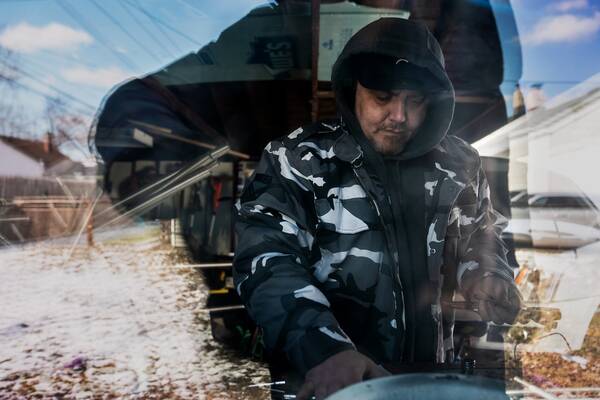 (Demetrius Freeman/The Washington Post) After generations of stability, a family reckons with death, debts and a desperate fall from the American middle class. By Eli Saslow ● Read more » | | | | | | It's not just parent challenges and school-board book bans. In secret, administrators are also quietly yanking titles before controversy can even erupt. Children's freedom to read has never been more endangered. By Hannah Natanson ● Read more » | | | | |  (Salwan Georges/The Washington Post) Washington Post photographers have been on the ground in Ukraine from the very beginning — here's some of their most powerful work, one month into Russia's invasion. By Washington Post Staff ● Read more » | | | | | The Oscars always get it wrong. Here are the real best pictures of the past 46 years. Now fill out your ballot for this year below. Who will win big at the 94th annual Academy Awards? By Washington Post Staff ● Read more » | | | | More people are using melatonin and taking larger doses, research suggests. But some experts say taking melatonin incorrectly could make sleep worse. By Allyson Chiu ● Read more » | | | | | These Americans came to Ukraine to join the front or help treat the injured. By Sudarsan Raghavan ● Read more » | | | | Residents of Arizona can now store state IDs as digital replicas in their iPhones' Wallet app. By Chris Velazco ● Read more » | | | | | | 




 Email
Email