| T.G.I.F Technology 202 subscribers! Below: Some House Democrats still aren't on board with antitrust legislation, and Facebook stock plummeted on Wall Street. | App store clampdown sails through key vote, marking lawmakers' latest antitrust win | 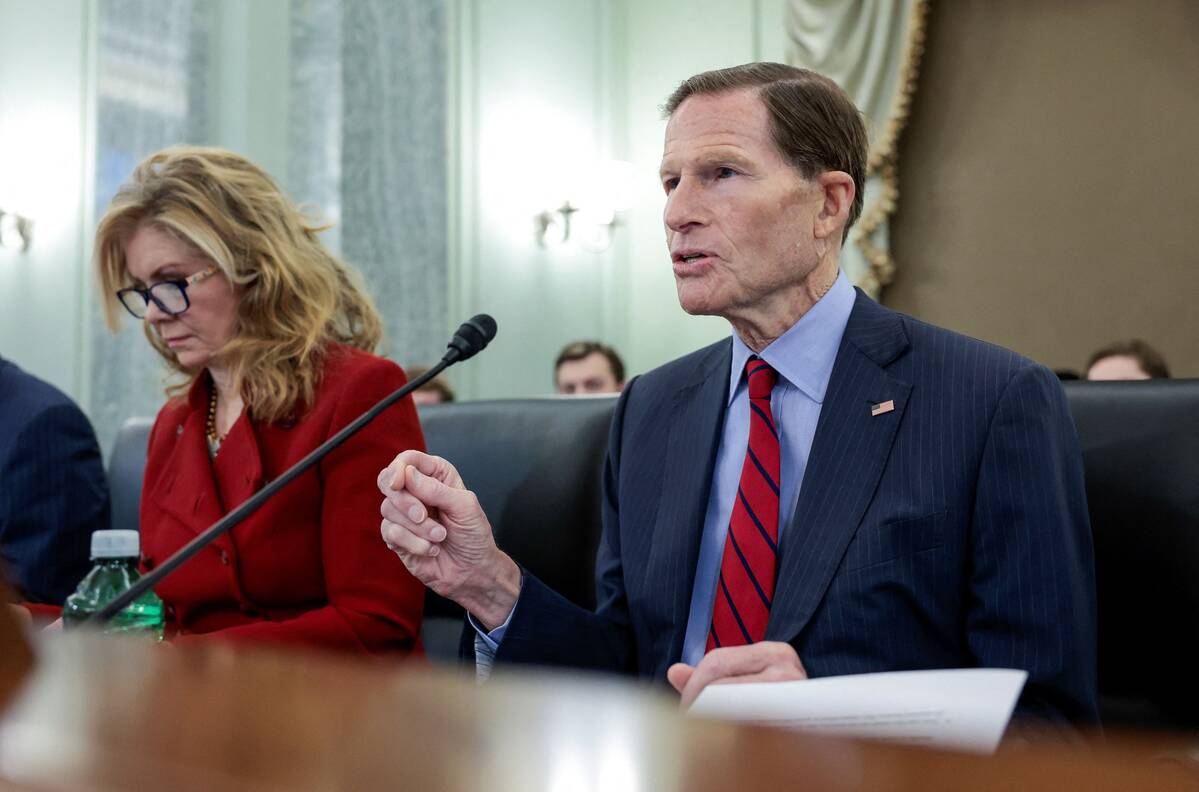 Sens. Richard Blumenthal (D-Conn.) and Marsha Blackburn (R-Tenn.) are leading the app store legislation. (Anna Moneymaker/Pool/Reuters) | | | A bipartisan measure aimed at reining in app store giants like Google and Apple breezed through a critical Senate committee vote on Thursday, notching another major victory for lawmakers looking to crack down on Silicon Valley's most powerful companies. The Open App Markets Act, which would bar the giants from requiring that third-party apps use their payment systems, advanced out of the Senate Judiciary Committee by a near-unanimous 20-to-2 vote. The bill notably drew less staunch opposition than another major tech antitrust bill the panel recently approved, a promising sign for proponents of the app store proposal. It's a rare bipartisan show of force for the campaign to regulate Big Tech, which has seen very few bills make it out of committee in recent years, let alone be signed into law. But as some of those other efforts have shown, even a broad bipartisan committee vote doesn't guarantee passage on the floor. And a number of lawmakers indicated they'd like to see changes to the legislation before it's called up for a final test in the Senate. Here are our top takeaways from the session: | Smooth sailing for one of Congress' most aggressive tech bills in years | | Of the more restrictive tech antitrust measures greenlit by House and Senate panels in the past year, the app store bill received the broadest support by a decent margin. | | None of the most sweeping antitrust proposals the House Judiciary Committee advanced in June drew near-unanimous approval. In fact, several advanced by razor-thin margins amid objections from most Republicans and some California Democrats. And the first major tech antitrust bill to be taken up by the Senate, a measure to ban dominant platforms from prioritizing their own goods, moved out of committee by a 16-to-6 vote that belied how much lawmakers on both sides of the aisle expressed deep reservations about the bill. At Thursday's markup, only two Republicans, Sens. John Cornyn (Tex.) and Thom Tillis (N.C.), voted against the measure, though others expressed concerns and proposed changes to the bill. But it was largely a less contentious affair than the other markups. Still, the one major tech bill that the Senate Judiciary Committee advanced unanimously last Congress — the EARN IT Act — didn't make it to the floor, showing that broad support at the panel level isn't always enough for final passage, and that time constraints often play a factor. | There're things you can change, and things you can't | | The markup showed that while the bill's backers are willing to make some technical changes to address concerns voiced by other members, other disagreements may be irresolvable. Sen. Dianne Feinstein, one of several California Democrats who have expressed skepticism about the antitrust proposals, said she had been concerned that the legislation didn't include enough protections for consumers' personal data and could pose security risks. But she said an amendment introduced by co-sponsors Sen. Richard Blumenthal (D-Conn.) and Marsha Blackburn (R-Tenn.) and later adopted to allow app stores to require that developers follow certain privacy and security measures made "major improvements." The remarks showed that skeptical lawmakers may be persuadable on those issues. "However," she said she is still concerned that the bill largely targets a few giant tech companies from California, including Apple and Google. Tillis echoed those criticisms, and proposed amendments to lower the threshold for the size of the companies that would be covered under the bill, and to widen the types of firms that would be affected, too. Blumenthal said those changes would undermine the very point of the bill — remarks that highlight a fundamental disagreement between some different camps on Capitol Hill. | | "That really upends the focus of the bill which is on the monopolistic gatekeepers," Blumenthal said of one of Tillis's amendments. Lawmakers did make some concessions about the scope of who the antitrust bill considered last month would apply to, but it was not nearly as drastic as what Tillis or others have called for. | Another antitrust bill faces concerns it will facilitate extremist content | | For the second time in two weeks, a measure targeting alleged anti-competitive conduct by the tech giants faced criticism that it might inadvertently enable the spread of more hate speech. Sen. Alex Padilla (D-Calif.) argued that a nondiscrimination clause in the legislation could give apps that have been removed from digital stores for not policing content that incites violence — such as Parler was after the Jan. 6 riot at the Capitol — a way to get their products back on. "We may be unintentionally providing an avenue for propagators of hate speech to dispute their placement within app stores," said Padilla, who voiced similar concerns last month about the bill to ban "self-preferencing" by the tech giants. A coalition of nonprofits and advocacy groups, some of which receive funding from tech companies including Google and Apple, argued in a letter to the committee that the app store bill "could be even more prone to abuse" than the prior proposal because it's "more elastic." Sen. Ted Cruz (R-Tex.), who praised that aspect of the earlier bill and has accused the tech giants of censoring conservatives, sought to expand the clause to prohibit app store giants from discriminating against a developer "based on either political views or religious faith." Blumenthal pushed back on the proposed change, which was defeated. "This bill is not about political speech. It's not about discrimination. It's really about protecting consumers," he said. | | |  | Our top tabs | | Not all House Democrats are yet on board with the antitrust push | 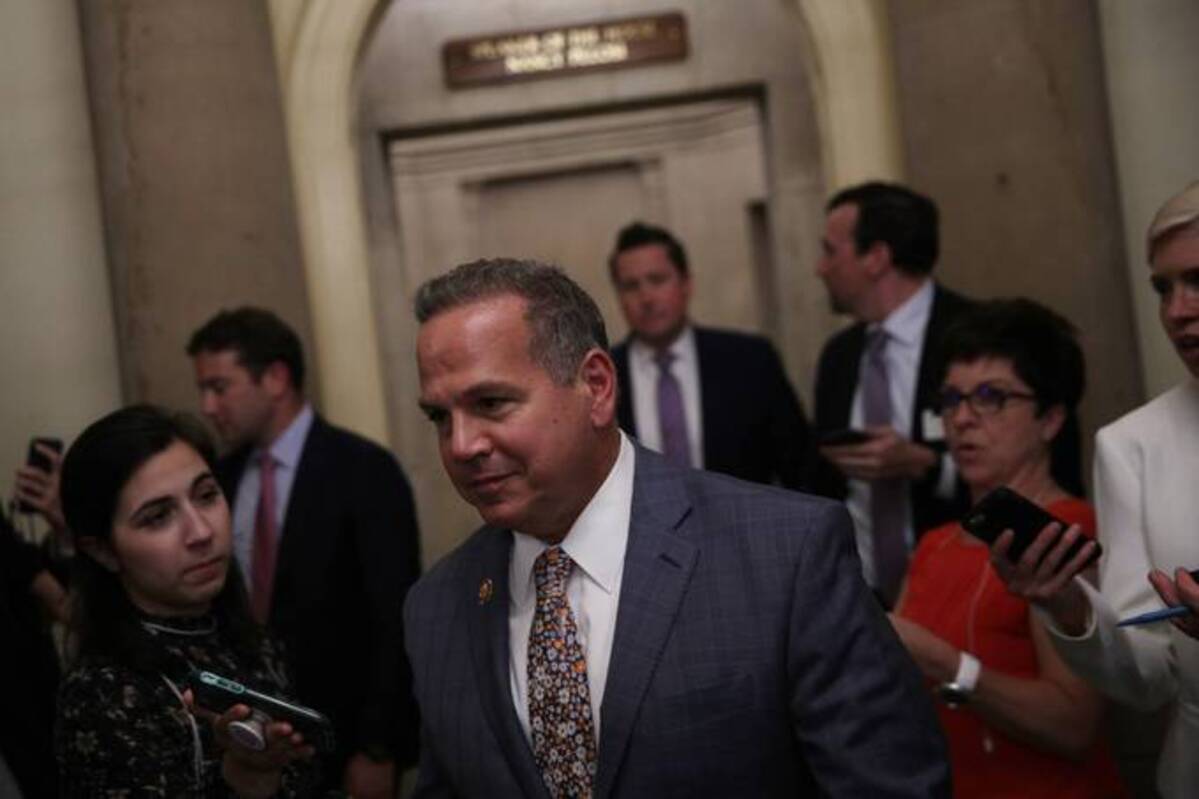 Some members of the moderate-leaning New Democrat Coalition have "serious disagreements" about the package, a staffer said. (Alex Wong/Getty Images) | | | Rep. David N. Cicilline (D-R.I.), chair of the House Judiciary antitrust subcommittee, met virtually on Thursday afternoon with members of the New Democrat Coalition, after chair Suzan DelBene (D-Wash.) and several other members of coalition wrote a letter last year raising concerns about the package of bills targeting tech companies' power. But after a nearly hour-long, virtual huddle, some members of the coalition harbor "serious disagreements" about the package, according to a staffer with a New Democratic Coalition office, who was not authorized to speak publicly about the meeting, Cat Zakrzewski reports for The Technology 202. The letter raised concerns that the bills could harm American companies' global competitiveness and that it would negatively impact privacy and content moderation. The staffer said little has changed after the meeting, despite members generally striking a polite tone. Participants in the call broadly expressed support for addressing the power of tech companies, said another staffer who was on the call and was not authorized to speak publicly about the meeting. That staffer said the New Democrat Coalition is not fully unified in raising concerns about the bill. Seven members of the 97-person coalition joined DelBene in sending the letter last year. The meeting came as Cicilline and the package's other co-sponsors seek to pass the legislation before the midterm elections. Democrats from California have raised similar concerns about privacy and content moderation in debate about the bills in both chambers. Members also asked questions about the package's progress in the Senate and the White House's position on the legislation, a staffer on the call said. | FAA administrator's testimony underscores 5G scramble | 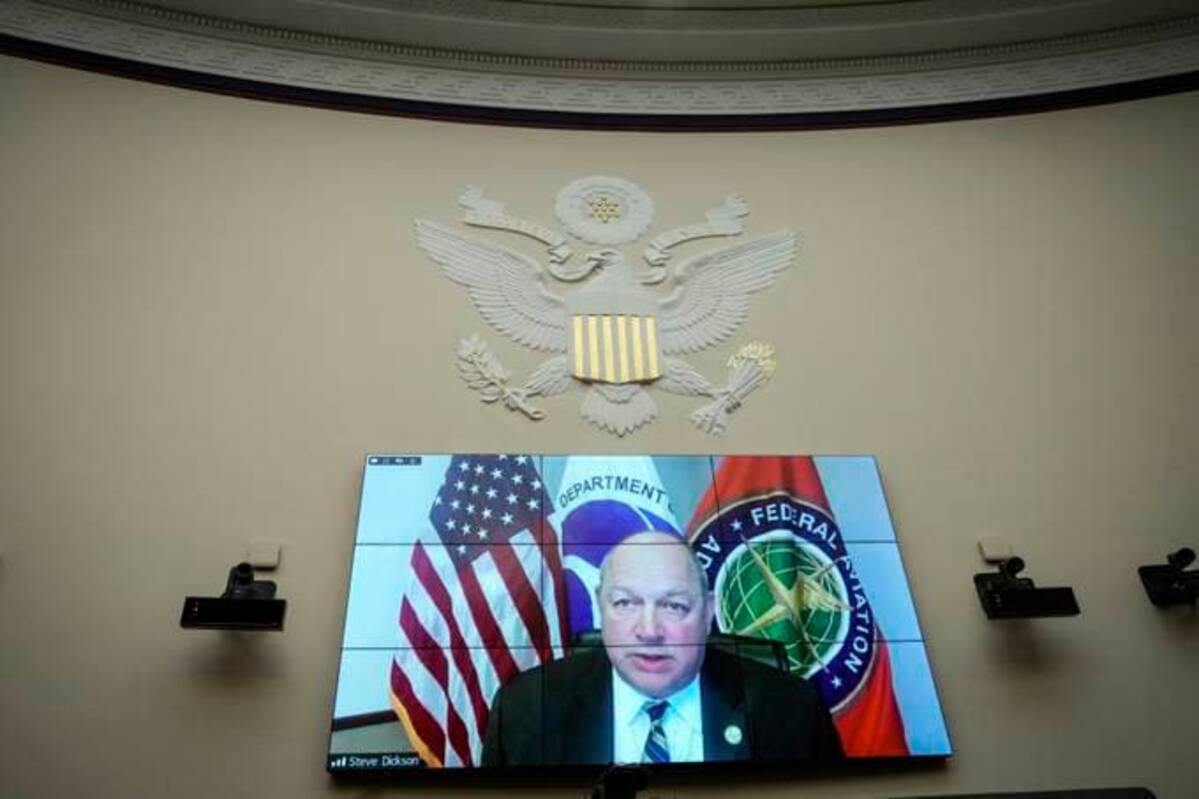 FAA Administrator Steve Dickson told a House committee that the "process did not serve anyone well." (Drew Angerer/Getty Images) | | | The Federal Aviation Administration didn't get detailed data to determine the risks of 5G technology until December despite concerns emerging in 2015, FAA Administrator Steve Dickson told the House Transportation Committee. Dickson said "the process did not serve anyone well," Ian Duncan and Lori Aratani report. House Transportation Committee Chairman Peter A. DeFazio (D-Ore.) said former FCC chairman Ajit Pai, who President Donald Trump named FCC chairman, had missed opportunities to tackle the issues, and that "the FCC's history of subordinating transportation safety to corporate broadband interests has predictably resulted in the current mess." In an interview, Pai said concerns by DeFazio and the airline sector are "entirely misplaced," and that the FCC coordinated with federal agencies like the Transportation Department on spectrum issues when he was chairman. He also said the FCC had the opportunity to raise concerns about the potential impacts of 5G technology on aviation security. "They might not like the answer they got, but they certainly had a chance to have input," he said. FCC Chairwoman Jessica Rosenworcel was invited to testify but had a prior engagement, FCC spokeswoman Paloma Perez said. Rosenworcel met with DeFazio and Rep. Rick Larsen (D-Wash.) separately on Wednesday and had a productive discussion, she said. | Facebook had a terrible day on Wall Street | | The company lost $220 billion in market value as investors punished Facebook for a privacy crackdown by Apple that has limited the company's ability to target ads on iPhones; struggling to monetize TikTok copycat Reels and mounting expenses in its quest to build the "metaverse," Will Oremus and Elizabeth Dwoskin report. The most symbolic data point in the company's fourth-quarter earnings numbers was the fact that its flagship social network has stalled at almost 2 billion log-ins a day, they write. "It's not what Facebook was aiming for, which was to connect everyone — the entire world, even the people who don't have Internet access yet," they write. "While it's possible that Facebook will resume its growth in some form in the future, the quarterly decline in the social network's most prized metric, known as daily active users, is a sign that [chief executive Mark] Zuckerberg's dream is unlikely to be fully realized, at least in the form he once envisioned." The impact on businesses is also hitting Facebook hard. Apple's privacy changes alone will cost $10 billion in lost sales this year, Facebook chief financial officer David Wehner said Wednesday, describing it as "a pretty significant head wind," the Wall Street Journal's Meghan Bobrowsky reports. | | |  | Rant and rave | | | Amazon is increasing the price of its Prime membership in the United States from $119 per year to $139. The Wall Street Journal's Nicole Nguyen and Newsweek's Tyler Hayes: | | Norfolk news station WAVY TV 10's Nathan Crawford: | | MarketWatch's Leslie Albrecht: | | |  | Inside the industry | | | |  | Hill happenings | | | |  | Trending | | | |  | Daybook | | - Facebook whistleblower Frances Haugen discusses social media's impact on teenagers' mental health at a Georgetown University School of Medicine and School of Nursing & Health Studies event on Monday at 3 p.m.
- Tim Wu, a special assistant to President Biden, discusses antitrust and its effects on workers at a New America event on Tuesday at 3 p.m.
- The Senate Agriculture Committee holds a hearing on digital assets on Wednesday at 10 a.m.
- The Senate Commerce Committee holds a nomination hearing for Gigi Sohn, Biden's nominee for FCC commissioner, on Wednesday at 10 a.m.
- Consumer Financial Protection Bureau director Rohit Chopra discusses consumer protection in the era of Big Tech at a Washington Post Live event on Thursday at 10 a.m.
| | |  | Before you log off | | | That's all for today — thank you so much for joining us! Make sure to tell others to subscribe to The Technology 202 here. Get in touch with tips, feedback or greetings on Twitter or email. | |


