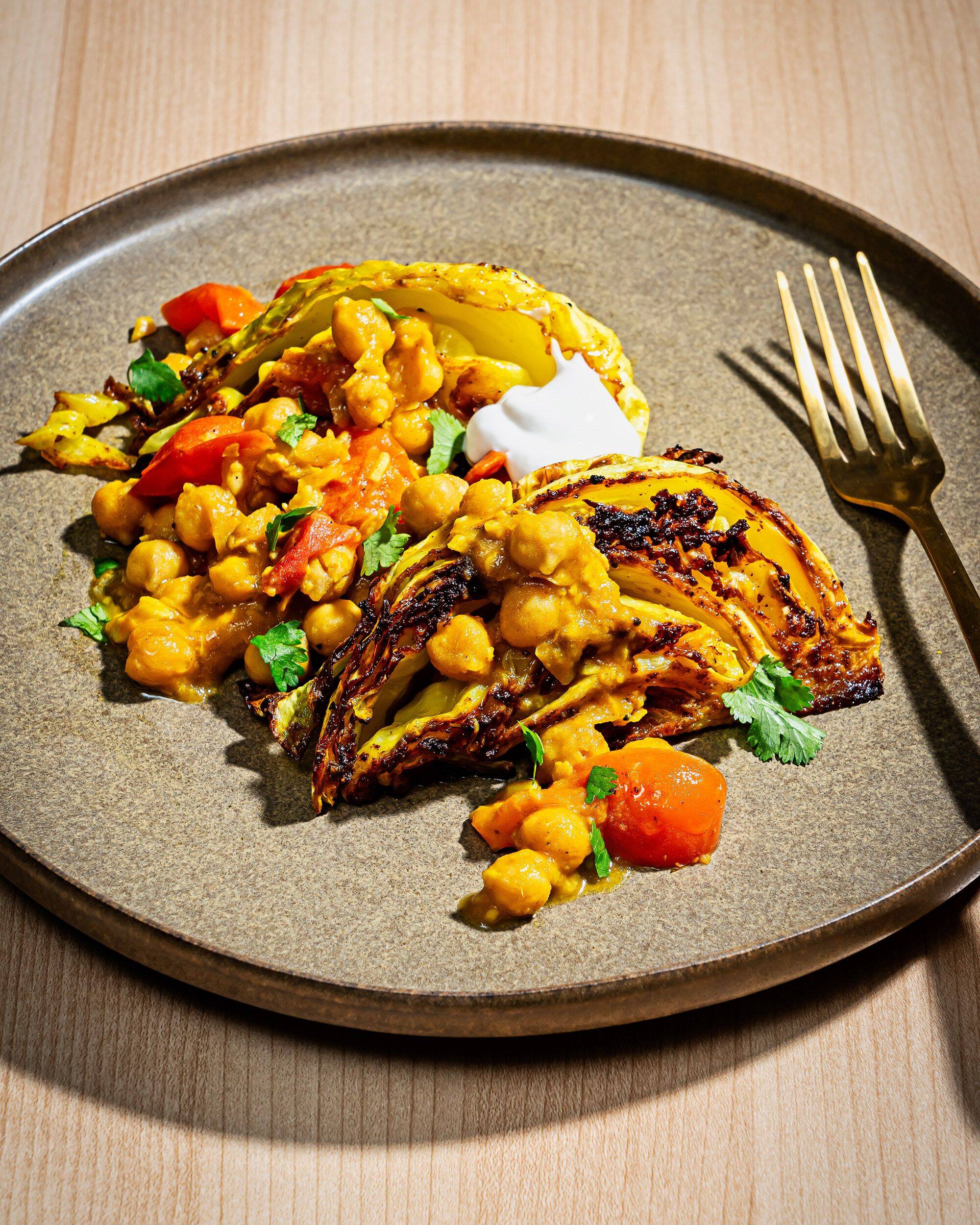
| Did a friend forward this to you? Sign up here. Cabbage for me, cabbage for you, cabbage for everyone! Good day, everyone! It's February, my birth month, and the last full month of winter — hooray! The ground is still frozen in D.C. and most of the Northern Hemisphere, and to keep myself excited about cooking dinner, I'm suggesting we examine one of the vegetable kingdom's most versatile, hardiest and most nutritious specimens: the cabbage. Hopefully, sometime over the weekend, you picked up one or two big heads of cabbage — red or green, round or oblong, frilly-leaved or tightly cupped, heavy and almost indestructible. It's time now to put one to use for dinner in this recipe for Roasted Cabbage Wedges With Chickpeas and Tomatoes. "A blast of heat transforms cabbage. What was crisp and crunchy turns silky, what was grassy and fresh turns sweet and nutty," Joe Yonan wrote last year when he brought this recipe to The Post. "All this can happen with the fewest of other ingredients — just oil and salt, really — and you're left with either a great side or something you can incorporate into so many other dishes." Start with a small-to-medium head of cabbage — or use just half of a big one — and cut it into wedges that are still attached at the core. Then, crank your oven up to 500 degrees and roast the cabbage until it wilts and browns. "Curry powder, a little sugar, and a generous application of oil help the heat burnish these wedges to a gorgeous deep brown, accentuating the frilly lines of their leaves," Joe explained. Meanwhile, make a saucy chickpea stew with grape tomatoes, curry powder and fresh ginger. It's a marvelous pairing for a vegetable that can get a bad rap — and will use half a large head of cabbage or one whole small one. 🥬 Calling all cabbage heads: What are some of your favorite cabbage-based dishes and tips? Inquiring minds want to know! 🥬  | Today's recipe | 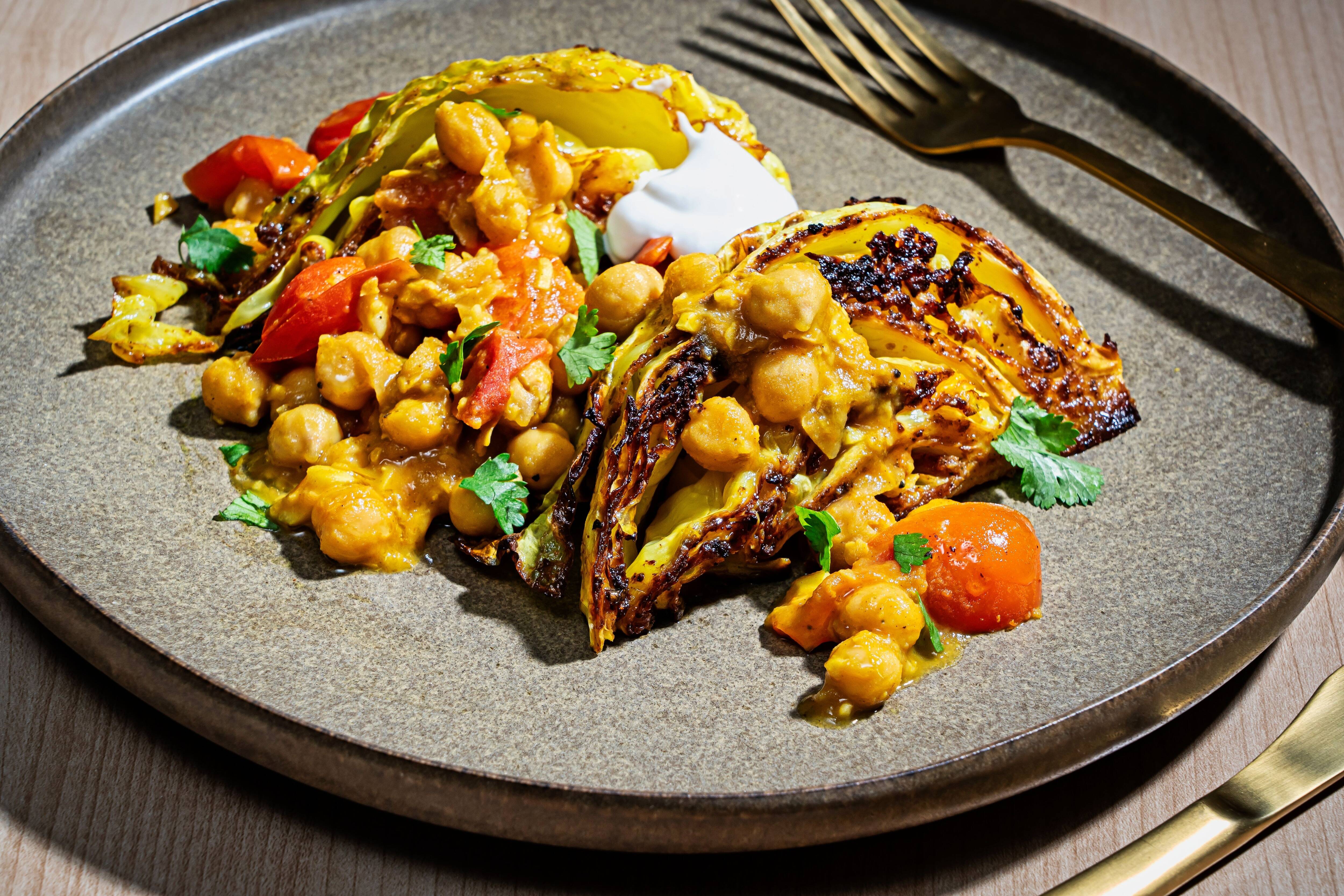 Photos by Scott Suchman for The Washington Post; food styling by Diana Jeffra for The Washington Post | Roasted Cabbage Wedges With Tomatoes and Chickpeas - If you don't have any kind of premixed curry powder >> you can make your own garam masala, or use a teaspoon each of ground cumin, coriander and turmeric.
- Can't have cabbage? >> This recipe would work with large eggplants, too.
- Not into cilantro? >> Try mint or parsley.
Storage Notes: Refrigerate the cooked cabbage and the chickpea-tomato sauce, preferably separately, for up to 5 days. The sauce can be frozen for up to 3 months; freezing the cabbage is not recommended. Reheat the cabbage in a 300-degree oven and the sauce (after thawing, if frozen) in the microwave or on the stove. Want to save this recipe? View it on Voraciously here and click the bookmark icon below the serving size at the top of the page to add it to your Reading List. For easy printing and scaling, view this recipe in our Recipe Finder. Servings: 4
Active time: 25 mins
Total time: 35 mins Ingredients - 5 tablespoons vegetable oil, divided
- 3 teaspoons curry powder, divided
- 1 1/2 teaspoons granulated sugar
- 1 1/2 teaspoons fine sea salt, divided, plus more to taste
- 1/4 teaspoon freshly ground black pepper
- 1 small-to-medium head green cabbage (2 pounds)
- 2 garlic cloves, chopped
- 2 teaspoons grated fresh ginger
- Two (15-ounce) cans no-salt-added chickpeas, undrained
- 1 pint (10 ounces) grape or cherry tomatoes, halved if small and quartered if large
- 1/4 cup chopped fresh cilantro
- 1/4 cup plain nondairy yogurt (may substitute dairy yogurt; optional)
Steps1. Position a rack in the lowest position of the oven and preheat to 500 degrees. 2. In a small bowl, whisk together 4 tablespoons of the oil, 2 teaspoons of the curry powder, the sugar, 1 teaspoon of salt and the pepper. Halve the cabbage through the core, and cut each half — again, through the core — into four equal-size wedges, leaving the core intact as much as possible. (This helps keep the wedges from falling apart in the oven.) 3. On a large, rimmed baking sheet, arrange the cabbage wedges in an even layer. Brush them all over with the oil mixture. Cover tightly with aluminum foil and roast for 10 minutes. Remove the foil and roast the wedges, uncovered, for 10 to 12 minutes, or until the cabbage is tender and the sides touching the sheet are well browned. 4. While the cabbage is roasting, in a 12-inch skillet over medium-high heat, heat the remaining 1 tablespoon of oil until shimmering. Add the garlic, ginger and remaining 1 teaspoon of curry powder and 1/2 teaspoon of salt and cook, stirring, 30 seconds. Add the chickpeas and their liquid, followed by the tomatoes, and bring to a boil. Reduce the heat slightly so the liquid is at a gentle boil. Cook, stirring frequently, until the tomatoes begin to break down and the liquid has thickened, 7 to 9 minutes. Taste, and add more salt if needed. 5. Divide the cabbage among individual plates and spoon the chickpea mixture on top. Sprinkle with cilantro, dollop with the yogurt, if using, and serve hot. Adapted from "The Complete Plant-Based Cookbook" (America's Test Kitchen, 2020). Tested by Joe Yonan. Nutrition information per serving: Calories: 453; Total Fat: 21 g; Saturated Fat: 2 g; Cholesterol: 0 mg; Sodium: 756 mg; Carbohydrates: 55 g; Dietary Fiber: 17 g; Sugars: 18 g; Protein: 15 g.  | Dessert | 🎧 I was recently on the TASTE Cooking podcast, which you can find here, or on any podcast platform, if you'd like to listen to me talk about cooking and cookbooks and how much I love writing this newsletter.
📺 Nathan Chen!
📖 "As Beijing Olympics begin, exiled Uyghurs fight for families oppressed in China" by Alice Su in the Los Angeles Times.
👀 This coconut rice pudding brulee, by Meiko Temple, looks incredible. (It's part of Eat the Culture's Afrofuturism theme this month.)
🗣 If you liked this newsletter, please forward it to a friend! |



 Email
Email 


