| Good morning, where in the DMV, we're hoping these April showers at least bring May flowers. 🌼 Today's edition: Cabinet members, journalists and more have tested positive for covid-19 after Saturday's Gridiron dinner. A new report calls for sweeping change for nursing homes. But first … Lots of booster questions, few concrete answers | 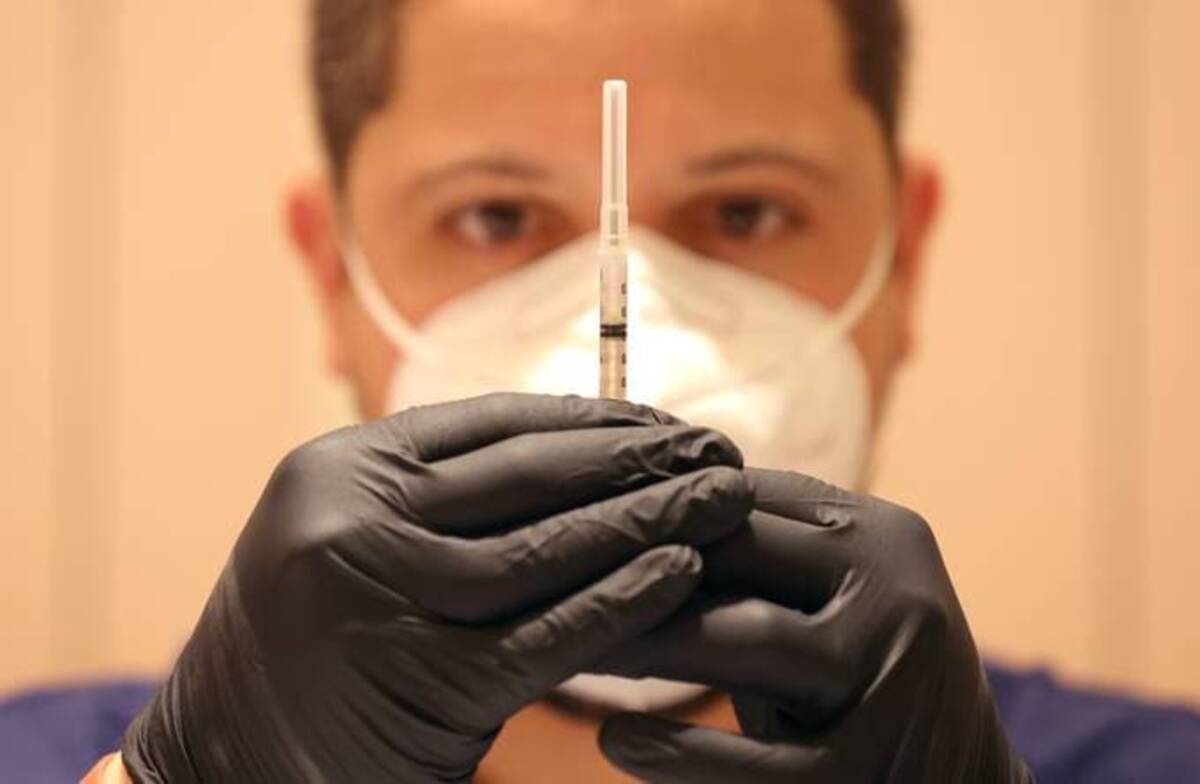 A syringe is filled with a coronavirus vaccine booster shot in California. (Justin Sullivan/Getty Images) | | | The window to prep for a potential fall coronavirus booster campaign is narrowing. In a public meeting yesterday, expert advisers to the Food and Drug Administration spent hours grappling with critical questions surrounding a long-term booster strategy for the country. That included whether additional shots should be redesigned to keep up with the ever-changing virus — and when such a task would need to be completed, our colleague Carolyn Y. Johnson reports. But there weren't concrete answers. Rather, the goal of yesterday's session was to give the FDA some clarity on the criteria for boosters going forward. The discussion comes at a critical moment for second booster shots. The agency recently greenlit second boosters for people 50 and older. The decision left some Americans wondering just how frequently they'll need another coronavirus shot, though doctors say they're still struggling to get people their first booster. Meanwhile, federal officials have warned they need more dollars from Congress to buy a vaccine targeting future variants and a potential fourth dose for all Americans. As one senior Biden official put it, the cupboard is empty. Here's what we learned from Carolyn's story: | | Many experts want to reformulate the vaccine. They say that shots for the general population should be redesigned to provide the best protection possible. But there are lingering questions over whether, when and how to do that. The National Institutes of Health launched a booster trial last week. It includes an additional dose of the original Moderna shot, a vaccine targeting omicron and another that can fight against two different variants. But still, there's no easy answer. The trials of redesigned shots could provide some guidance, but it's anyone's guess as to what version of the virus may be circulating come winter time. Either way, the timing is tight. That's because companies need time to gather data showing the vaccines are safe and effective, as well as to produce enough shots. A decision probably needs to be made by May or June, said Peter Marks, the director of the FDA's Center for Biologics Evaluation and Research. Let's say officials want to have a new booster available by September. The components of such a shot would need to be selected by early next month so clinical trials could start. That's per Robert Johnson, the director of the medical countermeasures program at the federal government's Biomedical Advanced Research and Development Authority. Looking to the flu for guidance. There's a decades-long, globally coordinated process for determining the flu vaccine each year. It's basically fine-tuned to fight the influenza strains that could be circulating in the fall and winter. For the Northern Hemisphere, such decisions are typically made in late February, roughly six months before flu shots are given, Carolyn notes. Coronavirus vaccines are only a little over a year old, and there's no set schedule for updating the shots. Various companies are working on changes, but there's no centrally coordinated effort. | | It's unclear, though, whether the flu is a good model to follow here. It's not clear if surges of the coronavirus will follow a seasonal pattern, like the influenza does — and covid-19 appears to be mutating much faster. | - "In two years' time since the start of the pandemic, we've accomplished about five years of equivalent evolution of [a type of influenza]," Trevor Bedford, a scientist who studies the evolution of viruses at Fred Hutchinson Cancer Research Center, said at the meeting. "The evolution has been remarkably fast so far."
| | |  | On the Hill | | After Gridiron dinner, a covid outbreak among Washington A-list guests | 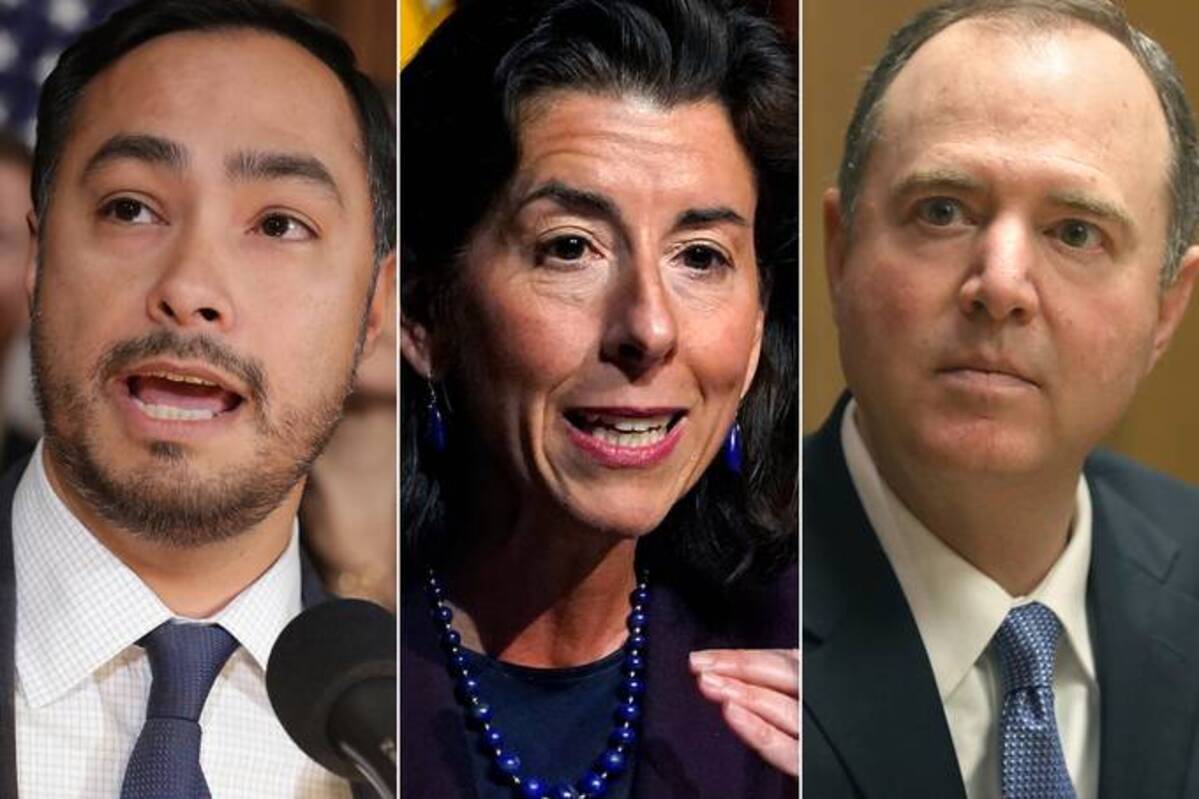 Rep. Joaquin Castro (D-Tex.), U.S. Secretary of Commerce Gina Raimondo and Rep. Adam B. Schiff (D-Calif.) each tested positive for the coronavirus following an event in D.C. (Chip Somodevilla/Getty Images; Charles Krupa/AP; Liz Hafalia/San Francisco Chronicle/AP) | | | More than a dozen guests who attended Saturday night's Gridiron Club dinner have since tested positive for the coronavirus. The count includes two Cabinet members, two members of Congress and a top aide to Vice President Harris, The Post's Paul Farhi, Roxanne Roberts and Yasmeen Abutaleb report. Guests of the event — which brings together some of the city's most well-known journalists and the government workers they cover — were asked to show proof of vaccination. Negative tests weren't required, and many mingled without masks. | - Two of President Biden's Cabinet members, Attorney General Merrick Garland and Commerce Secretary Gina Raimondo, announced Wednesday they had tested positive.
- Reps. Adam B. Schiff (D-Calif.) and Joaquin Castro (D-Tex.) — as well as Jamal Simmons, communications director for Vice President Harris — said later Wednesday that they, too, had contracted the virus.
- At least half a dozen journalists, White House personnel and National Security Council staffers also tested positive.
| | How serious the outbreak will prove remains unknown, but experts note that Americans now have the tools they need to respond to outbreaks. | - "We are in a situation where, as a population, we need to make a decision that is based on data as well as our own individual willingness to take whatever level of risk happens to be present," said the nation's top infectious-disease expert Anthony S. Fauci, who attended the event but has not tested positive.
| | Rep. Adam B. Schiff: | 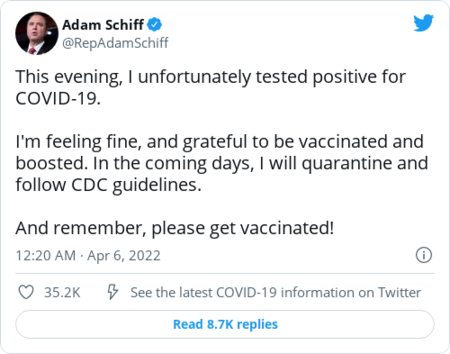 | | | | | |  | Industry Rx | | New report calls for fundamental change in nursing homes | 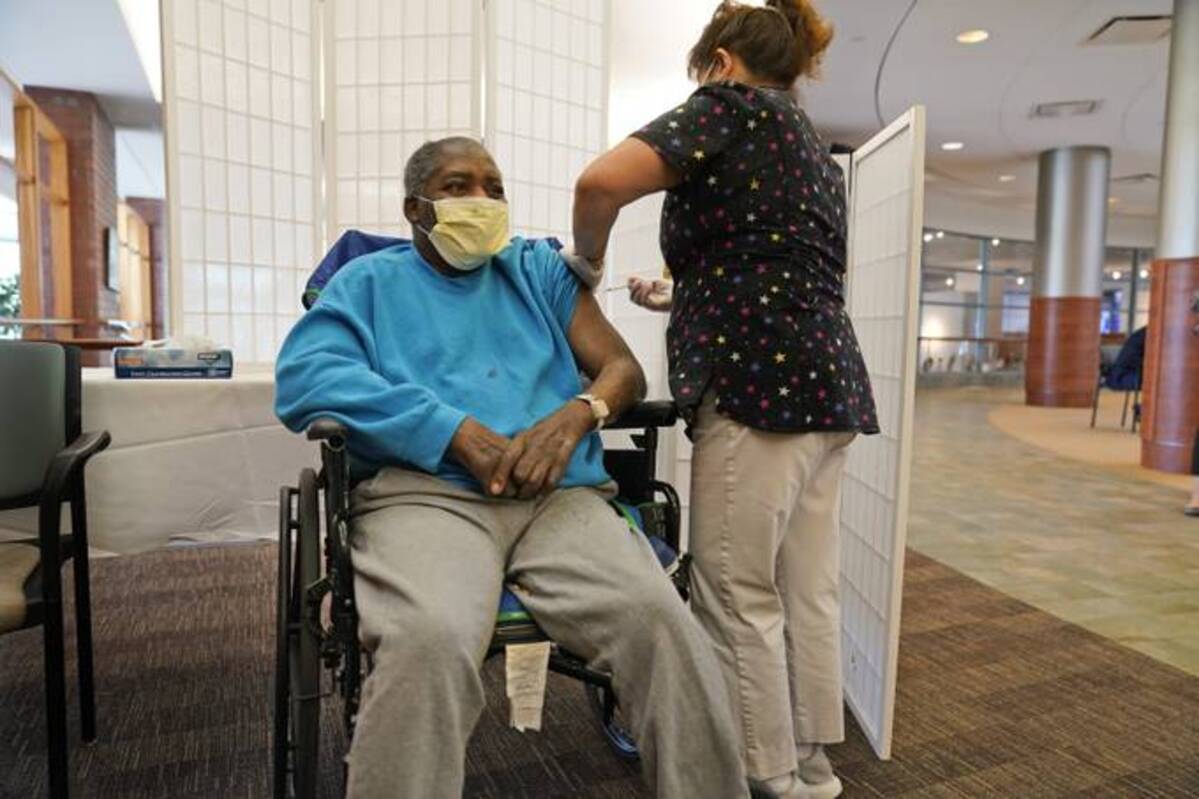 Flaws in the nursing home system were highlighted during the coronavirus pandemic. (Seth Wenig/AP) | | | The way the United States finances, regulates and delivers care to residents of nursing homes nationwide is "ineffective" and "unsustainable," according to a report released Wednesday by the National Academies of Sciences, Engineering and Medicine that called for sweeping change. Why it matters: Nearly 1.3 million Americans reside in nursing homes across the U.S., and over 150,000 died from contracting covid-19. Here are some of the report's takeaways: | - Low salaries, poor benefits and inadequate training has made nursing homes "a highly undesirable place of employment," the report states.
- There is "considerable variation" in how states implement routine inspections and investigate complaints.
- Meanwhile, a lack of transparency around facilities finances, operations and ownership prevents regulators from fully understanding how resources are allocated.
- A significant financial investment at the federal and state level — as well as from nursing homes — is needed to implement targeted recommendations.
| | Recommendations include having the Centers for Medicare and Medicaid Services enhance minimum education standards for all nursing home staff. Another says the Department of Health and Human Services should fund research to gauge the minimum and optimum staffing levels for nurses, social workers and recreational staff. Meanwhile … the industry argues the report underscores the need for policymakers to increase investments in nursing homes. "Decades of underfunding have left America's nursing home system in desperate need of an overhaul," said Katie Smith Sloan, the CEO of LeadingAge representing nonprofit aging services providers. | | |  | Mental health | | Scientists discover new genetic link to schizophrenia |  Researchers have found slight variations in genes that might uncover the mystery behind schizophrenia. (NHGRI/AP) | | | Researchers have identified a genetic link in schizophrenia patients that might unlock clues to help advance the diagnosis and treatment of the disease, our colleague Lenny Bernstein reports. Key context: Less than 1 percent of Americans are believed to have schizophrenia, and are typically treated with a host of antipsychotic drugs. The disease reduces their life expectancy by about 15 years. What the researchers found: People who have mutations in the 10 genes identified in the study can be between 10, 20 and even 50 times more likely to develop the disease, according to a new study by the Broad Institute of MIT and Harvard. | - Some of the genes also appear to be involved in autism spectrum disorder and other intellectual development conditions.
- "This is the biological clue that leads to better therapies," said Tarjinder Singh, the lead author of the study. "But the key thing is, we haven't had any meaningful clues for the longest time."
| | |  | In other health news | | - European regulators said Wednesday it's "too early" to administer a second coronavirus booster dose to the general public, but said the extra shots could be given to adults 80 and older, the New York Times reports.
- One of the Senate's most vulnerable members, Sen. Raphael G. Warnock (D-Ga.), introduced a bill that would limit Medicare beneficiaries' out-of-pocket costs for prescription drugs at $2,000 per year.
- Rep. Carolyn B. Maloney (D-N.Y.) and Sens. Debbie Stabenow (D-Mich.) and Tina Smith (D-Minn.) plan to introduce a bicameral package of legislation this morning targeting the business practices of pharmaceutical companies.
| | |  | Sugar rush | | | Thanks for reading! See y'all tomorrow. | |


