| Good morning, Early Birds. Congress has skipped town, but we're still here. Send us your best tips: earlytips@washpost.com. Thanks for waking up with us. In today's edition: Why Black voters who celebrated Ketanji Brown Jackson's confirmation to the Supreme Court also sought to temper their joy … the wave of covid cases in Washington is raising questions about whether enough is being done to protect President Biden ... More than 30 people killed and over 100 injured at the Kramatorsk train station in eastern Ukraine, according to Ukrainian officials … but first … | | |  | On the Hill | | Rep. Tony Gonzales: Republicans need to abandon "harsh rhetoric" to win over Hispanic voters |  (Washington Post illustration; Courtesy of Rep. Tony Gonzales; iStock) | | | Eight questions for … Rep. Tony Gonzales (R-Tex.): We sat down with the co-chair of the Congressional Hispanic Conference — the Republican counterpart to Democrats' Congressional Hispanic Caucus — to talk about how Republicans are working to win more Hispanic votes in the midterms. (A Quinnipiac University poll released on Wednesday found that 42 percent of Hispanic Americans would like to see Republicans win control of the House of Representatives if the election was held today.) This interview has been edited and condensed for length and clarity. The Early: Former president Donald Trump made significant gains with Hispanic voters in 2020. How are you working to consolidate those gains this year? Gonzales: In Texas in particular, if Republicans don't take advantage of this opportunity — and it's kind of a jump ball right now — I think you will see the political landscape change for the next decade, maybe more. There are 23 Republican members of Congress from Texas. Twenty-two of them are Caucasian. And then there's Tony Gonzales. So the starting point is in Texas we only have one [Republican] member of Congress that is of Hispanic descent. And that has to change. The Early: What do you mean when you say it's a jump ball this year in Texas? | | Gonzales: I think there's a great opportunity that the Democratic Party has given the Republicans. The Democratic Party has taken this far-left turn and has left a lot of people wondering, Am I still Democrat? Why am I voting this way? My grandfather, Blue Dog Democrat, voted Democrat his entire adult life. People like that feel disenfranchised by the Democratic Party. And that's an opportunity for the Republicans — if, and only if, we can show up and have a message that is welcoming. Not a message of hate or this kind of negative rhetoric. It has to be a message that is positive and it has to be a message that has solutions tied to it. Blaming Joe Biden for everything that's wrong — it's a good start, but it needs a lot more than that. The Early: What Republican policies do you think would appeal specifically to Hispanic voters or Tejano voters in South Texas? Gonzales: We'll talk about the border because it is the No. 1 issue in my district, the No. 1 issue in [Democratic Rep.] Henry Cuellar's district, [Democratic Rep.] Vicente Gonzalez's [district]. The message has to be one of border security. But it also has to be one of the American Dream and encouraging legal immigration. It can't be this harsh rhetoric of, "We don't want you. Stay out." The way Republicans will be successful is if we can [say] we are both for a secure border, but we also are for legal immigration and we want those people. The Early: The Trump administration took steps to reduce not only illegal immigration but also legal immigration. Are you saying you think Republicans should tack away from trying to reduce legal immigration? Gonzales: I think the message needs to be the Trump policies were successful when it came to border security. Very successful. You've seen this administration kind of strip away those policies, and you've seen the result: the chaos — and it is absolutely chaos — on the border. From a legal immigration standpoint, I don't think anyone has talked about that in a very long time. You see a lot of lawmakers, politicians shy away from the legal immigration conversation. They just don't want to have it. The Early: When you talk about legal immigration, what specifically are you advocating for? Gonzales: We have work shortages in every single industry. It's no longer just agriculture and construction and retail. Right now there is no legal route — that route is completely broken for people who want to come and do those things. The more difficult question, the political question that gets kicked around a lot, is voting. There's this notion out there that people are coming over here, and they can't wait to vote for Joe Biden. And I don't see that. I see people that are leaving their country in desperation for a better life for themselves. So if we could tackle that — maybe folks come over and they have work visas but they don't become citizens or they don't have voting access. At the end of the day, it's about political power. Increasing work visas, I think, makes a lot of sense. The Early: So you think Republicans would be more open to increasing legal immigration if migrants didn't have a path to citizenship? Gonzales: You start talking about a path to citizenship and you lose people immediately. I mean, the conversation is over. If we truly want to have that conversation and offer a path where people can come and work in the United States in a legal manner, then we have to start there. The Early: Trump won 38 percent of the Hispanic vote in 2020. But Republican House candidates won only 25 percent of Hispanics in the 2018 midterms. Do you think Republicans perform worse with Hispanic voters without Trump on the ballot? | | Gonzales: Hispanics are very different. You can't put 'em in just one category. Cubans are different than Mexicans. Mexicans are different than Puerto Ricans. You have Colombians, Venezuelans. It's just different cultures. And I think that's one trap that we fall into. We kind of monolithically put 'em into this category: How do I get the Hispanic vote? in Texas in particular, you're talking about Mexican Americans. The messenger matters. In my district, it's predominantly Hispanic. Me showing up and being Hispanic and talking to Mexican Americans — that matters. You're seeing the Republican Party [this cycle] have a more diverse group of candidates, top-tier candidates that can actually win: Juan Ciscomani in Arizona, Monica De La Cruz in Texas. The Early: The Republican Senate candidate J.D. Vance released an ad this week that begins with him saying, "Are you a racist? Do you hate Mexicans?" Is that an example of the sort of negative rhetoric that you urged Republicans to avoid? Gonzales: You know, Hispanic voters are no longer just in border communities. They're everywhere. A good friend of mine, [Rep.] Blake Moore [(R-Utah)], we were talking — I don't know Utah too well — and I go, "Hey, if you need anything, I'm happy to go down there and talk to your Hispanic community." Making a joke, right? And he goes, "I would love for you to visit. Twelve percent of my demographics are Hispanic." I'm going, "Twelve percent?!" But that's just a microcosm of the United States. So I think anytime you speak harshly against that community, you're taking a portion [of the electorate] that is growing off the table. And it's the wrong way. If you want to win, if the Republican Party wants to be successful long term, we have to speak to that community in a manner that gets to what their values are. And attacking them directly — that's not gonna work. | | |  | From the courts | | Senate confirms Ketanji Brown Jackson as first Black woman on Supreme Court | 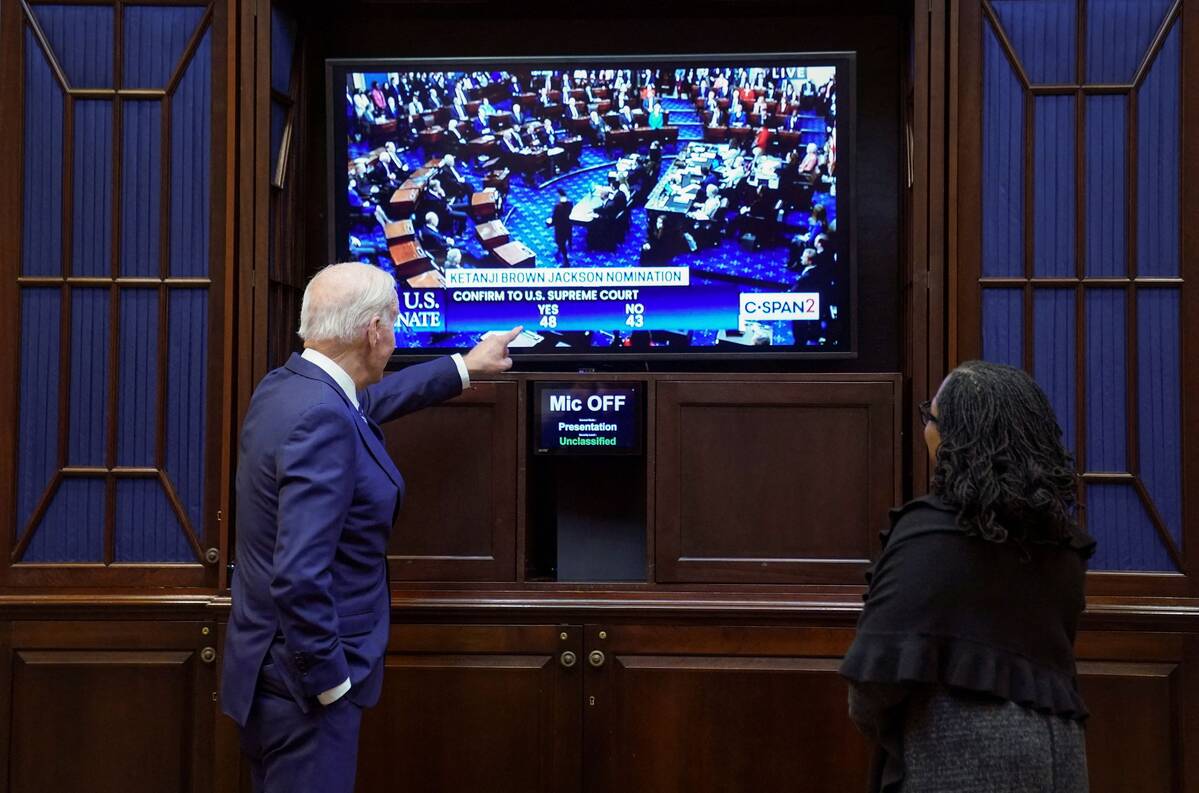 President Biden and Judge Ketanji Brown Jackson watch as the Senate votes to confirm her to the Supreme Court on April 7. (Kevin Lamarque/Reuters) | | | Legacy: "On Thursday, Jackson became the first Black woman confirmed to sit on the Supreme Court in its 233-year history, a reflection of Biden's vow to reshape the racial makeup of America's fundamental institutions, something of particular importance to the Black voters who propelled him to the White House," our colleague Cleve R. Wootson Jr. writes. | - "But 15 months into Biden's presidency, many Black voters sought to temper their joy, knowing from experience that a Justice Jackson — like a President Obama or a Vice President Harris — does not mean instant racial reconciliation."
- "For many, a pivotal question remains: Will Biden be remembered as a president who elevated a historic number of Black people to prominent positions, empowering a new generation of rising leaders? Or will his legacy be blighted by unfilled promises and unseized opportunities, especially when it comes to voting rights and police reform?"
| | |  | At the White House | | Nancy Pelosi, Vice President's staff test positive for covid | 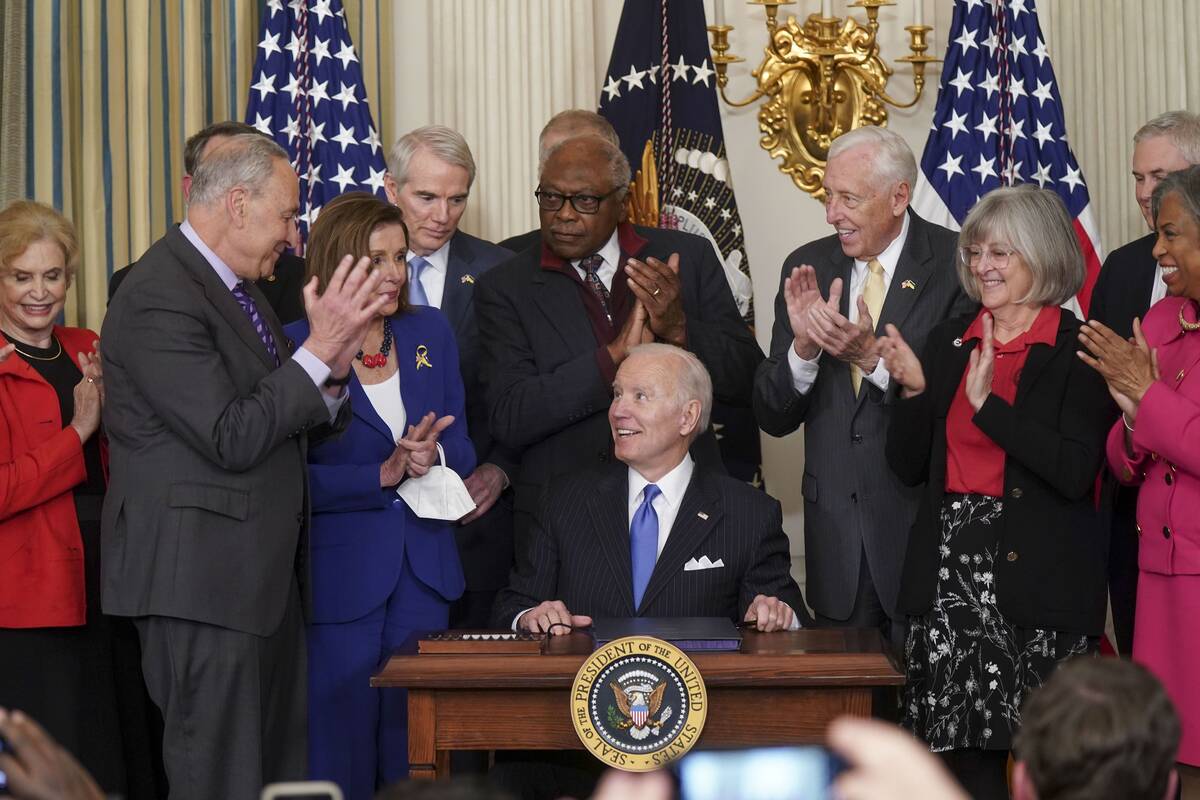 President Biden signs the Postal Service Reform Act on Wednesday. (Leigh Vogel/The Washington Post) | | | Covid Capital: "In the space of a week, dozens of White House aides and federal officials have contracted [covid] in an outbreak that appears to have touched all corners of the administration," Politico's Adam Cancryn writes. They include two Cabinet members, a slew of congressional Democrats — notably House Speaker Nancy Pelosi — and the first lady's press secretary. The outbreak has "raised fresh questions about how best to protect the 79-year-old commander in chief, who vowed this year to 'get out' of the White House more often — yet faces an ever-present elevated risk of severe illness," Cancryn writes. | - "It's almost impossible to isolate the president of the United States in a way that would keep him from getting sick," Irwin Redlener, director of the Pandemic Resources and Response Initiative at Columbia University, told Cancryn.
- But "perhaps the White House is resigned to the president eventually contracting the virus, given how transmissible both the Omicron variant and its even sneakier cousin, BA.2, have proved to be," the Atlantic's Russell Berman writes.
| | What we're watching: The White House will hold an outdoor celebration for Jackson's confirmation today. | - "The reception has already drawn some parallels to Supreme Court Justice Amy Coney Barrett's nomination announcement in the White House Rose Garden in late September 2020, which ended up being a likely covid-19 super-spreader event, and preceded then-president Donald Trump's covid-related hospitalization," CNN's Maegan Vazquez reports.
| | |  | The Media | | | |  | Viral | | | Confirmed. | 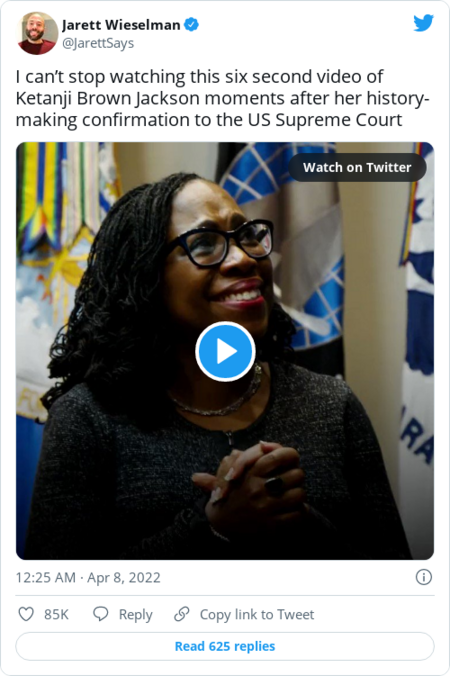 | | | | | | AM/PM | | Looking for more analysis in the afternoon? | | | | Weekday newsletter, PM |  | | | | | | |


