 | | Maxine Joselow | | | Good morning and welcome to The Climate 202! If you're enjoying the newsletter, please tell your friends and colleagues to sign up here. But first: | Energy executive was inadvertently listed as author of GOP witness's testimony at Big Oil hearing | 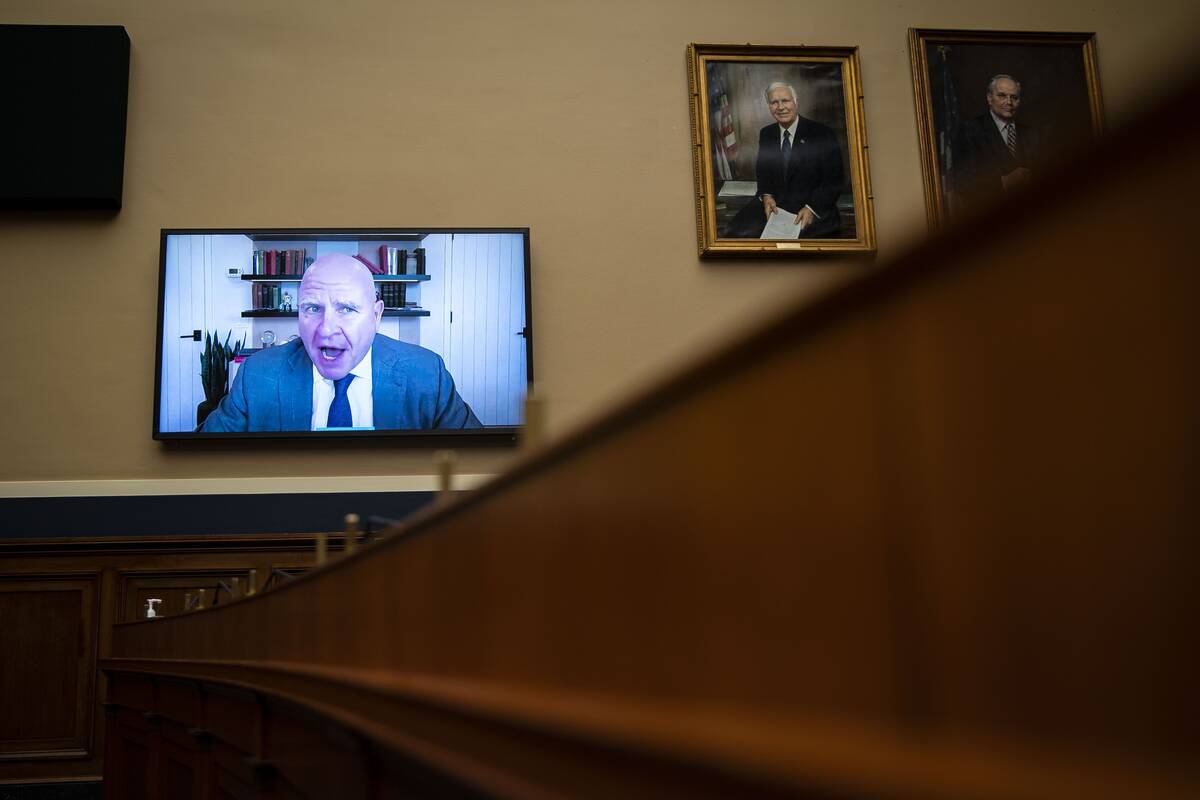 H.R. McMaster appears for a House Energy and Commerce subcommittee hearing on April 6. (Al Drago/Bloomberg News) | | | When Democrats on the House Energy and Commerce Committee invited the top executives of oil and gas companies to testify on Wednesday about their purported role in high gasoline prices, Republicans on the panel responded by inviting H.R. McMaster, who served as President Donald Trump's national security adviser and is a prominent conservative voice on energy issues. But when McMaster submitted his testimony to the committee, it accidentally listed an executive at Sempra Energy as the author, according to an original copy of the testimony obtained by The Climate 202. While a spokesman for McMaster said the energy executive did not draft the document, the incident raises questions about whether McMaster's advocacy to lawmakers dovetailed with Sempra's interests. McMaster told lawmakers at the hearing that boosting U.S. exports of liquefied natural gas would benefit both the climate and national security. Sempra, a California-based energy company, develops and invests in liquefied natural gas export facilities across North America. Brian Lloyd, regional vice president for external affairs and communications at Sempra Energy, was listed as the author of the testimony in the Word document that McMaster provided to the committee. Lloyd's name did not appear on the PDF that the committee publicly posted on its website. McMaster, who is now a senior fellow at the Hoover Institution, a conservative think tank on Stanford University's campus, did not respond to a phone call seeking comment. But a spokesman for the Hoover Institution told The Climate 202 that McMaster wrote the testimony. "The General wrote the testimony himself and alerted the committee beforehand that he is an advisor to Sempra," the spokesman wrote in an email. He did not respond to follow-up questions about whether the Sempra executive was involved in reviewing or editing the testimony, or why the executive's name appeared on the document. About five hours and 50 minutes into the roughly six-hour hearing, in response to a question from Rep. Kelly Armstrong (R-N.D.), McMaster did acknowledge that he advises Sempra. "Of course, you guys know that I'm an adviser to Sempra Energy, which has LNG export capacity," he said. | | Asked for comment, Sempra spokeswoman Christina Ramirez Kacmarski said in an email to The Climate 202: "As he noted in today's hearing, General H.R. McMaster is an advisor to Sempra Infrastructure, a subsidiary of Sempra, on issues of geopolitics and national security. We refer you to General McMaster for questions about his testimony." | Touting gas for the climate | | McMaster's written testimony asserted that boosting U.S. exports of liquefied natural gas, or LNG, would help reduce planet-warming emissions. "American LNG companies are at the forefront of proposing new technologies that will dramatically lower greenhouse gas emissions at energy export facilities," the document said, adding, "Increased U.S. liquefied natural gas (LNG) exports can serve as a bridge to renewables and make a foundational contribution to arresting climate change." Responding to a question from Rep. Cathy McMorris Rodgers (R-Wash.), McMaster also argued that U.S. natural gas is cleaner than coal, despite scientists' concern about its emissions of methane, a potent greenhouse gas. "Without our supplies, what's happening is the world is ramping up coal consumption and coal burning, which is the worst thing for the environment," he said. "So it's time to rationalize our policies, increase U.S. production and increase U.S. exports." McMaster made a similar argument in his 2020 book "Battlegrounds: The Fight to Defend the Free World," according to an excerpt of the book provided by the Hoover Institution spokesman. "The conversion of coal to natural gas worldwide presents the greatest near-term opportunity for carbon emissions reduction in the power and industrial sectors," McMaster wrote in the book, which predated his affiliation with Sempra, according to the spokesman. | Democrats' messaging dilemma | | Several Democrats on the Energy and Commerce panel yesterday implored the executives to increase oil production to lower gas prices for American consumers. But at a House Oversight and Reform Committee hearing in October on the oil industry's role in spreading climate disinformation, Democrats delivered the opposite message, urging the executives to decrease production to combat the climate crisis. "I've certainly enjoyed watching my Democrat colleagues convulse dramatically between two opposing stances," said Rep. Dan Crenshaw (R-Tex.). "Drill more, drill less." | | |  | Climate in the courts | | Supreme Court temporarily reinstates Trump-era water rule |  The U.S. Supreme Court in Washington. (Patrick Semansky/AP) | | | Conservatives on the Supreme Court on Wednesday temporarily reinstated a Trump-era rule that limited the ability of states to block projects that could pollute rivers and streams, The Washington Post's Robert Barnes reports. In a first, however, Chief Justice John G. Roberts Jr. joined liberals in calling the decision an abuse of the court's emergency powers, or what critics have called the "shadow docket." Justice Elena Kagan wrote in her dissent that the applicants had provided no evidence that they would suffer irreparable harm if the Supreme Court did not intervene, which is one of the elements necessary for putting a lower court's order on hold. The legal fight is over a rule issued by the Environmental Protection Agency during the Trump administration. It limited objecting states' ability to stop pipelines and other projects that could pollute navigable waters regulated by the Clean Water Act. The five conservative justices who granted the request from Louisiana, other states and the oil and gas industry did not explain their reasoning, which is common practice for emergency requests at the court. | | |  | Pressure points | | Pinterest bans climate misinformation from posts and ads | | Pinterest, a virtual pinboard service, on Wednesday said it will prohibit content that features climate misinformation after also blocking harmful ads and posts about politics, weight loss and anti-vaccine sentiment from its site, Tiffany Hsu reports for the New York Times. The ban targets any content that denies the existence or effects of climate change, including inaccurate posts about natural disasters and extreme weather, misrepresentations of climate science and challenges over whether humans help fuel global warming. Sarah Bromma, Pinterest's head of policy, said the company wanted to prevent misinformation before it gained popularity on the site. "We always want to make sure our policies are forward-leaning, that we're not waiting until we're overrun with some type of harmful content and then move," she said. "At that point, it's kind of too late." | | |  | On the Hill | | Reps. Casten, Tonko introduce bill to shore up electric vehicle charging stations | 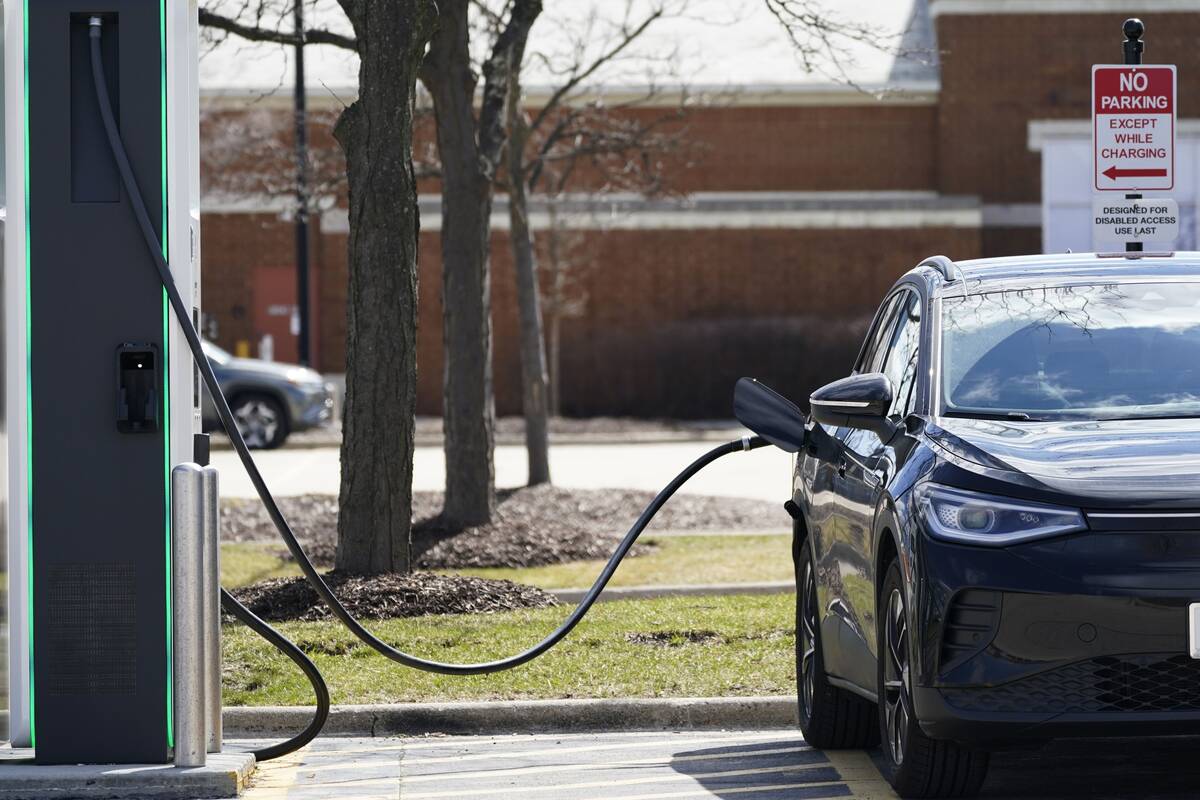 A charging station in Schaumburg, Ill., on April 1. (Nam Y. Huh/AP) | | | Reps. Sean Casten (D-Ill.) and Paul Tonko (D-N.Y.) introduced a bill today that directs the Energy Department to determine whether the nation's grid can meet the electricity demand of new electric vehicle charging infrastructure. Tonko leads the Energy and Commerce Subcommittee on Environment and Climate Change. The Electric Vehicle Grid Readiness, Improvement, and Development Act would require the agency to conduct a study on the growth of electric vehicle adoption necessary to meet President Biden's climate goals. The study would also assess how much additional electricity generation, transmission and distribution capacity would need to be added to the system. The measure seeks to build on the $7.5 billion for electric vehicle charging infrastructure that was included in the bipartisan infrastructure law, according to Casten's office. | | |  | International climate | | International Energy Agency countries to release 60 million barrels of oil | 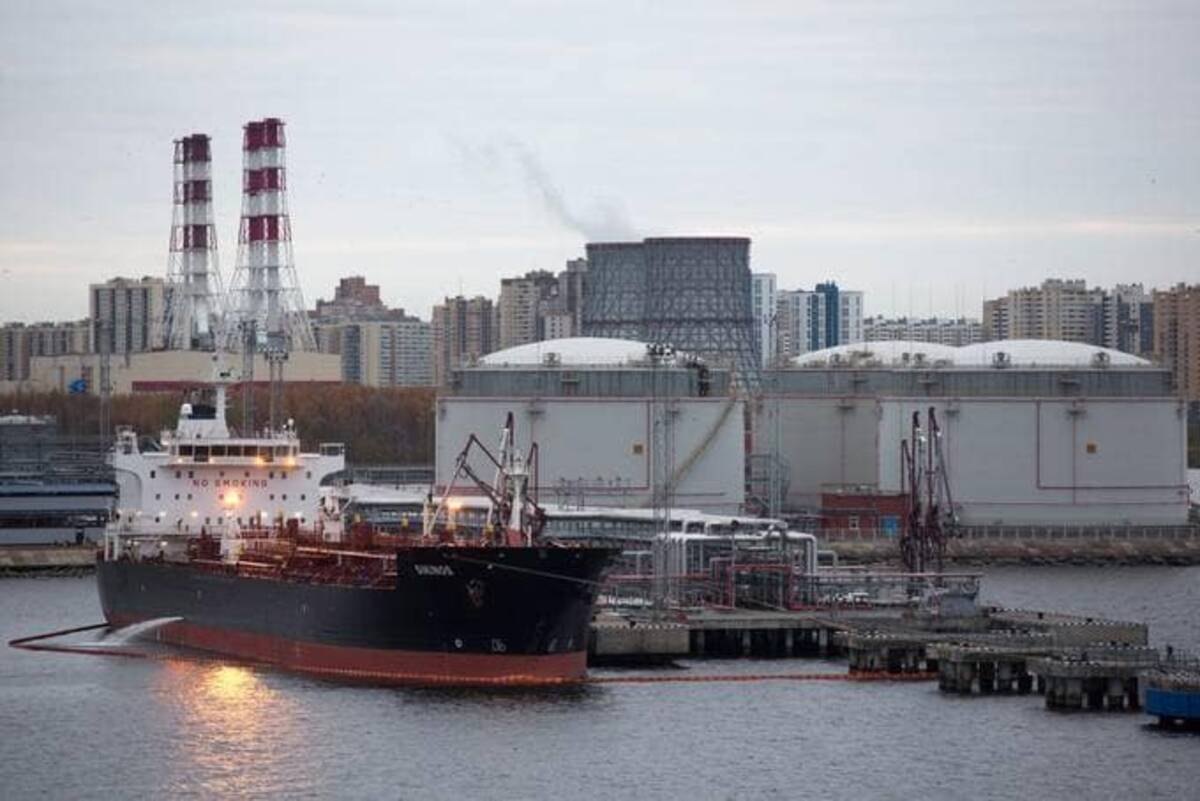 An oil tanker refuels in St. Petersburg. (Andrey Rudakov/Bloomberg News) | | | International Energy Agency member countries on Wednesday agreed to release 60 million barrels of oil from storage on top of the 180 million barrels the United States already announced it will release over the next six months, Timothy Gardner and Noah Browning of Reuters report. Executive Director Fatih Birol said in a tweet that the group of 31 member nations is "moving ahead with a collective oil stock release of 120 million barrels," including 60 million that were already released by the United States from the Strategic Petroleum Reserve. The massive releases are intended to ease rising gas prices and supply concerns amid the Russian invasion of Ukraine. The move marks the countries' second coordinated release in a month and would be the fifth in the agency's history. | Germany looks to boost renewable energy, cut Russian imports |  Wind turbines near a solar farm in Rapshagen, Germany. (Michael Sohn/AP) | | | The German government on Wednesday unveiled a package of reforms to boost the production of renewable energy as part of a push to meet its climate goals and to become independent of Russian energy imports, the Associated Press's Frank Jordans reports. The 600-page document that was approved by the cabinet outlines ambitious goals for the expansion of offshore wind and solar power. Europe's biggest economy aims to generate almost all of its energy from renewable sources by 2035 — more than doubling the current rate. | | |  | Viral | | |