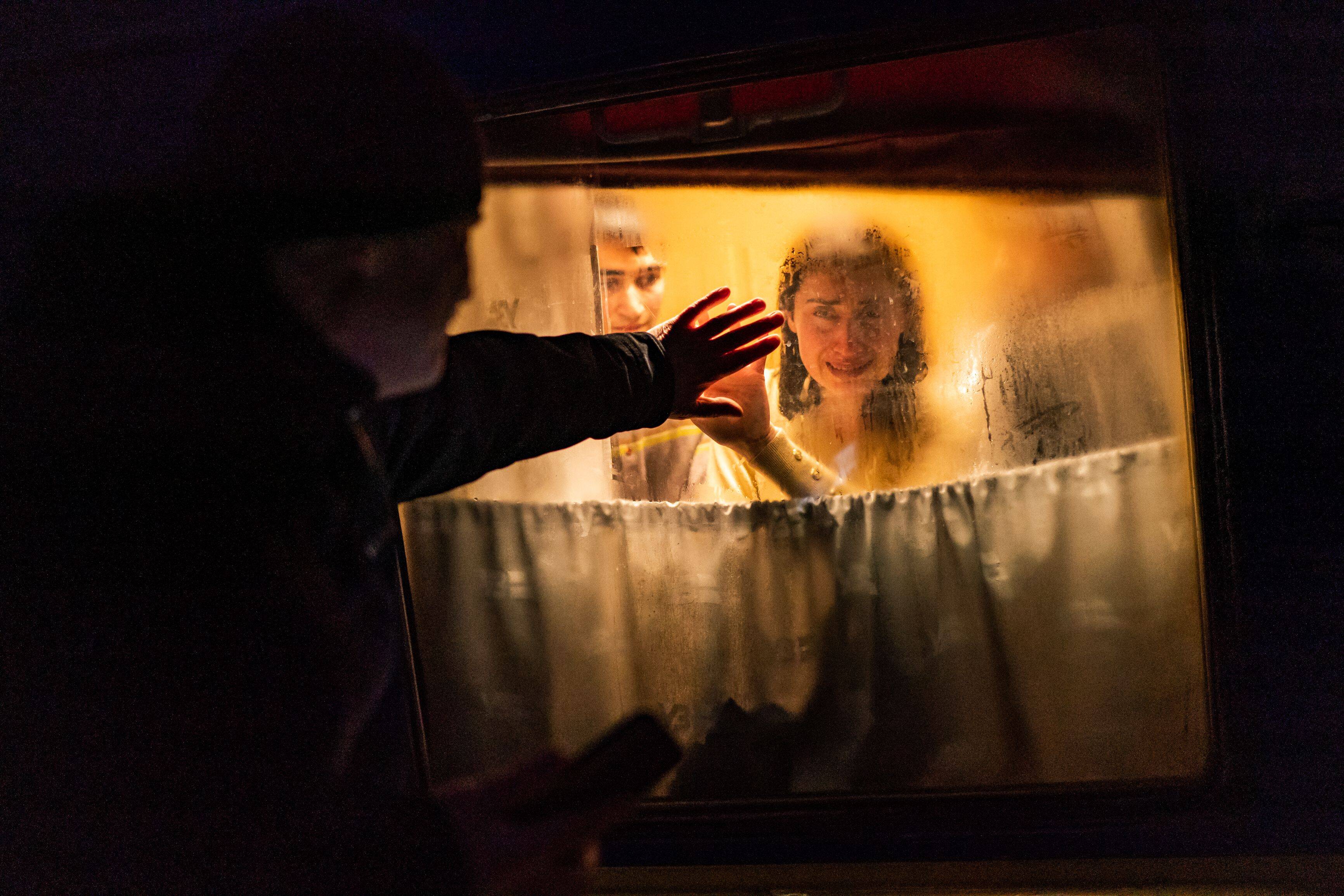
Behind the Story 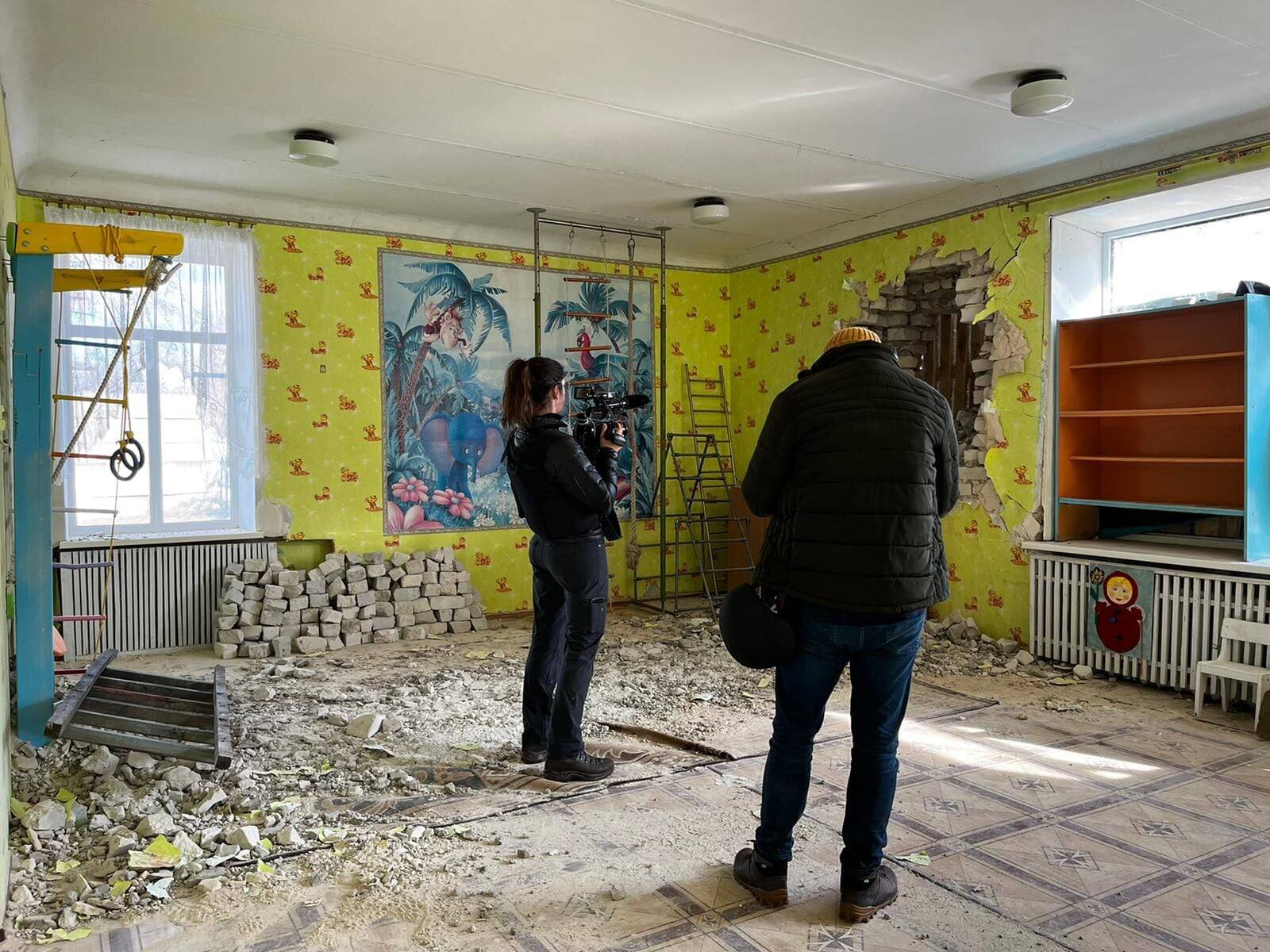 Whitney Leaming and Salwan Georges reporting in a kindergarten hit by artillery in Stanytsia Luhanska, eastern Ukraine, in February. | The Post has been covering the escalating war in Ukraine closely, with multiple correspondents based in Ukraine and other teams around the world covering developments 24/7. We spoke to Moscow correspondent Isabelle Khurshudyan, video journalist Whitney Leaming and staff photographer Salwan Georges. The three have been reporting together on the front lines of the conflict in eastern Ukraine. — Kanyakrit Vongkiatkajorn The situation has changed so quickly over the past few days. How do you decide which stories to focus on, and who goes where? Isabelle: You try to make a judgment, but it's so hard. It was one thing when the invasion hadn't started yet. Post-invasion, the situation changes so quickly. You have a plan to go to one place, then it's not accessible anymore because of the presence of Russian forces or shelling or how dangerous the roads are. We've organized it in a smart way, where we have a team of reporters in the west, a team in the capital, which is the center, and a group in the east. Any story we do, we can have all three areas covered and get those perspectives in. Whitney: Isabelle's institutional knowledge on Russia and Ukraine has been invaluable. She's taught me and Salwan so much. We had just checked into a hotel in the east and about five minutes later, she was like: "I think we need to go to Kharkiv, I think the invasion is closing in on us." We were in the car within an hour and driving up to Kharkiv. And two days later, we woke up to the invasion starting by bombings. Salwan, as a photographer, what are you looking for as you are out reporting? How are you deciding what to capture? Salwan: In every war, people are the victims, not the politicians or politics or whatever. As a former refugee myself and as a person who grew up in the war in the '90s in Iraq, I never wish it on anyone. But I can really connect with people and what they're feeling and how they're reacting. What I look for as a photographer is really showing the impact on humans. This is what breaks my heart. We went to this underground metro subway that was packed with hundreds of people — a lot of women and children, because men were volunteering to go fight. Being there was surreal. It was such a sad thing to see because it reminded me of fleeing Iraq. I hope all those people are okay because, again, in every war, people are always the victims — innocent people. And that's exactly what's happening in this war. You and other Post journalists have filed multiple dispatches showing how the crisis is affecting everyday Ukrainians. How are you approaching people in these situations, and how have they responded to you? Have they been open to sharing their stories? Whitney: We try to be very respectful of what people are going through right now. We approach them without the camera and talk to them for a few minutes. And a lot of people want to share their story. They understand the power of media, they understand the power of video and their own voices. We just try to explain who we are, what we do and that we aren't Russians. Isabelle: I am a fluent Russian speaker, which does really help. The other thing is, a lot of times I'm able to tell people that my family is from Odessa, Ukraine. I was the first person in my family born in the U.S. It's like, "My family's from Ukraine. Your story is my story, too." That doesn't mean I don't have professional distance, but I do think people are more willing to trust you in that situation, to know that you're not a total outsider, that you have some cultural understanding. I tell them that our job is to report about what's happening on the ground, to show what the effects of this are, to show people what's really happening. Salwan: You have to really respect people and not photograph them in their most vulnerable time. There's always a balance to making an impactful photo and not overstepping. So what I always try to do is to make a connection, smile, talk to them. And not just walk around, take pictures, and then go and leave and never think of these people — because these situations stick with me for the rest of my life. I think what plays to my benefit is me going through similar things, so I can totally understand and feel it. There's a lot of misinformation being spread about the conflict. In addition to your own on the ground reporting, how do you assess which sources to trust and how do you vet this information? Whitney: People we have met, we've stayed in communication with. For example, with the Freedom Square in downtown Kharkiv, which was the home of the territorial defense, there was a supply chain tent where people were gathering to go out on assignment and being trucked off to different stations to protect their city — [it] was hit with at least one bomb. A lot of these videos were coming over Telegram, and there's an amazing team back at The Post that works to verify these videos and lets us know which ones that they can say with great confidence are true. There's a Slack channel where Isabelle and I can share clips on Twitter and Instagram and they'll go through and try their best to see if it's verifiable. And we work with people on the ground — we had at least two people who could give us an idea of what was happening at the square. Isabelle, I heard that you recently turned 30 while you were in a bunker. Can you tell us about that? Isabelle: We were in Kharkiv, which had been pretty heavily hit. The local government put out a message that was like, "If you go outside today, police might mistake you for a Russian saboteur and shoot you." So we did as much reporting as we could without venturing too far out and most of the day was spent inside of the bunker. But it was nice. Salwan brought me a piece of cake from the breakfast buffet. The hotel gifted me a bottle of wine even though they're not supposed to be selling alcohol, and some of the freelance and other media celebrated with me. It's not how I envisioned spending my 30th for sure, but all things considered, I did feel really loved. And I honestly wouldn't want to be anywhere else right now. I think this is one of the few times, at least in my case, when you feel like what you're writing about is really, really important and you're doing a real service. So as difficult or as dangerous as it can be, it feels like a really great responsibility that you want to embrace. Read more: Behind the Story: How three Washington Post journalists are covering Ukraine on the ground | 



 Email
Email