 |  | | 435 districts, 50 states, one campaign newsletter. | | | | | | | In this edition: War in Europe meets the United States' immovable partisanship, Texas holds a whole bunch of elections, and swing state Republicans try to hand power for this one (and the next one) to their state legislative majorities. Finally, we're about to find out whether the state of the union is good or not. This is The Trailer.  Activists rally against Russia's war in Ukraine during a protest in Lafayette Square near the White House on Monday, in Washington. (Alex Brandon/AP) | ORLANDO — War can utterly transform domestic politics. Unpopular presidents discover new political capital as their critics rally around the flag. Issues that consumed Washington suddenly vanish as the city focuses on something real. Politicians who'd doubted that war would break out — or even defended the aggressor — are humbled or even purged. That's not how Russia's invasion of Ukraine is playing out — not so far. The most popular responses to the century's first ground war in Europe have been returns to safe political spaces. Republican have called for more drilling and fewer environmental regulations; Democrats have highlighted sympathies from the right that favor Russian President Vladimir Putin, and the Trump administration's quid pro quo approach to Ukraine. Politicians who regretted the rush to war in Iraq — or entered politics after the 2003 invasion — were more comfortable scoring points against their domestic enemies than discussing NATO's expansion or Russia's endgame. At the Conservative Political Action Conference, which unfolded in Orlando over the first four days of the war, discussions of "energy independence" got new urgency from the scenes in Ukraine; and the bravery of the Ukrainians resisting their invaders was celebrated not just as a patriotic act, but as inspiration for the people resisting lesser forms of tyranny — mask mandates, vaccine requirements, or Canada's Emergency Powers Act. Republicans put the blame for invasion on Putin, but shared it with President Biden. His withdrawal from Afghanistan, which happened on a slower timeline than the one Donald Trump had planned before leaving office, convinced dictators in Moscow and Beijing that they could go to war again without serious resistance from America, they claimed. Snap polling backed them up, with most Americans saying that they disapproved of how Biden was handling the new crisis after disapproving of how he handled the last one. "We were the barbarians, we were the rubes," former secretary of state Mike Pompeo told his CPAC audience on Friday, referring sarcastically to how the Trump administration was attacked by the foreign policy establishment. "Look pretty competent now." Conservatives had already been talking about Russia and Ukraine — whether they wanted to — for the better part of a decade. From the 2014 invasion of Crimea to the last minutes before the invasion of the rest of Ukraine, Putin earned a reputation among some conservatives — including Trump — as a masculine and unapologetic nationalist who was getting stronger as Western nations busied themselves with wokeness and gender theory. That attitude took a beating at CPAC. "Vladimir Putin is a nationalist Russian," British politician Nigel Farage, one of the key figures in uniting the Trump-led GOP with European nationalist parties, said at CPAC on Saturday. "He wants to get back — at least, I thought he wanted to get back — Russian-speaking areas into his country. When it comes to those two eastern provinces in Ukraine, well, they are Russian-speaking. I'd always thought that we were dealing with somebody who was actually very logical. But I now begin to wonder whether he is." Conservatives weren't alone in their confusion or their readjustment. The Democratic party's left wing had a complicated relationship with Russia and Ukraine, which started in 2016, when hackers repeatedly obtained emails from Hillary Clinton's campaign and the Democratic National Committee. Even after special counsel Robert S. Mueller III found that the hackers worked for Russian's GRU intelligence directorate, there was widespread skepticism on the left; Americans, some said, were being dragged into a proxy fight between a corrupt Kyiv and a nationalist Moscow. That speculation has continued since the invasion began, but with no buy-in from Democrats running for office this year. Democratic Socialists of America, whose membership includes both Rep. Rashida Tlaib (D-Mich.) and Rep. Alexandria Ocasio-Cortez (D-N.Y.) as members, released a set of statements on the invasion that called "for the U.S. to withdraw from NATO and to end the imperialist expansionism that set the stage for this conflict," arguing that "the ruling class is trying to build a new world, through a dystopic transition grounded in militarism, imperialism, and war." Neither Tlaib nor Ocasio-Cortez has echoed that sentiment; neither was part of a quickly-organized series of rallies, on Saturday, calling for an end to both the invasion and NATO expansion. Polling has found rock-bottom support for the idea of American forces fighting in Ukraine, but the Biden administration has ruled that out — and the electoral left has not embraced the position that socialists here and in western Europe are being attacked for. The candidates who are talking about Russia and Ukraine are more comfortable fitting it into a worldview they had before the crisis started. In a video statement, Rep. Thomas Suozzi (D-N.Y.), who's running for governor of New York, said confusingly that America must "hold Putin and the Russian Communist Party accountable" — Putin is not a member of the Communist Party — and called on the United States to "do everything we can to seize the properties of Russian oligarchs, both here in New York State and throughout the United States of America and the world." Republicans, including Rep. Lance Gooden (R-Tex.) and Rep. Don Young (R-Alaska), introduced bills that would make it easier for Americans to seize Russian property. Left-wing Democrats, wary of where saber-rattling could take the party, urged the political class to knock it off. "One civilization-ending threat wasn't enough?" tweeted Rebecca Parson, a DSA member running for Congress in Washington. "Now we have nuclear war on top of climate change? The ruling elites are incompetent fools." The response from Republican candidates was evolving every day, though nothing united the party like the argument that a hot war with a petrostate was a reason to finally deregulate energy exploration on the terms they'd wanted for years. After the invasion, Rep. Cathy McMorris Rodgers (R-Wash.) introduced the American Energy Independence from Russia Act, which would undo the Biden administration's climate policies and clear a new path for the on-again, off-again, on-again, off-again Keystone XL pipeline. The party's nationalist wing and its more interventionist wing were on board for that, with candidate after candidate arguing that energy exploration would defend the country from foreign surprises. "U.S. energy independence is more than a slogan, it's an indispensable economic tool in the arsenal of democracy," Ohio state Sen. Matt Dolan, who is running for the U.S. Senate, wrote in a column for the Columbus Dispatch. "The ability of American workers, industry and suppliers to export energy to allied nations helps them maintain freedom from the growing shadow cast by dictators like Xi Jinping and Putin." As the images from Ukraine rolled in, there was support for the country's heroism, and nearly as many attempts to link it to the causes already driving American politics. Scenes of Ukrainian civilians resisting Russian invaders looked, to some candidates, like a dramatization of why the Second Amendment was necessary. "Why do we need access to an AR-15? Turn on the TV," tweeted Mike Collins, a Republican candidate for Congress in Georgia. Former Rep. Mark Walker of North Carolina — a Republican who's now running for the U.S. Senate — had the same thought: "I find it interesting the left has gone silent on gun control measures as we witness Ukraine's attempt to have a well-armed militia playing out in real time." And as Senate Democrats proceeded with Monday's doomed abortion rights vote, Sen. Roger Marshall (R-Kan.) linked it to the battle for Kyiv. "At a time when Vladimir Putin is murdering Ukrainians," Marshall told Family Research Center president Tony Perkins, "my Democrat colleagues want to murder more unborn Americans." Republicans from the party's "America First" wing talked less about the lessons Americans might take from the conflict, and more about why Americans should be focused on it at all. "We have a regime that basically decided war on its own citizens, and we're about to probably lose the republic if we don't correct course," Florida state Rep. Anthony Sabatini, who's running for the U.S. House after the state finishes its new maps, told the American Conservative. "Any conversations about regional conflicts between nations on the opposite side of the world put forward by the media are mostly a way of distracting people and pushing back on the critical mass Americans are reaching right now in terms of trying to change our own government." Not many Republican candidates would go that far. But the idea that the conflict was a distraction, blundered into by Democrats who should be focused on national sovereignty, was everywhere on the right. "If the president is so focused on this border between Russia and Ukraine," said Texas Gov. Greg Abbott (R) at one of his final stops before today's primary elections. "He should be focused on the border between the United States of America and Mexico." There was no war between the U.S. and Mexico; but there could be politics, by other means. | | | Reading list 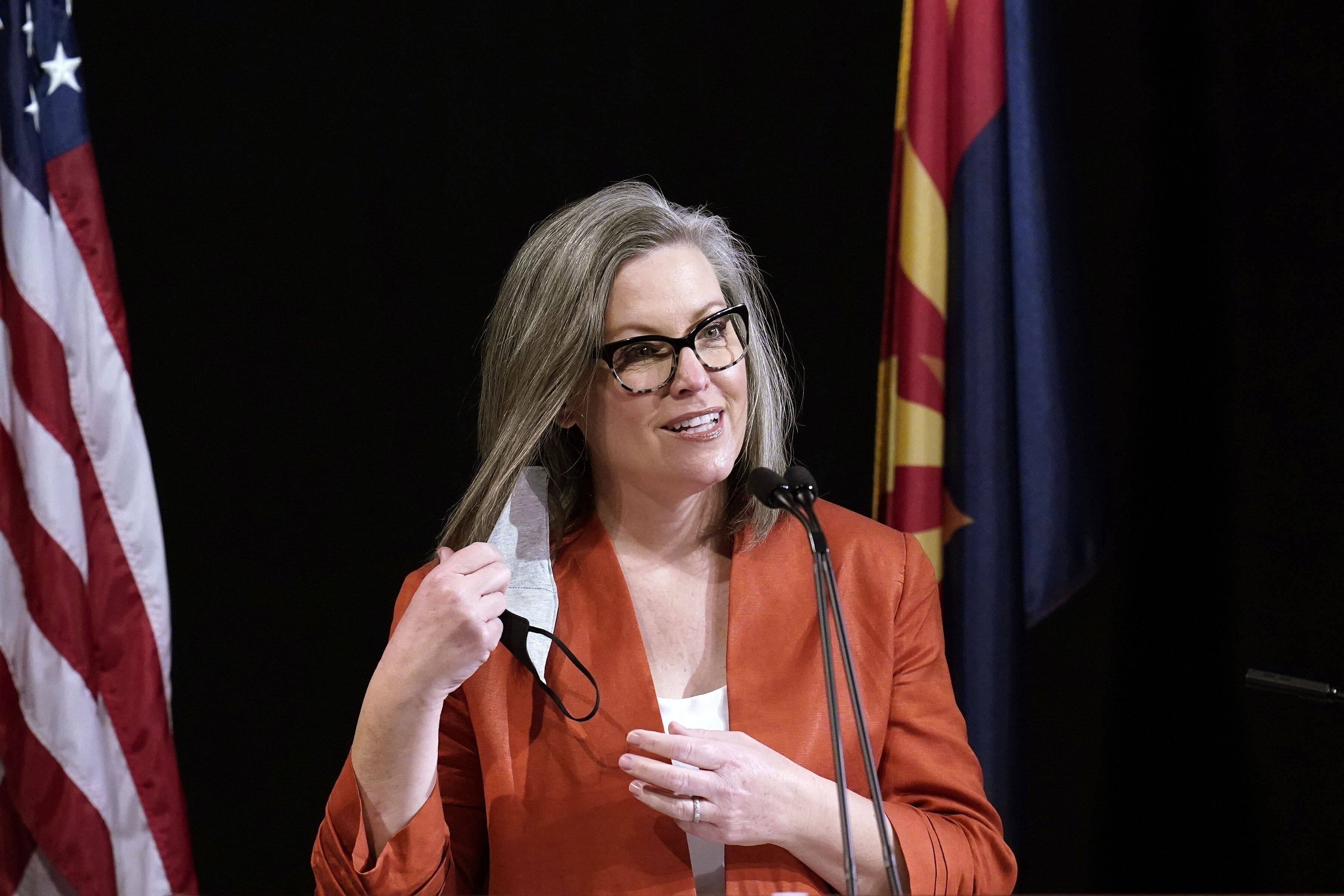 Arizona Secretary of State Katie Hobbs removes her face mask as she addresses the members of Arizona's Electoral College prior to them casting their votes, on Dec. 14, 2020, in Phoenix. (Ross D. Franklin/AP) | "Amid signs of low turnout, Texas rings the starting bell of the midterm primary season," by David Weigel and Michael Scherer An endangered Democratic congressman, a fight over Trump loyalty, and other things to watch today. "She defended democracy. Do voters care?" by Elaine Godfrey Arizona's Secretary of State runs for governor. "In Texas, a millennial's political ambitions could upend the career of one of the House's most conservative Democrats," by Mariana Alfaro Who is Jessica Cisneros, and why is she running for Congress again? "'Blood Red': How lopsided new district lines are deepening America's divide," by Shane Goldmacher Candidates sprint to the right in places Republicans designed to be impossible for Democrats. "How the West campaign was lost," by Christopher Hooks Inside a conservative challenge to Texas's conservative governor. | | | On the trail  The U.S. and Texas flags fly in front of high voltage transmission towers on Feb. 21 in Houston. (Justin Sullivan/Getty Images) | It's primary day in Texas, the first since the passage of new voting restrictions last year, and the first on new congressional and legislative maps that replaced most swing districts with safe seats. Those are some of the reasons turnout during early voting was fairly low, with 1.6 million ballots cast by 17.2 million eligible voters. Four years ago, Democrats surprised Republicans by surpassing their early vote total, powered by suburban turnout in the state's largest counties. Republicans grabbed back the advantage this year, casting more than a million early ballots as Democrats cast a bit less than 630,000. Republicans had more to vote for, and an effort to recruit new candidates in majority-Hispanic South Texas paid off. In two of the state's most populous border counties, Cameron and Hidalgo, Republicans blew past their total 2018 primary vote before early voting was over; in the third, El Paso, Republicans nearly matched the 2018 total with early votes alone. Here are seven races to watch, why to watch them, and what the vote patterns could tell us. The returns come in after 8 p.m. Eastern time in most of the state, and 9 p.m. in the state's western tip. Governor. Pollsters from both parties expect Gov. Greg Abbott and former Rep. Beto O'Rourke to win the Republican and Democratic primaries, respectively, with no need for runoffs. If there's a surprise, it's more likely to happen in Abbott's primary: Former state GOP chair Allen West and former state Sen. Don Huffines spent months campaigning against Abbott, though neither threatened his lead in public polls. Donald Trump's endorsement — a major theme in today's primaries, in this case of Abbott — gave the challengers less room to run in. Huffines represented part of suburban Dallas for a single term, from 2015 to 2019, but has no political base outside of there. West, who spent less than a year leading the party, is a conservative celebrity who raised nearly $2 million for the race, but like Huffines he was ignored by Abbott, who reminded primary voters that he'd mobilized National Guardsmen and resources behind a Texas border wall. O'Rourke has a few challengers, but has been widely endorsed and embraced by the party, and spent the early vote period crisscrossing the state with a special focus on the Rio Grande Valley. When he won the 2018 primary for U.S. Senate, O'Rourke lost most of the state's majority-Hispanic counties to candidates who ran shoestring campaigns but had Hispanic last names. Four years earlier, Wendy Davis won the party's gubernatorial nomination while losing some of the same counties. O'Rourke should win easily, but the margins and turnout outside the major urban counties will be revealing. Lieutenant Governor. Republican Dan Patrick, who's held this job since 2015, has used it to advance goal after conservative goal — from last year's abortion restrictions to limits on what the state's public universities are permitted to teach. In the middle of early voting, he announced another strike on "critical race theory" — a bill to revoke tenure from academics who teach it, and the end of tenure, period, for new hires. That approach has left Patrick with few challengers, and he polled comfortably above 50 percent in the last public poll of this race from the Dallas Morning News. The Democrats' primary is its first competitive race for the office in years, pitting 2018 nominee Mike Collier, who held Patrick to a single-digit win, against state Rep. Michelle Beckley and party activist Carla Brailey. Attorney General. Every Republican expects Attorney Gen. Ken Paxton to be forced into a May 24 runoff, including Paxton, who's been followed by scandal since his first victory eight years ago but shaken it off with the support of Donald Trump. Paxton, who sued over Joe Biden's 2020 victory in Pennsylvania and has defended Texas's controversial new restrictions on voting, abortion, and transgender rights, has avoided debates with his challengers; his ads portray two of them, Rep. Louie Gohmert and former state Supreme Court Justice Eva Guzman, as liberals playacting as conservatives. Paxton has said less about George P. Bush, the state land commissioner running against him in a long-expected attempt to move up the political ladder. Bush has outraised Paxton in some quarters, but Trump's early endorsement of the attorney general complicated every challenger's strategy — to argue that allegations of bribery and abuse of power against Paxton could throw the election to the Democrats. At campaign stops, Bush has cited Rep. Alexandria Ocasio-Cortez's (D-N.Y.) optimism that a "blue Texas is inevitable" to say that it will be, if Paxton wins. Every candidate is fighting for a runoff spot, with Paxton himself suggesting he won't crack 50 percent of the vote. Paxton has been running ads in Gohmert's East Texas base, where turnout was relatively high during early voting. Democrats struggled to raise money for their last campaign against Paxton, and none of the candidates on today's ballot spent much on the primary: Former Galveston Mayor Joe Jaworski led the field with around $200,000 raised and ACLU attorney Rochelle Garza raised around $100,000 after switching from a House race to this one. Civil rights attorney Lee Merritt raised a bit less; any of the three could get a runoff spot. Land Commissioner and Agriculture Commissioner. On the Republican side, both primaries will give Donald Trump chances to test, and probably boast about, the power of his endorsement. He's backed state Sen. Dawn Buckingham to replace Bush as land commissioner, and tapped incumbent Agriculture Commissioner Sid Miller over challengers hoping to take advantage of his weak fundraising and a scandal engulfing his chief strategist. 8th Congressional District. Eleven Republicans are on the GOP primary ballot, but the race that matters is between ex-Navy SEAL Morgan Luttrell and GOP strategist Christian Collins. In another year, Luttrell might have scared off the competition for this deep red district, after raising $2.2 million and campaigning alongside mentors like former governor Rick Perry and Rep. Dan Crenshaw (R-Tex.). Crenshaw even dismissed Collins as a "nice kid" whose "opinions change with the political winds," running against a man with hard-won experience defending America on the battlefield, in the Republican heartland of Montgomery County. But Collins has tried to channel hard-right frustration with the 2020 election into an insurgent campaign, attacking Luttrell for accepting a donation from Rep. Adam Kinzinger (R-Ill.), who has been sharply critical of Trump and joined the commission investigating the Jan. 6 Capitol riot. He campaigned alongside Trump allies Rep. Marjorie Taylor Greene (R-Ga.), Rep. Madison Cawthorn (R-N.C.), and MyPillow founder Michael J. Lindell. All of them supported the 2020 challenge to Pennsylvania's electoral votes, which factored into the Jan. 6 insurrection; all of them have warned that Luttrell would side with the party "establishment," as evidenced by Crenshaw's criticism of the "Stop the Steal" campaign. At a debate this month, Crenshaw immediately said that the election was "stolen," while Luttrell, pushed by moderator Lara Logan, said it was "taken from us." Luttrell is favored, but the long ballot and Collins's relentless earned media attacks could drag both candidates intro a runoff. 15th Congressional District. Republican Monica De La Cruz nearly won the old version of this seat in 2020, benefiting from a surge of Republican votes in South Texas, where the Trump campaign's vigorous in-person campaigning paid off. The GOP's House leadership, and Trump, are supporting De La Cruz and hoping she can avoid a runoff against Mauro Garza, a bar owner who's put some of his own money into a campaign. Democrats are less confident about dodging a runoff, even after Rep. Vicente Gonzalez (D-Tex.) endorsed veteran and third-time candidate Ruben Ramirez to replace him. (Gonzalez is leaving this McAllen-based district to run in the bluer 34th Congressional District next door, covering Brownsville.) Attorney John Villareal-Rigney, who loaned his campaign $300,000, has outspent his rivals, and business executive Michelle Vallejo picked up endorsements from former gubernatorial candidate Wendy Davis and Sen. Elizabeth Warren (D-Mass.) as she ran to the field's left. 28th Congressional District. The rematch between Rep. Henry Cuellar and immigration lawyer Jessica Cisneros gives the Democratic Party's wounded left wing its first chance this year of ousting a conservative Democrat, and replacing him with a "squad" member-in-training — albeit one who's talked less about left-wing issues in this race. In 2020, Cisneros surged and lost by fewer than 2,800 votes, out of nearly 75,000 cast, thanks to the same-day presidential primary: Voters who came out to support Sen. Bernie Sanders (I-Vt.) overwhelmingly opposed Cuellar. Cisneros doesn't have that advantage now, but Cuellar has limped through the campaign's final weeks, ever since FBI raids on his home and campaign office which he did not fully explain. "There was no wrongdoing on my part," Cuellar said in a video released after the raids — some of the last remarks he made in public, period, before the primary. His paid ads have talked up his family's roots in the district, and warned that Cisneros would support "open borders." Justice Democrats, the left-wing group that recruited Cisneros to run both years, pivoted its ad strategy after the raid to portray Cuellar as corrupt; polling had found that voters who were aware of the FBI raid broke decisively against him. Even though the new map made the seat slightly bluer, Republicans believe they could compete either against Cisneros or a weakened Cuellar: House staffer Cassy Garcia, rancher Ed Cabrera and retired cop Willie Vasquez-Ng have run the best-organized campaigns for that nomination. 35th Congressional District. The left is even more optimistic about this primary, because former Austin city councilman Greg Casar jumped in early and locked down labor support and endorsements from the likes of Sanders and Ocasio-Cortez. Polls have shown him comfortably ahead, though not at 50 percent, against state Rep. Eddie Rodriguez, who's argued not that Casar could lose the seat — Republicans drew it as one of two safe Austin districts — but that the ex-councilman jumped into battles over paid leave, homelessness, and police funding that backfired on Democrats. Rodriguez has lagged a little behind Casar in fundraising, and former San Antonio city councilwoman Rebecca Viagran has a shot at a runoff. Casar wants to prevent one from happening. | | | Ad watch  A new ad from Texas Attorney Gen. Ken Paxton. (YouTube) | Ken Paxton, "Eva Guzman: Too Woke for Texas." Texas's attorney general has only attacked his GOP primary opponents from the right, while they've been trying to make the race about Paxton's personal ethics. The only Paxton spot running against Guzman, who'd be the state's first non-White and first female attorney general, claims that she is more woke and liberal than she lets on. "She spent our tax dollars on a woke critical race theory summit that claimed our justice system is racially biased, and called for mandatory CRT training for every police officer," a narrator says — a reference to a 2016 summit on race and bias that Guzman was part of, generating zero controversy at the time. After a year of campaigns against "critical race theory," the summit is described as destructive racism, with one idea from the conference, an app that would teach children how to recognize bias, dramatized here by a child finishing a phone game and being informed that she's a racist. Monica for Congress, "Monica De La Cruz for Congress." Republicans are extremely bullish on De La Cruz's ability to flip Texas's 15th Congressional District, after she came close to doing it in 2020, and after a new map added more Republican precincts. Her closing primary ad looks like the spots statewide GOP candidates have been running for a year: De La Cruz walks along a border wall, stops where it runs out, and says that Democrats who don't want to protect America were responsible. "Joe Biden abandoned us, and our border, transforming our country with drugs, gangs, and violence," she says, as images for each problem float over the unfinished section of the wall. Morgan Luttrell for Congress, "Navy SEAL." Luttrell, a Republican veteran-turned-Trump-official-turned candidate, has emphasized his service since jumping into the primary for Texas's 15th Congressional District. His chief opponent, Christian Collins, has accused Luttrell of modeling himself after Rep. Dan Crenshaw (R-Tex.), another veteran with impeccable battlefield credentials, but one who doesn't always vote like Trump voters ask him too. This spot follows the Crenshaw model to a T: Luttrell is seen talking to an actor playing a news anchor, and when asked what separates him from the field, he experiences a flashback consisting of pulse-pounding military action. You are reading The Trailer, the newsletter that brings the campaign trail to your inbox. | | | | | | Poll watch 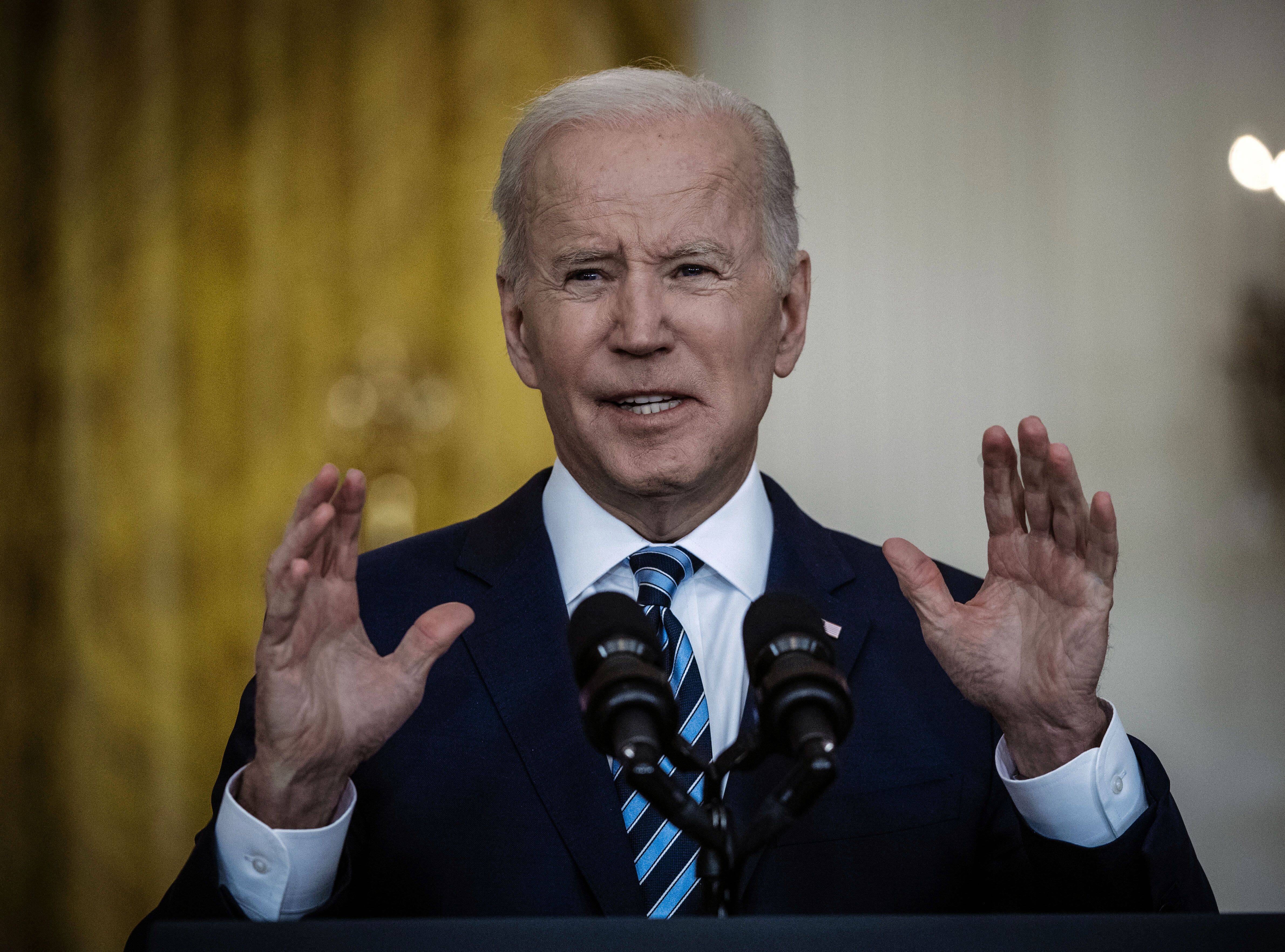 President Biden delivers remarks in the wake of Russia's invasion of Ukraine, in the East Room of the White House on Feb. 24. (Bill O'Leary/The Washington Post) | "Do you approve or disapprove of the way Joe Biden is handling his job as president?" (Washington Post/ABC News, 1011 adults) Strongly approve: 20%
Somewhat approve: 18%
Somewhat disapprove: 11%
Strongly disapprove: 44% The president headed into tonight's State of the Union address, his first, with some of the lowest approval ratings of his presidency. We've broken down the "strong" opinions here because they're telling: The intensity of opposition to Biden is twice as high as support for him, at this point mostly concentrated among registered Democrats and Black voters who remain heavily supportive of the party. "President Biden approved the deployment of thousands of troops to Eastern Europe to support U.S. allies in NATO, such as Poland and Romania. Do you support or oppose that decision?" (Quinnipiac, 1364 adults) Support: 70% (+16 since mid-February)
Oppose: 21% (-15) Public opinion of Russia's invasion of Ukraine has shifted quickly: Most voters are unhappy with how the president is handling the crisis, but more of them now support the deployment of troops to Ukraine's NATO-member neighbors. Twelve days earlier, a majority of voters approved of the decision, but Republicans remained skeptical of it by a 4-point margin. Since then, Russia did what the skeptics thought he wouldn't — invade Ukraine and attempt to capture Kyiv — and the mood's shifted in favor of intervention. Republicans now support the deployment by a 37-point margin, and most partisans and demographic groups are even more supportive. Just 11 percent of Democrats, down from 22 percent before the invasion, oppose what Biden did. The president's net disapproval rating has dropped, too, from 20 points to 15 points. | | | In the states Republican challenges to the 2020 election and to new maps for the 2022 elections unfolded in three swing states this week. In Wisconsin legislators received a report that suggested they could nullify Joe Biden's victory; in Pennsylvania and North Carolina, Republicans went to court to argue that maps drawn by judges should be thrown out in favor of maps drawn by their majorities in state legislatures. The "independent state legislature theory" was present in Wisconsin, too, with retired Judge Michael Gableman concluding his election probe by arguing the GOP-run legislature in Madison, "acting without the concurrence" of Democratic Gov. Tony Evers, "could decertify the certified electors in the 2020 presidential election." Doing so wouldn't "change who the current president is," wrote Gableman, but a process that other Republicans had ruled out was, he wrote, possible — so long as legislators concluded that nonprofit grants that were used to turn out votes in Democratic strongholds, and allegations of nursing home residents having their ballots filled in by other people, made the election's legitimate winner unknowable. "This would lead to decertifying the relevant electors, if the Legislature concluded that they were not the slate of electors that best accorded with the election if run consistent with all relevant Wisconsin laws in effect on election day," Gableman wrote. Democrats who'd attacked the probe at every stage attacked it again as Gableman delivered his report to the legislature. Wisconsin Attorney Gen. Josh Kaul, a Democrat running for reelection this year, called it a "full-throated attack on our democracy and a truly shocking example of the authoritarian mind-set at work." But in his own appearance before the legislature, Gableman emphasized other advice that came out of the investigation, such as replacing the Wisconsin Election Commission after it approved changes to the voting process in 2020. "Decertification is a political question," Gableman said. "If there were fundamental defects in the administration and conduct of an election, it's up to the legislature to advance that cause." The Republican lawsuits in Pennsylvania and North Carolina use the same reading of state and federal constitutions to argue that the state legislature has sole authority to draw maps for the 2022 election. In Pennsylvania, the suit brought by Republican congressional candidates argues that "any attempt by the state judiciary to usurp the Legislature's constitutionally assigned role must be disregarded by state officials" — which, taken a step further, would cut Democratic Gov. Tom Wolf out of the process. (Wolf's veto of maps that gave Republicans a clear advantage pushed the issue to state courts.) In North Carolina, Gov. Roy Cooper, another Democrat, has no role in redistricting, and is unable to veto maps from the GOP-majority legislature. The suit from the state's Republican legislators argues that the United States Supreme Court must throw out the maps that a panel of judges approved, because they never had authority to draw them — only the legislature did. "Without a stay, North Carolina's upcoming election will take place based on unconstitutional congressional maps," the plaintiffs argue. But as they point out, the delayed candidate filing period — pushed back by other complications to redistricting — ends on March 4, and an intervention after that would prevent the state from holding its 2022 elections on the current schedule. | | | Retirements 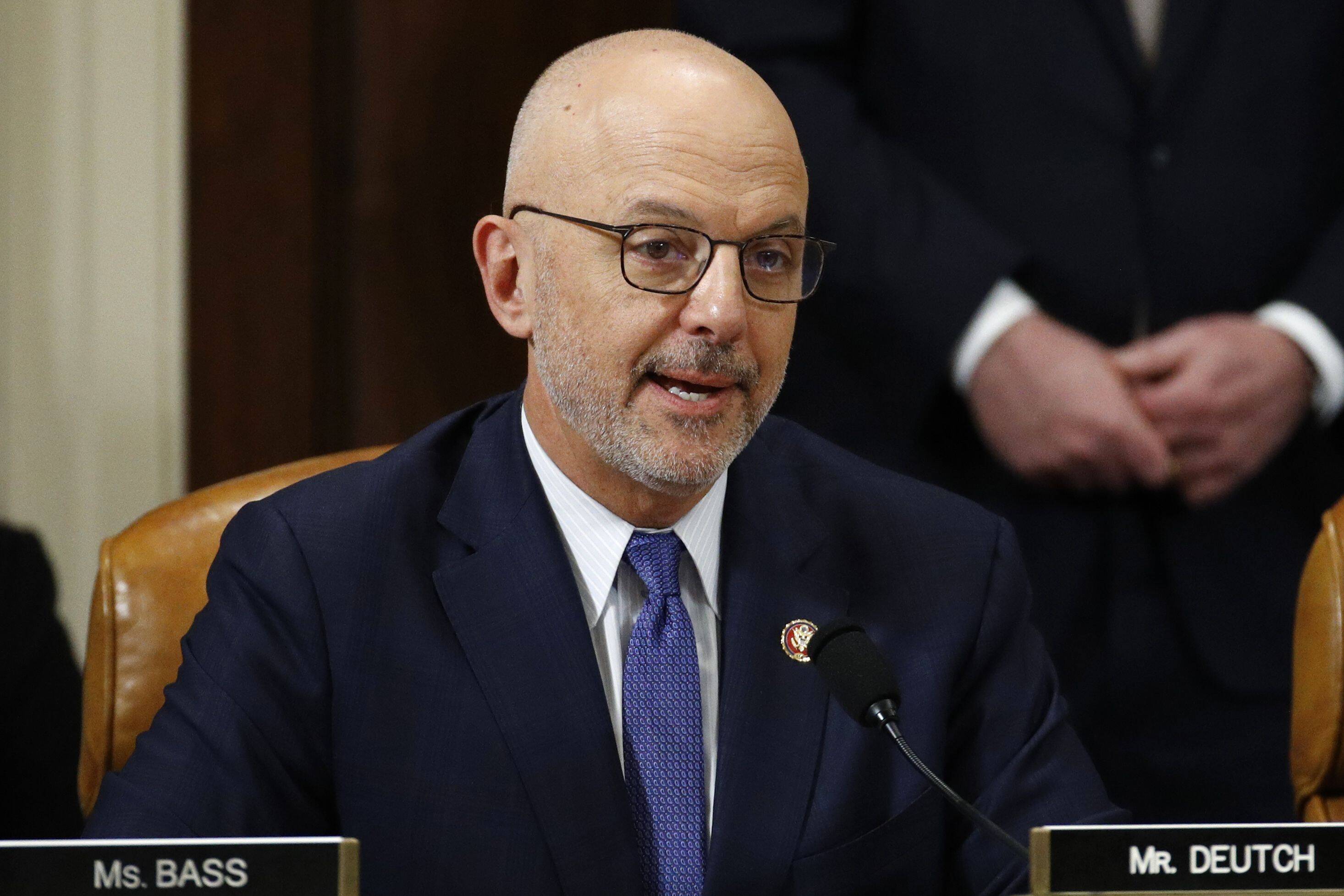 Rep. Ted Deutch (D-Fla.) speaks during a House Judiciary Committee meeting on Dec. 13, 2019, on Capitol Hill. (Patrick Semansky/AP) | Rep. Ted Deutch (D-Fla.) became the 31st House Democrat to announce an exit ahead of the 2022 election, confirming in a Monday statement that he'd leave to take over the American Jewish Committee. "This foreign policy work has been a natural continuation of my deep ties to the American Jewish community and my long-standing advocacy on behalf of the U.S.-Israel relationship," Deutch explained, referring to his work in the House. Deutch's district in Palm Beach and Broward Counties has been safely Democratic since it was drawn, voting for Joe Biden for 15 points in 2020 and for Hillary Clinton by 16 points before that; Democrats' 2020 losses in South Florida were starker in Miami-Dade County. The Republican-run legislature in Tallahassee hasn't approved a new map yet, but Democrats are wary of the GOP combining districts to shrink the party's delegation to D.C. Rep. Stephanie Murphy (D-Fla.) announced her own retirement last year, as Republicans looked for ways to increase their numbers in her part of central Florida. There's a synchronicity to this retirement: Deutch came to Congress in 2010 after Robert Wexler, who'd held another version of the seat, quit to lead the S. Daniel Abraham Center for Middle East Peace. | | | Countdown … 63 days until the next primaries
… 244 days until the midterm elections | | | | | | | | |


 Email
Email 
