| Happy Thursday! Know of any under-the-radar tech rulings by Ketanji Brown Jackson? Let me know: cristiano.lima@washpost.com. Below: Sanctioned entities are on social media sites, and Ukraine explains how it's using Clearview AI's facial recognition tool. First up: | Here's everything Ketanji Brown Jackson has said about tech at this week's hearings | 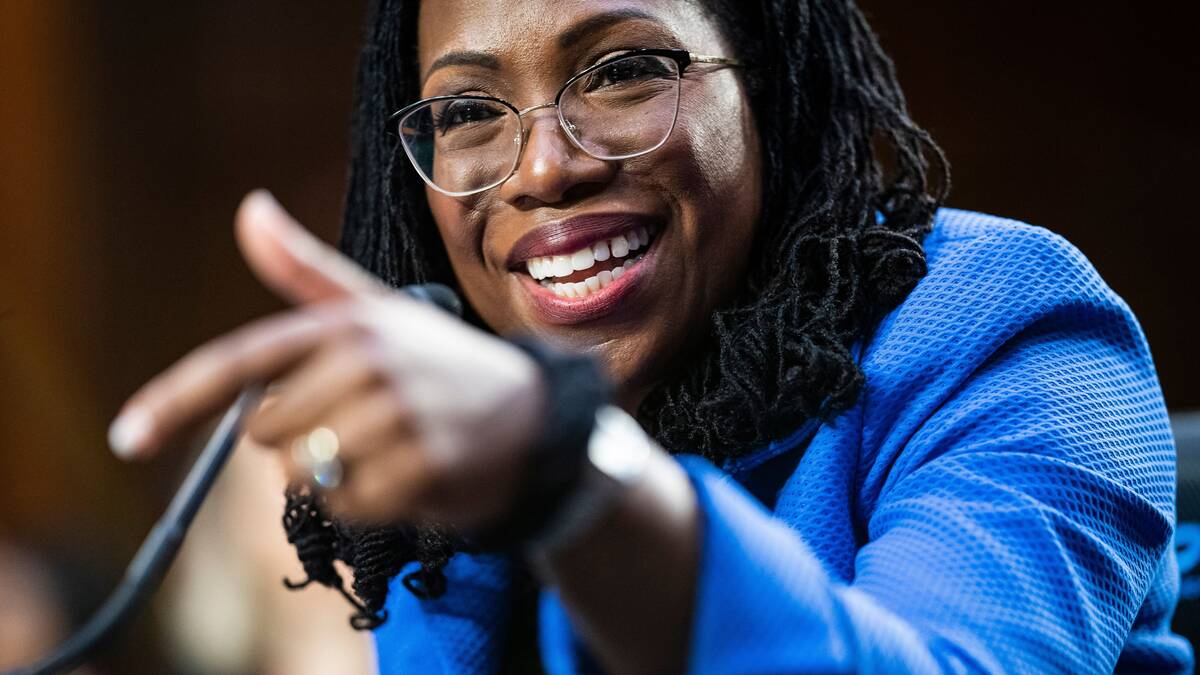 Supreme Court nominee Ketanji Brown Jackson testifies at a confirmation hearing before the Senate Judiciary Committee on March 23. (Jabin Botsford/The Washington Post) | | | Amid a barrage of questions this week about Supreme Court nominee Ketanji Brown Jackson's judicial philosophy, senators have found time to repeatedly press her about major technology debates, including around competition, content moderation and emerging technologies. While brief, Jackson's responses offer a rare glimpse into how President Biden's pick may approach an array of tech issues that are likely to eventually come before the court. The remarks are notable given that Jackson's most high-profile cases have had little to do with technology, leaving spectators wondering how she would factor into the high court moving ahead. Here's a rundown of the most prominent tech mentions at this week's confirmation hearings: | Should the Supreme Court seek out more tech expertise? | | Sen. Jon Ossoff (D-Ga.) asked Jackson how she'd approach seeking out expertise for cases involving "technologically complex questions," such as how to apply principles about the expectation of privacy to things like geolocation data from cellphones. | | Jackson said she thinks the "primary mechanism" for the court to get that technical expertise is through amicus briefs submitted by external experts with knowledge of the technology at hand. | Have the courts read antitrust law too narrowly? | | Sen. Amy Klobuchar (D-Minn.) raised concerns that the courts have interpreted U.S. antitrust laws too narrowly, particularly when it comes to the tech sector. Klobuchar said she thinks some judges have "substituted their own ideologies for the intent of Congress," and asked Jackson how much Congress's intended meaning should matter. Jackson replied that the "courts are not policymakers and judges should not be importing their own policy preferences," and they are constrained from doing that so that they can "affect the will of Congress in terms of their interpretation of the laws." The remarks arrive as lawmakers push for legislation to crack down on the conduct of the tech giants, which they argue aren't being fully addressed under existing law, and as federal and state regulators pursue antitrust cases against the companies, which have run into hurdles in the courts. "Judge Jackson affirmed that antitrust laws are meant to protect the vibrancy of our economy. … I am confident Judge Jackson will consider antitrust cases thoroughly and thoughtfully," Klobuchar told The Technology 202 after Wednesday's hearing. | Jackson chimed in on the Section 230 debate | | Sen. Mike Lee (R-Utah) asked Jackson about Section 230, the decades-old liability shield that protects digital services from lawsuits for hosting and moderating user content. Lee asked Jackson whether Congress would have the power to make those protections contingent on tech platforms operating as "a public forum that is not discriminating on the basis of viewpoint." Republicans have introduced bills to do just that in a bid to address what they call bias by tech companies. Jackson responded that she couldn't comment on whether a particular issue is constitutional or not, but stated that the government "seeking to regulate along viewpoint lines" is "generally impermissible." Some spectators interpreted the remarks as a rejection of GOP proposals to condition the protections around viewpoint discrimination, but one expert didn't see it that way. "Her answer was basically restating a fairly uncontroversial portion of First Amendment law that we can't have viewpoint discrimination, so I don't think there's all that much to read into how she would rule in a case like that," said U.S. Naval Academy law professor Jeff Kosseff, a Section 230 expert. | | Kosseff said it was unsurprising Jackson gave an uncontroversial answer given that it's "increasingly likely" that the Supreme Court will look at a case related to the liability protections down the line. Justice Clarence Thomas has been clamoring for the court to take up the issue. "It was pretty remarkable that Section 230 even came up at a Supreme Court confirmation hearing, in part because it's something that the Supreme Court has never interpreted before," he told me. | Jackson on the challenges of applying old laws to new tech | | Several senators asked Jackson how the courts should apply aging statutes to cases involving modern technologies that were not around when the laws were passed. Sen. Richard Blumenthal (D-Conn.), who has introduced bipartisan legislation to boost protections for children online, asked Jackson whether it's helpful to the courts if Congress updates existing laws to account for "technological change." Jackson replied that "to the extent that Congress undertakes to make amendments and make the changes, I think it helps courts, maybe there will be fewer disputes, or easier disputes to resolve." Jackson cited her work in a case dealing with royalties for digital recording devices, which had changed significantly since the relevant statutes were crafted. Jackson said her focus while interpreting the case was figuring out "what Congress intended this statute to cover." | | |  | Our top tabs | | Social media accounts linked to sanctioned entities operate largely unfettered | 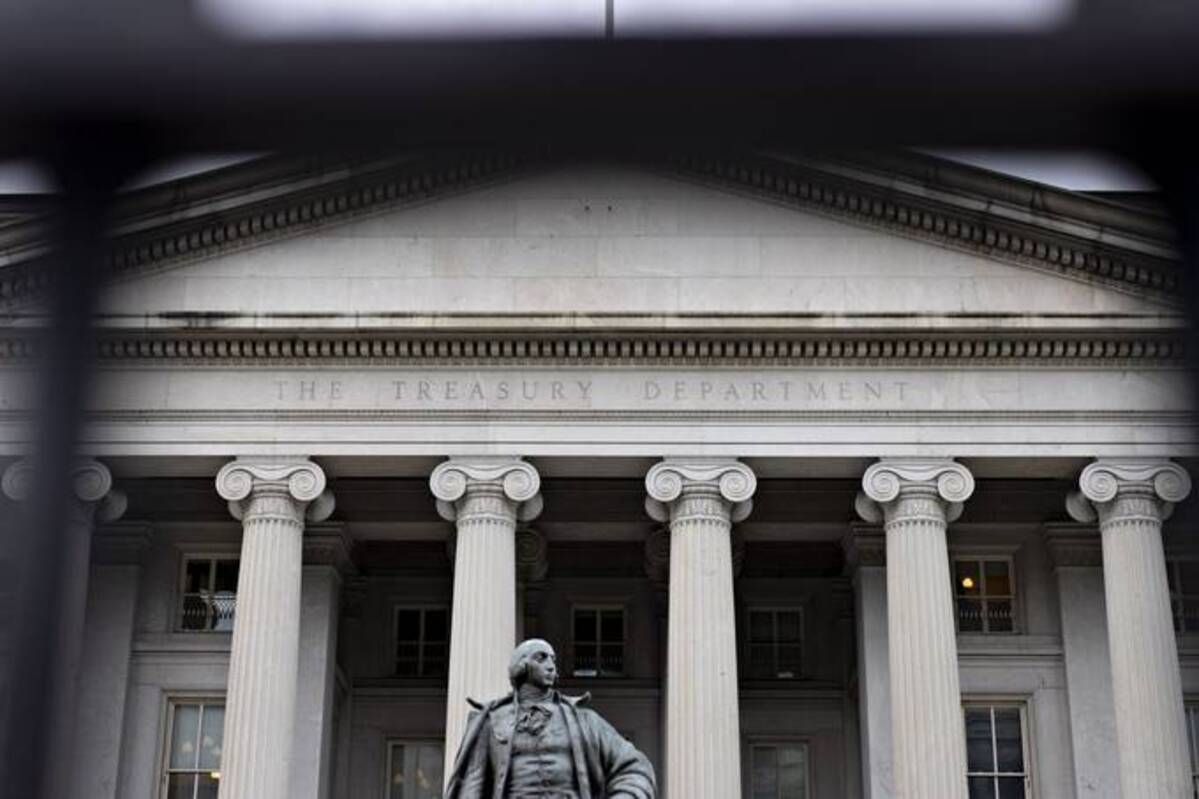 Despite being sanctioned by the U.S. government, some entities are active on social media. (Andrew Harrer/Bloomberg News) | | | Individuals sanctioned by the U.S. government appear to have active Twitter accounts, and at least two had YouTube accounts that the company removed Wednesday, Cat Zakrzewski reports. Social media companies have for years faced questions about what limits they should impose on controversial or even sanctioned leaders, but those questions are even more urgent in wartime. "More than a dozen YouTube and Twitter accounts tied to individuals and entities on the sanctions list espouse many of the same talking points as state-baked websites like Sputnik and RT, largely unfettered," Cat writes. "Unlike other sensitive content, there are no labels that identify these accounts as being tied to sanctioned entities." Sanctions experts say the U.S. government hasn't clarified the actions that tech companies have to take to remove accounts or posts from people on the U.S. sanctions list, creating a legal gray area. Twitter did not respond to a request for comment. YouTube disabled several accounts identified by The Washington Post on Wednesday. "Google is committed to compliance with all applicable sanctions and trade compliance laws. If we find that an account violates our Terms of Service or our product policies, we take appropriate action," YouTube spokeswoman Ivy Choi said. | Ukraine says it's using Clearview AI to identify dead Russian soldiers | 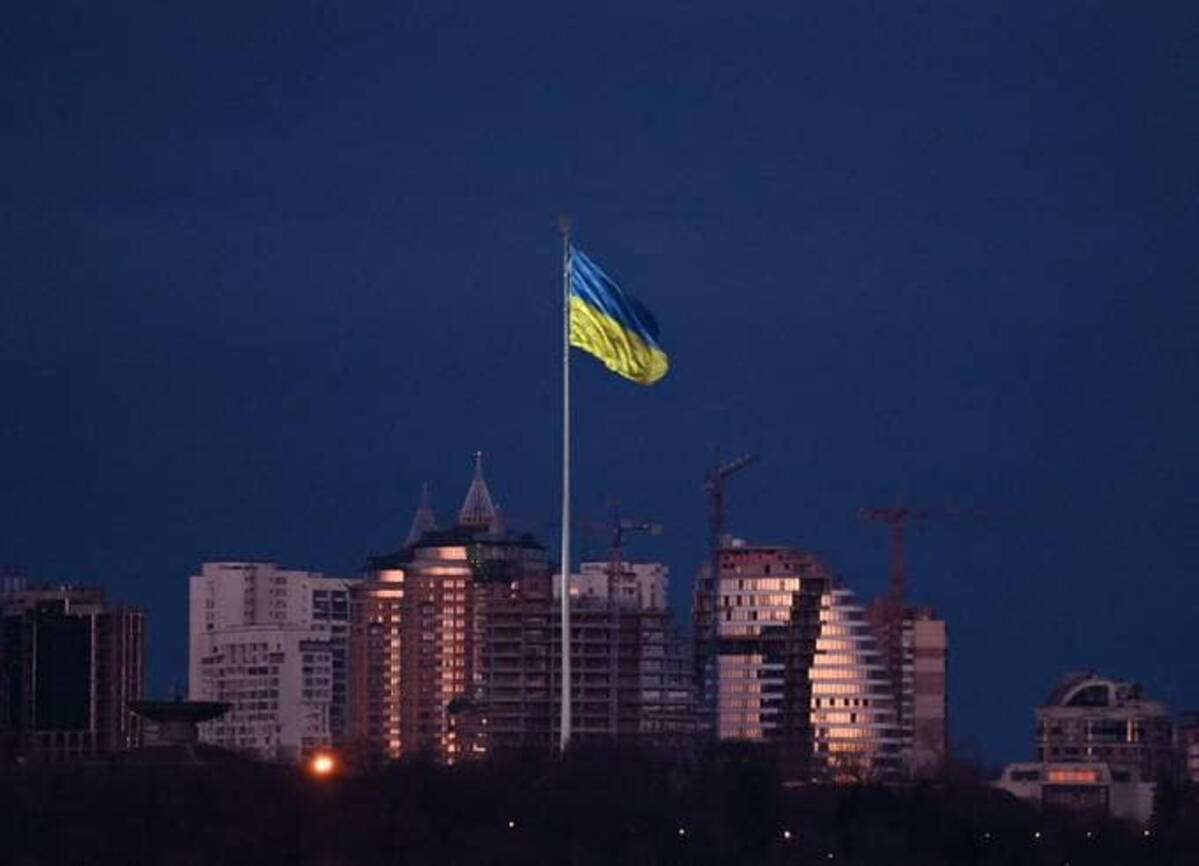 Ukraine says it will tell dead Russian soldiers' relatives about what happened to them. (Genya Savilov/AFP/Getty Images) | | | Ukraine is using technology from the firm Clearview AI so it can tell dead soldiers' relatives that they were killed in the war, Forbes's Thomas Brewster reports. Clearview this month said Ukraine was using its technology, but that hadn't been confirmed by Ukrainian authorities. Skeptics say the technology could backfire. "When facial recognition inevitably misidentifies the dead, it will mean heartbreak for the living," Surveillance Technology Oversight Project founder Albert Fox-Cahn told Forbes. Clearview AI chief executive Hoan Ton-That said the opposite would be true. "War zones can be dangerous when there is no way to tell enemy combatants apart from civilians," he told Forbes. "Facial recognition technology can help reduce uncertainty and increase safety in these situations." | Israel rejected Ukrainian request to get NSO spyware over Russia fears |  Israeli authorities blocked the licenses over fears about how Russia would react. (Sebastian Scheiner/AP) | | | The country is believed to have asked for the powerful spyware as far back as 2019, but Israel's Defense Exports Controls Agency blocked such licenses, Craig Timberg, Stephanie Kirchgaessner, Souad Mekhennet, Ellen Nakashima and Shane Harris report. Officials were concerned that the Kremlin would see such a purchase as an escalation by Ukraine. "Concerns about Russian reaction also affected NSO's dealings with Estonia, a member of NATO," people familiar with those actions told our colleagues. "According to these people, NSO had licensed Pegasus to Estonia, which achieved independence from five decades of Soviet rule in 1991 and is known for its aggressive counterintelligence measures against Russia, but the company later imposed restrictions on the spyware's use." It's not clear what those restrictions look like, though Estonia can't target Russian phone numbers with the spyware. NSO Group, when given a detailed list of questions, said in a brief statement that the company "continues to be subjected to inaccurate media reports regarding alleged clients, which are based on hearsay, political innuendo and untruths." Ukraine's Deputy Prime Minister Mykhailo Fedorov declined to confirm that Ukraine sought NSO's Pegasus spyware. "The government of Israel is at this time not participating in any discussion or facilitation regarding offensive tech, but we have ongoing conversations with a lot of the Israeli companies in the market and they're at various stages," he said. | | |  | Rant and rave | | | Instagram has launched a long-awaited reverse chronological timeline. Our colleague Taylor Lorenz on a piece written by BuzzFeed News's Katie Notopoulos: | | Big Revolution's Martin SFP Bryant: | | KTLA-TV Channel 5 in Los Angeles tech reporter Rich DeMuro: | | |  | Inside the industry | | | |  | Agency scanner | | | |  | Workforce report | | | |  | Mentions | | - Airbnb is joining Technet as a new member. The company is the 10th member that Technet has added this year.
| | |  | Daybook | | - Facebook whistleblower Frances Haugen and White House Office of Science and Technology Policy assistant director Suresh Venkatasubramanian speak at MIT's Social Media Summit on March 31.
| | |  | Before you log off | | | That's all for today — thank you so much for joining us! Make sure to tell others to subscribe to The Technology 202 here. Get in touch with tips, feedback or greetings on Twitter or email. | |


