| Welcome to Thursday's Health 202, where we're thinking about this quote from "Veep": "Well now it's time for me to punch a clock — with a hammer." (Wondering why? Read on to find out.) Today's edition: The House passed a long-term deal to fund the government. At least three people were killed, including a child, in a Russian airstrike on a maternity hospital, another grim moment in the escalating conflict. But first… | Getting more coronavirus funds just got a lot harder for Democrats | 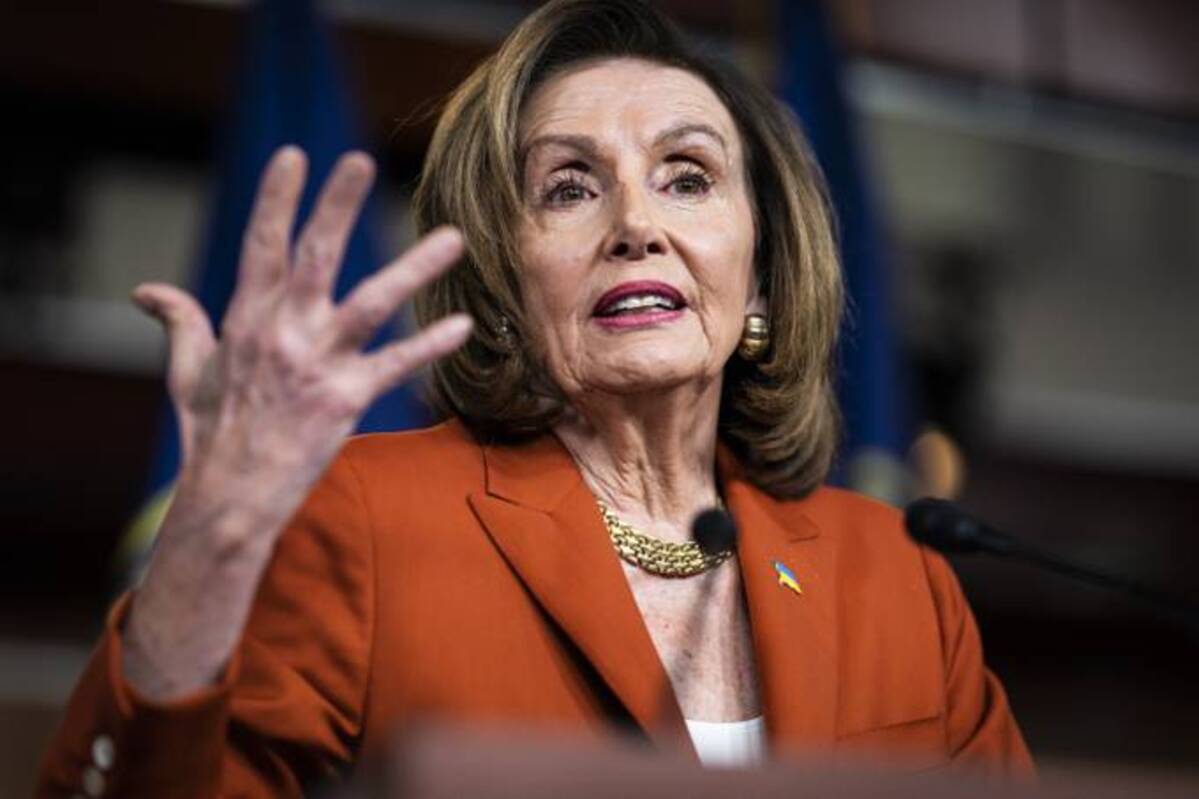 House Speaker Nancy Pelosi removed additional coronavirus funding amid lawmaker disputes. (Photo by Jabin Botsford/The Washington Post) | | | Congress passed a bill last night to fund the government – without billions of dollars to combat the pandemic. That means lawmakers have lost their clear pathway to deliver the additional coronavirus funds the White House says are urgently needed. The effort is a stunning turnabout after congressional negotiators worked for weeks to hash out a deal to quickly get $15.6 billion for vaccines, therapeutics and global pandemic efforts to President Biden's desk. The White House warns it needs new money immediately to "avoid severe disruptions" to the country's pandemic response. The state of play: | - In recent weeks, Republicans demanded that the new coronavirus aid be paid for in full, such as by drawing from state and local pandemic funds.
- That resulted in a bipartisan deal released early Wednesday to source $7 billion from an existing pot of pandemic money for state and local governments, our colleagues Tony Romm and Marianna Sotomayor report.
- But some Democrats were upset over the decision, contending their governors and state legislators were counting on the funds.
- Democratic leaders ultimately removed the coronavirus funding from the broader spending package on Wednesday afternoon, a move House Speaker Nancy Pelosi called "heartbreaking."
| | The Post's Tony Romm | 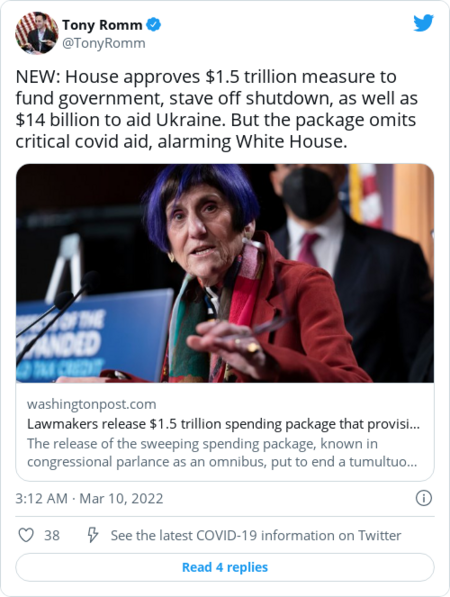 | | | | | Now Democrats are aiming to pass more coronavirus funding as a stand-alone piece of legislation next week. | | After Pelosi stripped the coronavirus aid out of the spending bill, Democrats released a revised version of the pandemic aid legislation. It's virtually the same as before but without repurposing the controversial state and local funds. That means the legislation isn't fully paid for, and there are no plans as of now to find an offset to replace the $7 billion in state and local aid, a senior Democratic aide told The Health 202. That's a problem in the Senate, where at least 10 Republicans would have to support the measure. It's much easier to get legislation passed in Congress when it's attached to a larger package — and that leverage is now lost. | - "I don't know which Republicans would jump on the hand grenade to do that when we had a good deal," said a senior GOP aide, who spoke on the condition of anonymity to be candid. The aide emphasized that the party wants more transparency into how existing dollars have been spent.
| | Early warning signs: The GOP had already expressed wariness over giving the Biden administration more dollars for its pandemic response. Three dozen Republicans argued in a letter last week that they first wanted a full accounting of how the government has spent the previous $6 trillion in aid. | | The White House has been pleading its case for $22.5 billion in new covid–19 funds. The Department of Health and Human Services recently sent Congress tables, obtained by The Health 202, showing that none of the dollars Congress previously provided the agency remain unallocated. That goes for all spending categories, such as money for vaccines, therapeutics and testing. | - "Without money, the medicine cabinet is out," a senior Biden official told The Health 202. "We've been shipping out whatever we get."
| | Last week, White House press secretary Jen Psaki outlined what the administration believes is at stake. | - By May, the current supply of monoclonal antibodies — a coronavirus treatment — will be out of stock. By September, the supply of oral antivirals could run out if more pills aren't purchased now. Within weeks, testing supplies could drop without more dollars.
| | But the immediate funding request may be just the tip of the iceberg. The White House recently unveiled a sweeping road map charting the next phase of its pandemic response. Yet, the plan is contingent on new dollars from Congress. Jeff Zients, the White House coronavirus response coordinator, was clear last week: The administration will need to work with Congress "in the weeks" ahead for even more funding. | That government funding bill | | The House passed the sweeping, roughly $1.5 trillion spending package late last night. The bill now heads to the Senate, where the chamber must approve it before midnight Friday to avoid a government shutdown. The package included increased funding for HHS, the National Institutes of Health and the Centers for Disease Control and Prevention. And it adds more money into long-standing bipartisan priorities, like combating the opioid epidemic and addressing the country's mental health crisis. | | Craig Caplan, C-SPAN | 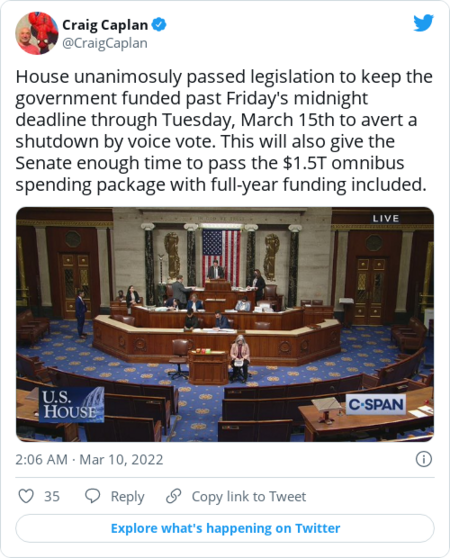 | | | | | |  | Global health | | Ukraine maternity ward bombed in the latest attack on health facilities | 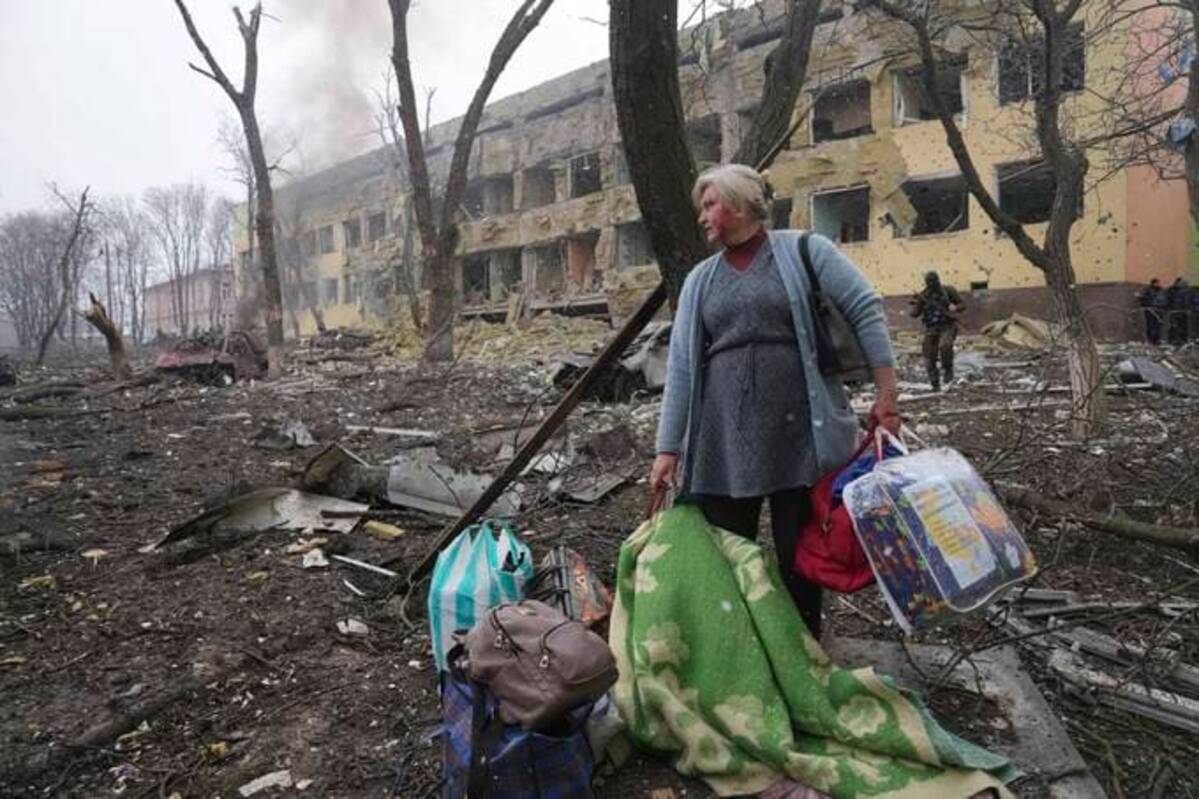 A woman walks outside a maternity hospital that was damaged by shelling in Mariupol, Ukraine, on Wednesday. (Evgeniy Maloletka/AP) | | | At least three people, including a child, were killed in a Russian airstrike on a maternity hospital in the southern port city Mariupol, The Post reports. Here's what we know: | - The attack buried patients under rubble despite a cease-fire for people to evacuate the city.
- The airstrike occurred after the World Health Organization announced it has so far verified 18 attacks on health facilities since the conflict began.
| | Key context: The shelling began hours after the Russian government said it would allow the evacuation of civilians from five Ukrainian cities, including Mariupol, according to state media. | - But still … Ukrainian officials were hesitant to trust the temporary cease-fire announcement after they accused the Russian military of firing on safety corridors used by civilians to flee hard-hit cities four days in a row.
| | The attack comes as NATO resists increasingly loud calls from the Ukrainian government to impose a no-fly zone over the country, which officials fear could further provoke Russian President Vladimir Putin. | - "They know we can't go there," House Speaker Nancy Pelosi (D-Calif.) said after talking on the phone with Ukrainian President Volodymyr Zelensky following the airstrike.
| | More than 2 million people have fled Ukraine since Russia began its invasion almost two weeks ago in a conflict that has already killed more than 400 civilians, according to the United Nations. | | Volodymyr Zelensky, president of Ukraine: |  | | | | As businesses leave Russia, drug companies remain | | At least 320 companies are exiting Russia as its invasion of Ukraine intensifies, but some U.S. and global drug companies who are exempt from sanctions are sticking around to manufacture and sell products, Kaiser Health News reports this morning. Drugmakers, medical device manufacturers and health-care companies contend that humanitarian law requires they keep supply chains open, as Russians will continue to need access to medicines and medical devices during the conflict. | - Pharmaceutical companies Novartis, Abbott and Johnson & Johnson are among those who will remain.
| | But their decision to stay has drawn criticism by some who argue that the major drug companies' interests are rooted in their investments in Russia's sizable pharmaceutical complex and the country's attractive research market that offers relaxed standards for clinical drug trials. | | |  | On the Hill | | | New in The Health 202: ARPA-H to get a legislative hearing in the House. There's more movement for Biden's proposal to create an agency to speed up medical breakthroughs. Rep. Anna Eshoo (D-Calif.) — who chairs the House Energy and Commerce health subcommittee — said in an interview that her subcommittee would hold a legislative hearing next week on her bill to create the new agency, as well as on Cures 2.0. This comes after the government funding package included $1 billion to establish the new Advanced Research Projects Agency for Health — which Eshoo said in an interview was "more than a great launching pad." There has been a lingering debate over where to house the new agency. Eshoo wants it to be its own entity within HHS. The spending bill would establish the agency under the HHS Office of the Secretary, but grant the ultimate power over where to place ARPA-H to the department's secretary. Meanwhile, two influential senators are slated to introduce a proposal soon on creating the new agency. | A debate as regular as clockwork | 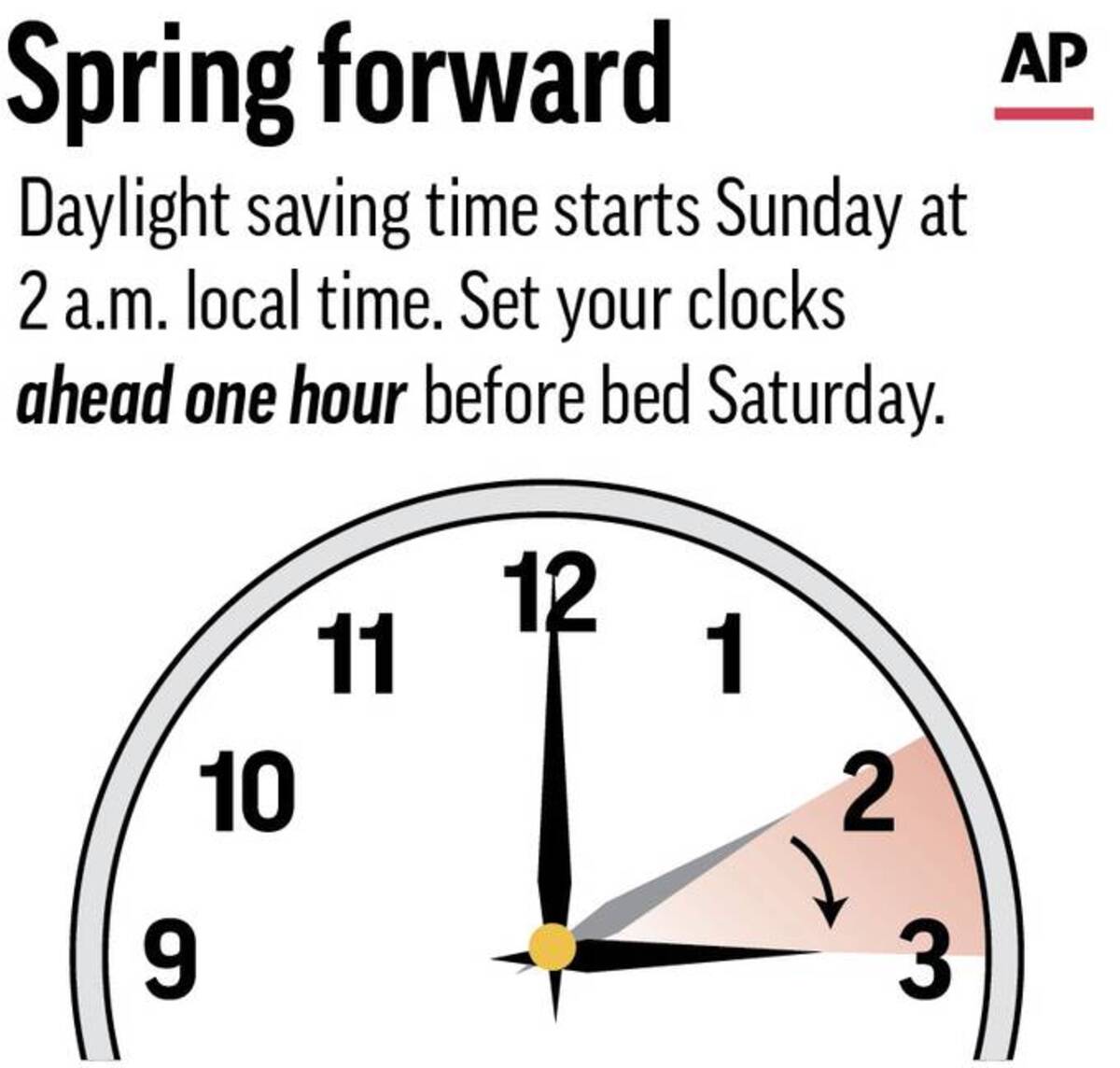 People in parts of the United States that observe daylight saving time will set their clocks ahead this weekend as the country switches from standard time. (AP) | | | A congressional panel convened yesterday to debate whether the nation should ditch its "spring forward" or "fall back" daylight saving policy. As our colleague Dan Diamond writes, "most agreed it was about time." | - Why it matters: Experts say that shifting the clocks twice per year hurts sleep, is linked to cardiac problems, and presents other health and public safety risks because the switch disrupts people's sleep cycles.
| | However, experts at the House Energy and Commerce subcommittee hearing were divided over how to solve the problem. One camp advocates for permanently adopting daylight saving time to maximize light in the early evening, while others argue for a keeping standard time year-round because moving the clocks earlier throws off the body's natural responses to light. | - "Over the years, the science continues to get clearer that sleep is vital for our health and well-being," said Rep. Frank Pallone Jr. (D.-N.J.), the panel's chair. "I haven't decided yet if I want daylight or standard, but I don't think we should go back and forth."
| | |  | Coronavirus | | | Here's what else you need to know: | - Pfizer announced that it has begun a Phase 2 and 3 clinical trial for its covid-19 treatment Paxlovid in children ages 6 to 17.
- Global watch: The Americas have reported 63 percent of the world's new known coronavirus cases this year, despite making up less than 13 percent of the world's population, WHO officials said Wednesday.
- Meanwhile, in the world of sports: Unvaccinated tennis player Novak Djokovic will be ineligible to compete in upcoming tournaments in California and Florida because of CDC regulations that prevent non-U.S. citizens who aren't fully vaccinated against the coronavirus from landing on American soil, The Hill reports.
| | |  | Sugar rush | | | We're returning to work in person at the The Washington Post headquarters next week! Check out Dave Jorgenson's remote tour of our office: |  | | | | | Thanks for reading! See y'all tomorrow. | |


