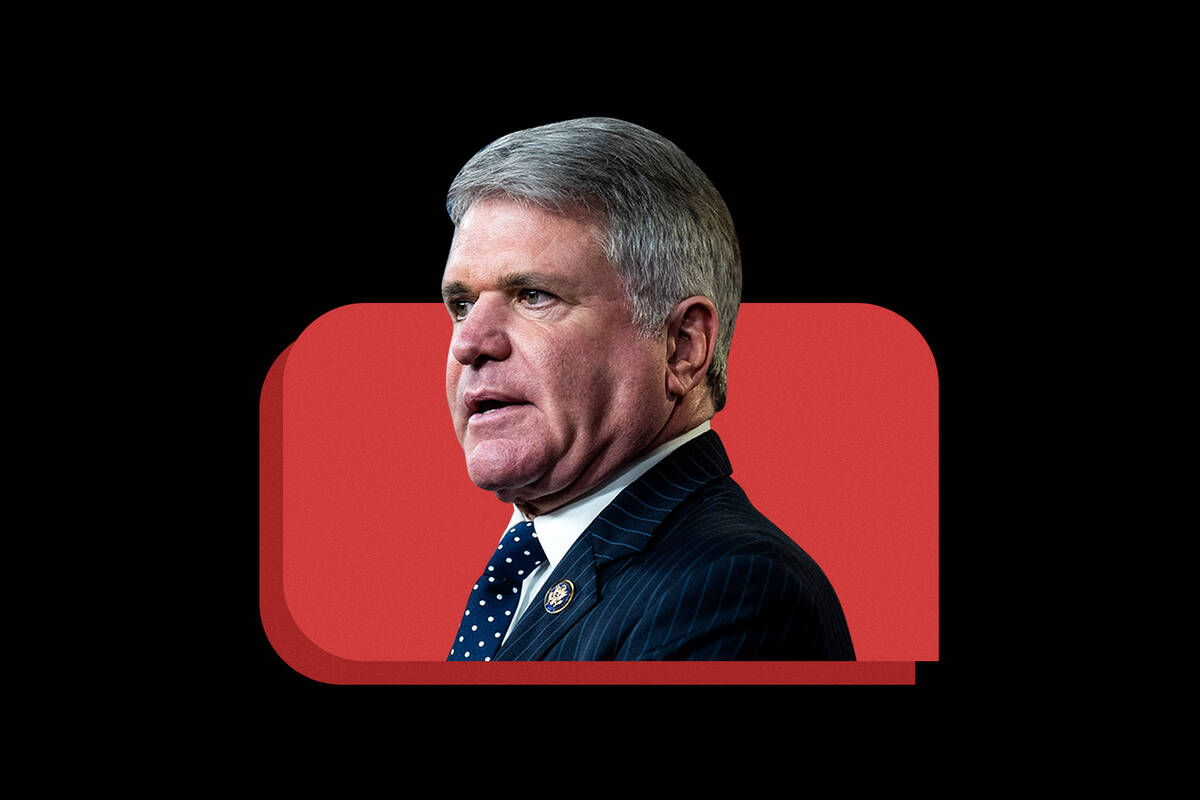
| The Early: You told CNN that you urged Secretary of State Antony Blinken to give U.S. fighter jets to Poland, allowing the Polish government, in turn, to provide old Soviet fighters to Ukraine. Poland seems lukewarm about such an arrangement. The Polish president's office said on Sunday that "Poland won't send its fighter jets to #Ukraine." Why do you think the Poles are reluctant to strike a deal? McCaul: Well, I think they would be happy to do it, but they need the assurance of force protection — that we're going to put more into Poland. I know we're putting more Patriot [missile] batteries. What they want is F-16s. [House Foreign Affairs Committee Chairman Greg] Meeks (D-N.Y.) and I sign off on all foreign military weapon sales, and we said we'd be happy to approve those to Poland if they would do this. They're right on the border of this conflict, and they're worried about provocation. They just want the assurance that NATO is going to fully defend them in the event that Putin makes a gross miscalculation. The Early: Are the Poles simply seeking the F-16s? Or are they also looking for other commitments, such as more NATO troops? McCaul: They want the F-16s. They would like to see more troops. They would like to see not 10,000 but 40,000. The Early: Is the holdup on the Polish side, getting them to agree to it? Or is it on the Biden administration's side? McCaul: Well, we had a Zoom with [Ukrainian President Volodymyr] Zelensky and he said that Poland was willing to do it, and that somebody else is holding it up. I know all this is being discussed at very high levels right now. I'm hopeful that they will move forward with this, but they have to get Poland assurances that we'll give them more force protection. [The Pentagon did not accept an offer from Poland made public shortly after this interview on Tuesday to transfer MiG-29 fighters to the United States so they could be sent to Ukraine — a decision McCaul criticized in a statement to The Early on Thursday afternoon. "Failing to support the transfer of the Polish MiGs out of fear of provoking Putin projects weakness," he said.] The Early: What discussions have you had about what the United States can do to avoid provoking Putin in a way that leads him to feel cornered and lash out? McCaul: They'll tell you you want to wear him down enough where he'll come to the negotiating table. But we tried diplomacy. The administration — they tried. It failed. I don't know what the Ukrainians would be willing to give up at this point, now that [Putin has] crossed the line. I mean, would Zelensky be willing to give up the Donbas region? I don't think so. Not when I listen to him. The Early: What's the most urgent step you'd like to see Biden take on Ukraine that he hasn't already? McCaul: The air defenses. Getting these jets that they've asked for, getting the drones that we know would be effective and getting the surface-to-air missiles. To me, that's the most urgent thing right now. I'm astounded that Zelensky's still alive, to be honest. And his days may be numbered. The Early: Trump has argued that Russia never would have invaded Ukraine if he was still president. Do you think there's any merit to that argument? McCaul: Condoleezza Rice always told me when she was secretary of state: You want everyone to like you, but not they're not all gonna like you. And if they don't, you want them to respect you. And if they don't respect you, you want them to fear you. I do think Trump had some of that fear factor. Because he was unpredictable. Dropping the 'mother of all bombs' on Afghanistan's a good example: Wow, where did that come from? I think [Russia] would have to try to figure out, what would this man do if I invade Ukraine or Taiwan? To that extent, I think he had more leverage than, say, Biden, who they view as a weaker president. The Early: You and others have said you think Putin was surprised by the ferocity of the Ukrainian resistance and the severity of the sanctions. Do you think in that respect that Biden has, in some ways, proven unpredictable, too? McCaul: I would give the president credit for efforts in unifying NATO, getting the sanctions approved by NATO and the G-7, and that vote at the United Nations [to condemn the Russian invasion]. That has certainly strengthened our hand. There's certain things I think we could have done to deter this in the first place. But it is what it is now, and we need to do everything we can to help the Ukrainian people. |