| Welcome to The Daily 202! Tell your friends to sign up here. An observation from Middlebury College political science professor (and friend of The Daily 202) Allison Stanger: "The Polish and Ukrainian national anthems — both countries sharing the experience of Russia periodically swallowing them up — begin with the exact same opening line: Poland/Ukraine has not yet perished." | | |  | The big idea | | Russia's advance is slower than expected, and four other takeaways from one week of war | 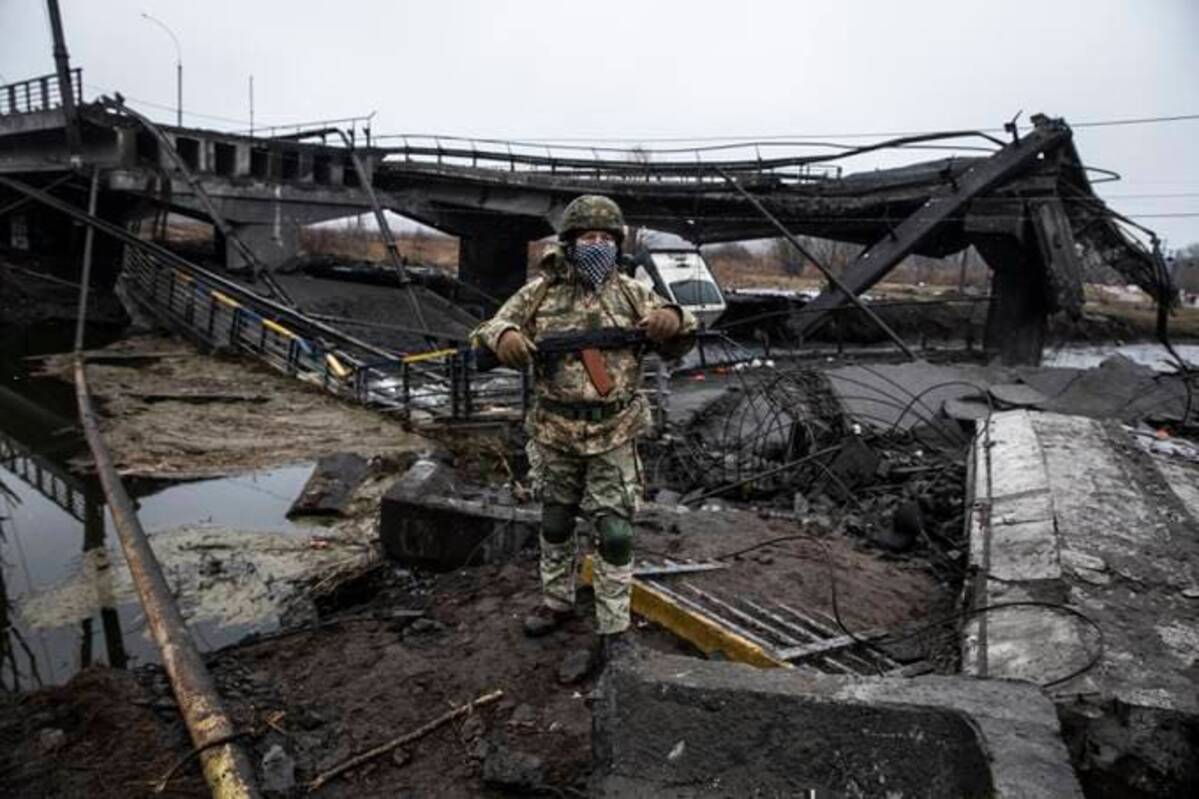 An armed Ukrainian commander by a destroyed bridge in the outskirts of Kyiv on Thursday. Ukrainian forces say the Russians destroyed the bridge. (Photo for The Washington Post by Heidi Levine). | | | Russia's massive assault on Ukraine is just over a week old, but it's still possible to draw some tentative conclusions about the conflict and the various actors involved, even if the duration and outcome of the war are not clear. Here are five takeaways, laced with a few questions, from the operation that began Feb. 24. | First, parts of Russia's advance have unexpectedly bogged down. But just parts. | | As the war began, Western intelligence officials painted a grim picture of Moscow wiping out Ukraine's defenses and taking its capital, Kyiv, in a matter of hours. Russia's air force would seize control of the skies, pound ground targets and enable its army to grind its way to … wherever Russian President Vladimir Putin wanted. Kyiv and other major cities have endured hundreds of Russia missiles and artillery barrages, but most are still standing and under Ukrainian control. Some Russian forces are apparently suffering from shortages of food and fuel. A 40-mile-long Russian convoy of tanks and combat vehicles seems to have stalled 20 miles outside of the capital. But, but, but: The Russians are not having nearly as much difficulty along Ukraine's southern coast, and Moscow's war machine can still vastly overpower Ukrainian forces. Military experts still expect the country to fall. | Second, 1 million Ukrainians have left, with ominous ramifications. | | The figure comes from the United Nations. Evening newscasts are full of images of desperate Ukrainians – many of them women and children, as men opt to stay behind to fight. Beyond the vast human consequences, there could be political aftershocks in Europe. Putin surely knows how refugees fleeing Syria's civil war upset the continent's politics, feeding right-wing populist movements of the sort he encouraged — the most successful one being Brexit. Last year, Belarus brought in thousands of migrants, including many Iraqi Kurds, and tried to push them over the border into Poland. The European Union denounced this as a "hybrid attack." The Daily 202 wonders whether one of Putin's second-order priorities might not be to stress Poland and other E.U. members among Ukraine's neighbors. | Third — and this is a wow — the invasion really transformed Germany. | | Berlin had said for years it would not link the Nord Stream 2 pipeline — built to bring Russian natural gas to energy-hungry Germany — to geopolitical events like the looming invasion. Germany had a policy of not allowing arms sales to conflict zones and cultivated close economic ties with Russia. Chancellor Olaf Scholz has now reversed all three, freezing the pipeline, giving the green light to weapons flowing to Ukraine, and imposing tough sanctions on Russian financial institutions. Germany's shift — Scholz has called it "the turning of an era" — is a symptom of a remarkable broader phenomenon. There's a joke in D.C. and Brussels that "only Putin could have united NATO and made the EU make quick decisions." The Russian president may have decided to roll the dice because he saw a NATO alliance shaken by the Afghanistan withdrawal, a European Union almost perpetually in disarray and Washington helping to break up a French submarine deal with Australia. While it's still too soon to know the final outcome, the West's unified response suggests he miscalculated. | Fourth, President Biden is holding the line on the U.S. role. | | Ukrainian President Volodymyr Zelensky has repeatedly begged for a NATO-enforced "no-fly zone" over his country. The United States is no stranger to the concept, having helped set them up and enforce them in the 1990s in Iraq and over the Balkans, as well as in Libya in 2011. (President Barack Obama opposed imposing one over Syria, as the regime's Russia-backed air force dropped devastating barrel bombs on civilians.) | | Biden has made clear he won't sign on because you can't just declare a no-fly zone — you have to enforce it by shooting down violators. And be ready to go rescue any of your pilots if they're shot down. That would put NATO in direct confrontation with Russia, with the possibility of escalation and the possibility — however remote — of triggering World War III. | Fifth, it's not the first information war, but it may be the most impressive. | | Considered in the right light, the Trojan Horse was an example of information warfare, and secrets and lies have been a staple of violent conflict forever. But there's no doubt that Russia's war in Ukraine has been defined by the use of information. The Daily 202 sees three major components. First, there was the unprecedented American declassification of intelligence about Russian intentions to invade and Moscow's plans to try to justify its actions, undercutting its reasoning in the court of global public opinion (but not stopping the onslaught). Second, far more conventional, has been Moscow's war on information at home and in Ukraine. On Wednesday, a Russian airstrike struck a major TV broadcast tower in Ukraine. At home, Putin has shut down independent news media while flooding state-run media with propaganda to defend the invasion. The third and most interesting component: Zelensky's social-media communications with his people and the world, personally assuring everyone he is in charge and staying put. Then there are the videos of captured or killed Russian soldiers, as well as unarmed Ukrainians confronting the armed men and armored convoys Putin deployed. The message: Ukraine is fighting. But for how long? | | |  | What's happening now | | Russia has seized a nuclear plant in Ukraine | U.S. adds 678,000 jobs in February | | "The unemployment rate fell to a new pandemic low of 3.8 percent last month, from 4 percent in January, the Labor Department said Friday. Wages, meanwhile, held steady, climbing by 1 cent. Annual wages are up 5.1 percent, although they have not kept up with inflation," Abha Bhattarai and Andrew Van Dam report. | Barr says Trump was 'responsible in the broad sense' for Jan. 6 riot | | "I do think he was responsible in the broad sense of that word in that it appears that part of the plan was to send this group up to the Hill," former attorney general William P. Barr said in a Friday interview with NBC News, John Wagner reports. "I think the whole idea was to intimidate Congress, and I think that that was wrong." | Sen. Lindsey Graham defends calling for Russians to assassinate Putin | | "In an interview on Fox News' 'Fox and Friends,' Graham said he hopes someone in Russia will understand that Putin is 'destroying Russia and you need to take this guy out by any means possible,'" NBC News's Rebecca Shabad reports. | | |  | Lunchtime reads from The Post | | Exclusive to the Post: The Roger Stone tapes |  Roger Stone, former adviser to Donald Trump's presidential campaign, arrives to a Select Committee to Investigate the January 6th Attack on the U.S. Capitol deposition on Dec. 17, 2021. (Ting Shen/Bloomberg News) | | | Roger Stone, Donald Trump's longest-serving political adviser, allowed Danish filmmakers to document his activities over more than two years for the forthcoming documentary, "A Storm Foretold." The Washington Post reviewed more than 20 hours of video filmed for the project. "The footage, along with other reporting by The Post, provides the most comprehensive account to date of Stone's involvement in the former president's effort to overturn the election and in the rallies in Washington that spilled over into violence on Jan. 6," Dalton Bennett and Jon Swaine report. Key findings: | - Stone privately coordinated post-election protests with prominent figures.
- In January, he communicated by text message with leaders of far-right groups that had been involved in the attack on the Capitol.
- On several occasions, Stone told filmmakers or his associates that he remained in contact with the president.
| China said its friendship with Russia had 'no limits.' But at what cost? | 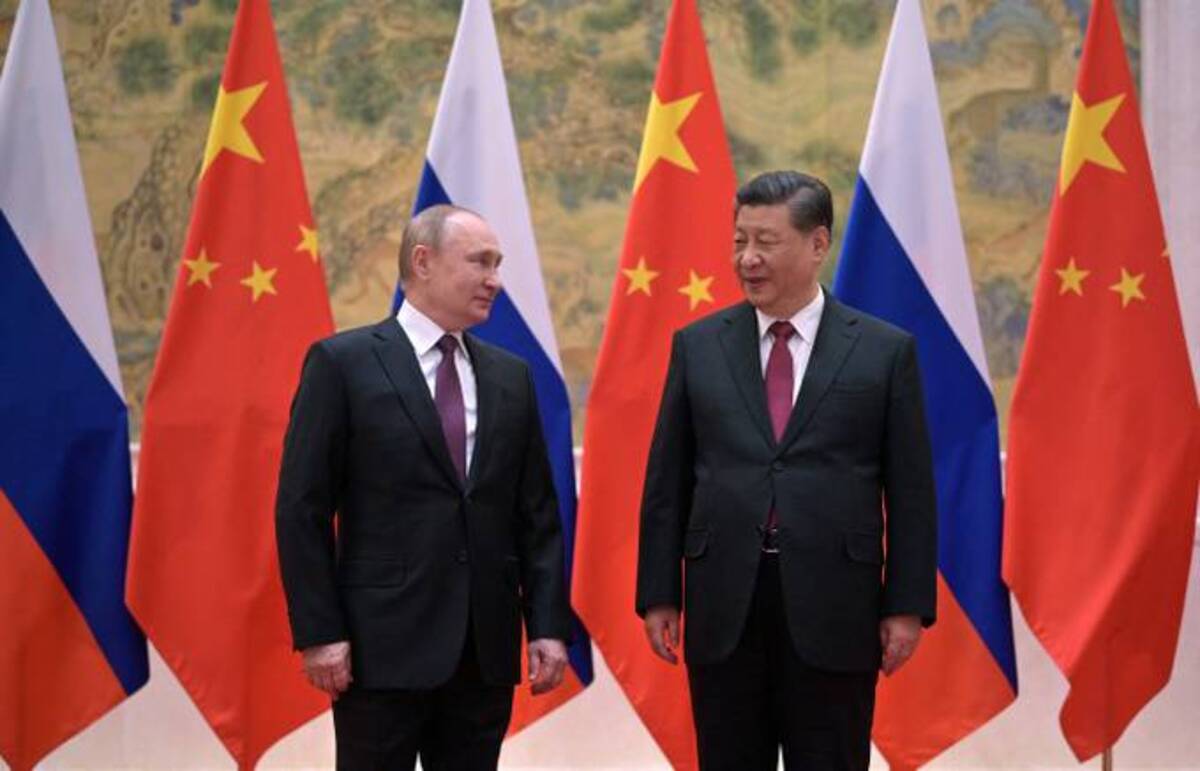 Russian President Vladimir Putin and Chinese President Xi Jinping pose during their meeting in Beijing, on Feb. 4 (Alexei Druzhinin/Sputnik/AFP) | | | Chinese President Xi Jinping wanted to work with Russian President Vladimir Putin to present "a united front against the U.S.," the Wall Street Journal's Lingling Wei reports. Then Russia invaded Ukraine, and now China is facing the consequences. "In Beijing … some officials say they are fearful of the consequences of getting so close to Russia at the expense of other relationships—especially when Russian aggression against Ukraine is isolating Moscow in much of the world." | 'My city's being shelled, but mum won't believe me' | | Oleksandra, 25, has been sheltering in the bathroom of her flat in Kharkiv. She's been speaking regularly to her mother, who lives in Moscow. "But in these conversations, and even after sending videos from her heavily bombarded hometown, Oleksandra is unable to convince her mother about the danger she is in," BBC's Maria Korenyuk and Jack Goodman report. | | Oleksandra | "Even though they worry about me, they still say it probably happens only by accident, that the Russian army would never target civilians. That it's Ukrainians who're killing their own people." | | | | | | | | |  | The Biden agenda | | | U.S. offers temporary legal status to Ukrainians | 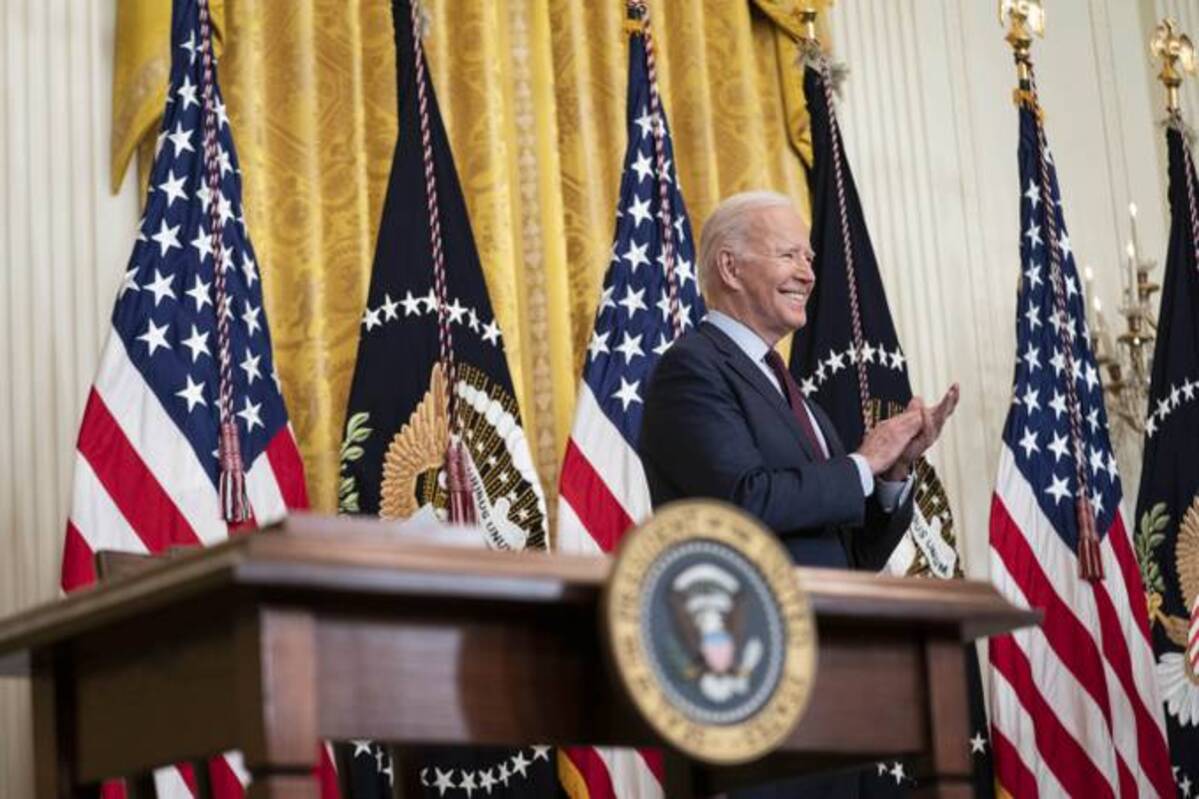 President Biden listens to Vice President Harris deliver remarks before signing H.R. 4445, legislation to end force arbitration on sexual assault and harassment claims in the East Room of the White House on Thursday. (Sarah Silbiger/The Washington Post) | | | "Department of Homeland Security (DHS) Secretary Alejandro Mayorkas created an 18-month Temporary Protected Status (TPS) program for Ukrainians who have lived in the U.S. since March 1, allowing eligible people to apply for work permits and deportation protections," CBS News's Camilo Montoya-Galvez reports. Biden isn't going after the GOP on Russia. Some Democrats want him to. Biden hasn't mentioned those within the GOP who have praised Russian President Vladimir Putin. His reluctance to draw the comparison reflects the delicate nature of the foreign conflict — though Republicans have continuously slammed him as "weak" on Russia, Politico's Christopher Cadelago and Laura Barrón-López report. Now, some Democrats are calling for Biden to take a stand. "'We're Zelenskyy Democrats. And they're Putin Republicans' would be my bumper sticker," Democratic Congressional Campaign Committee chair, Rep. Sean Patrick Maloney (D-N.Y.), said in an interview Wednesday. Biden outlines new measures to boost U.S. manufacturing "Goods can be purchased by the federal government with tax dollars if just 55 percent of their parts were manufactured here. On Friday, President Biden plans to unveil a new regulation upping that standard to 75 percent," Annie Linskey reports. The scope: "White House officials said Thursday evening that they do not know what percentage of goods purchased by the federal government will meet the new threshold." | | |  | Postcards from Earth's climate futures, visualized | | | Based on the latest United Nations climate report, "The Washington Post envisioned how three locations around the globe could be transformed depending on humanity's emissions trajectory over the next 80 years. These postcards from Earth's possible futures show what the world stands to lose as temperatures tick upward. They also reveal how much can still be saved." | | |  | Hot on the left | | Is there room for patriotism on the left? | | For the Nation, Georgetown University history professor Michael Kazin and Rafia Zakaria, author of "The Upstairs Wife: An Intimate History of Pakistan," debate. Kazin: Yes. "One cannot engage effectively in the democratic process without being part of a community of feeling … Patriotism will continue to flourish, whether or not progressives embrace it. When left intellectuals and activists abandoned speaking in terms of American ideals in the late 1960s and after, they lost the ability to speak convincingly to their fellow citizens." Zakaria: No. "Patriotism not only gives unearned entitlement to those waging war but also places collective blame on those against whom the war is waged. If you dally with patriotism, then its mother, nationalism, will come along and tell you that noncitizens deserve their misfortune." | | |  | Hot on the right | | Rick Scott: Why I'm defying Beltway cowardice | | Sen. Rick Scott (R-Fla.) published a stinging op-ed in the WSJ on Thursday night, defending his decision to release a Republican policy platform, which was sharply rejected Tuesday by Senate GOP Leader Mitch McConnell. Scott's plan included a proposal for all Americans to pay some form of income tax. ("I went out and made a statement that got me in trouble. I said that all Americans need to have some skin in the game. Even if it is just a few bucks, everyone needs to know what it is like to pay some taxes. It hit a nerve," he writes in the op-ed.) One standout line: "If we have no bigger plan than to be a speed bump on the road to socialism, we don't deserve to govern." | | |  | Today in Washington | | | Biden will make an announcement "delivering on his Made in America commitments" at 12:25 p.m. The president will have a bilateral meeting with Finnish President Sauli Niinistö at 2:30 p.m. in the Oval Office. Biden will leave the White House for New Castle, Del., at 5:35 p.m., arriving at 6:40 p.m. | | |  | In closing | | The new Batman hits screens |  Robert Pattinson as Bruce Wayne/Batman in The Batman. (Jonathan Olley/Warner Bros./DC Entertainment) | | | Thanks for reading. See you next week. | | |