| Welcome to The Daily 202! Tell your friends to sign up here. Via the Associated Press: On this day in 1918, doctors found what are thought to have been the first confirmed U.S. cases of a global flu pandemic that ultimately killed between 20 million to 40 million people. The outbreak was among U.S. soldiers at Fort Riley, Kan., and 46 people died. | | |  | The big idea | | The invasion of Ukraine has focused attention on Beijing's ties with Moscow | 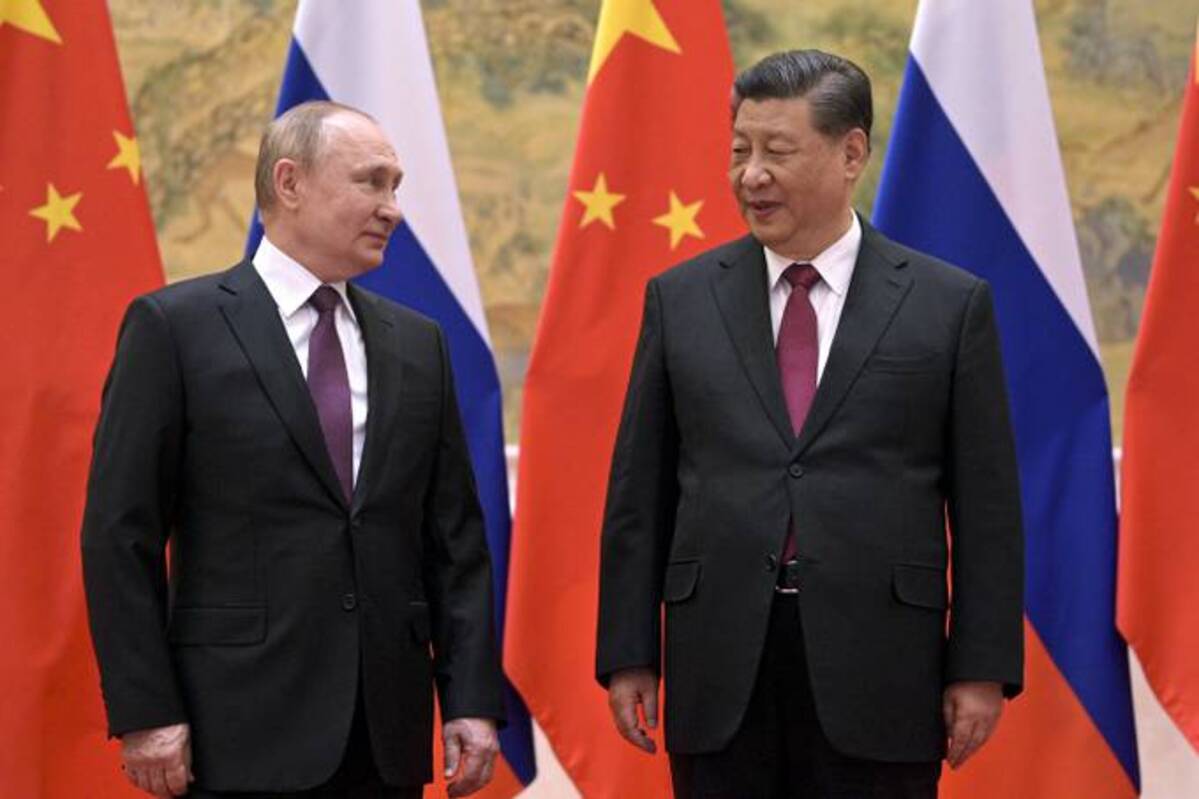 Chinese President Xi Jinping and Russian President Vladimir Putin during their meeting in Beijing on Feb. 4. (Alexei Druzhinin, Sputnik, Kremlin Pool Photo via AP) | | | Here's the view from Washington on relations between Moscow and Beijing, now being tested by the invasion of Ukraine: An "unsettled" China overestimated prospects for a speedy Russian victory and isn't happy about the war's economic aftershocks. But the two are still getting closer. China, which hasn't publicly condemned Russian President Vladimir Putin's war, has mostly abided by international sanctions. And it could not, even if it wanted to, make up for Russia's losses in trade from Europe and America or access to Western capital markets. That's the picture that emerged this week from the White House, as well as assessments from CIA Director William J. Burns and Director of National Intelligence Avril Haines, who testified to Congress at an annual hearing about worldwide threats on Tuesday and Thursday. | - "It continues to be the case that they are getting closer together" even after the invasion, Haines told the House Intelligence Committee on Tuesday. "We see that across a range of sectors — economic, political, security — and expect it to continue. I think there's a limit to which it will go, but nevertheless that remains a concern."
| | China "has invested a lot in the relationship," Burns told the Senate Intelligence Committee on Thursday. "I don't expect that to change anytime soon," he predicted. | | Still, Chinese President Xi Jinping is "unsettled" by Russia's military setbacks in Ukraine, Burns said, because "his own intelligence doesn't appear to have told him what was going to happen." | | Xi also frets over "the economic consequences, at a time when, you know, growth rates in China … are lower than they've been in 30 years," as well as the "reputational damage" Beijing is taking for lining up largely with Russia, Burns said. "We've seen them largely abide by the sanctions that have been put in place," White House press secretary Jen Psaki told reporters Wednesday. "I would note, though, that if any country tries to evade or work around our economic measures, they will experience the consequences of those actions." Two days earlier, Psaki had suggested China's economy wasn't large enough, compared with the Group of Seven rich countries, to fully counter sanctions on Russia. "It's just not possible," she said. Since Putin launched the invasion more than two weeks ago, observers have closely watched for signs it might upset a relationship that had never been better. Last month, before the war, Xi welcomed Putin to Beijing, and the two issued a statement celebrating a bilateral partnership with "no limits." But there have been some changes in tone from China, which shares many of Russia's beefs with U.S. power and grudges against NATO, which bombed the Chinese Embassy in Belgrade, Serbia, in 1999. The United States apologized, but China regarded the strike as deliberate. On Tuesday, Xi called for "maximum restraint" in Ukraine and said his country was "pained to see the flames of war reignited in Europe." He also worried about the sanctions' impact on global trade and finance, and disruptions in already strained supply chains. His words came a day after China made its first formal public offer to directly mediate the crisis, as my colleague Christian Shepherd noted. | | In the past, China had coupled public sorrow about civilian deaths with gibes at NATO. And at home, state-run media serve as a megaphone for the Russian version of what's happening in Ukraine, pitting the official line against a small army of would-be debunkers. | - China has also repeatedly affirmed support for Ukrainian territorial sovereignty. But there's a caveat: Beijing does not think that principle applies to Taiwan, a democratically governed island Beijing regards as a renegade province to be reunified with the mainland, by force if necessary.
| | The Ukraine war "is likely to reinforce China's perspective on the seriousness with which we would approach an infringement on Taiwan" and highlighted the "unity" of the Western response, Haines said Tuesday. All of this has played out as a new era in Sino-U.S. relations may have opened up with the arrival of the new U.S. ambassador to Beijing: | | |  | What's happening now | | Biden, European allies move to strip Russia of trade status | | Biden announced Friday morning that the U.S. and its allies will "strip Russia of routine trade benefits," David J. Lynch reports. What happens next and what it means: "The president will need congressional approval to alter Russia's trade status, ending what's called 'permanent and normal trade relations' and treating the country as a pariah along with nations like Cuba and North Korea." More sanctions: "The administration also plans to ban imports of Russian seafood and alcohol, which amounted to $550 million last year. And Biden intends to prohibit the U.S. exports of luxury goods favored by the wealthy Russian oligarchs who support Putin." | Iran nuclear talks are suspended amid new Russian demands | | "Negotiations in Vienna aimed at reviving the Iran nuclear deal were called off indefinitely on Friday after Russia upended the talks by raising objections to Moscow's participation while under the new U.S. sanctions imposed in punishment for its invasion of Ukraine," Liz Sly reports. | U.N. council to meet at Moscow's request over unproven claim of U.S. biolabs | | "The U.N. Security Council will meet Friday at Russia's request to discuss Moscow's claims of U.S.-supported chemical and biological weapon labs in Ukraine — allegations both Washington and Kyiv vehemently deny," Adela Suliman reports. | Russia expands attacks via airstrikes on Ukraine's west | China locks down city of 9 million amid new covid cases | | "China on Friday ordered a lockdown of the 9 million residents of the northeastern city of Changchun amid a new spike in COVID-19 cases in the area attributed to the highly contagious omicron variant," the Associated Press reports. The context: Changchun has identified 78 cases in recent days, including two reported Friday. "Authorities have repeatedly pledged to lock down any community where one or more cases are found under China's 'zero tolerance' approach to the pandemic." | | |  | Lunchtime reads from The Post | | The Russian military is grinding forward — at a heavy cost to both sides | 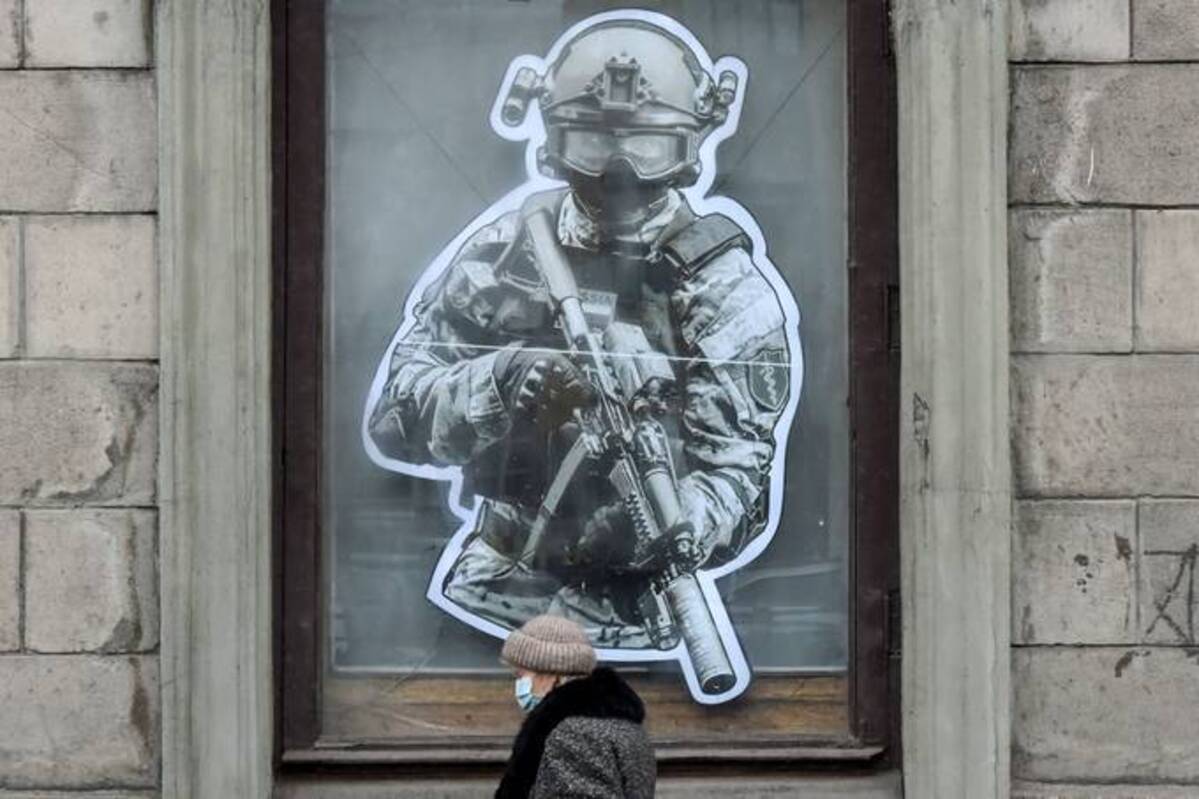 A woman walks past a military store in St. Petersburg on Friday. (AFP) | | | "Two weeks after Russian forces streamed into neighboring Ukraine following months of buildup, evidence is mounting that the invasion has not gone to plan — and that Russia's much-vaunted military may not be the formidable force once feared," Griff Witte, Dan Lamothe, Karla Adam and Rick Noack report. But: "That doesn't mean Russia won't ultimately seize Kyiv and topple the Ukrainian government. And it doesn't mean Ukraine won't pay a horrific price in both military and civilian casualties, as it continues to do daily." | A Texas county didn't count 10,000 ballots. Who's to blame? | | The March 1 primary in Harris County, Tex., did not go smoothly. But the parties don't agree on what went wrong. The split: "Republicans are suing and demanding that the state take over the Democratic-controlled elections office. Democrats say the problem is a new law enacted by Republicans that made it harder to vote by mail and criminalized election mistakes," Amy Gardner reports. What it means: The result is "new evidence of a weakened system too fragile to withstand the everyday glitches and mistakes of running an election in a state where the parties are too deeply divided to fix those problems together." | Here's where the $5 trillion in pandemic stimulus money went |  The Washington Monument and the U.S. Capitol are seen in Washington. (Carolyn Kaster/AP) | | - Individuals and families: $1.8 trillion
- Businesses: $1.7 trillion
- State and local aid: $745 billion
- Health care: $482 billion
- Other: $288 billion
| As spending plans stall, local covid aid emerges as key social policy tool for Biden | | The American Rescue Plan's State and Local Fiscal Recovery Fund (a $350 billion bucket of coronavirus aid money for state and local governments enacted a year ago Friday) is emerging as President Biden's top poverty-fighting tool, Reuters's David Lawder reports. | | |  | The Biden agenda | | Why are U.S. oil companies holding back on Biden's calls for more drilling? | 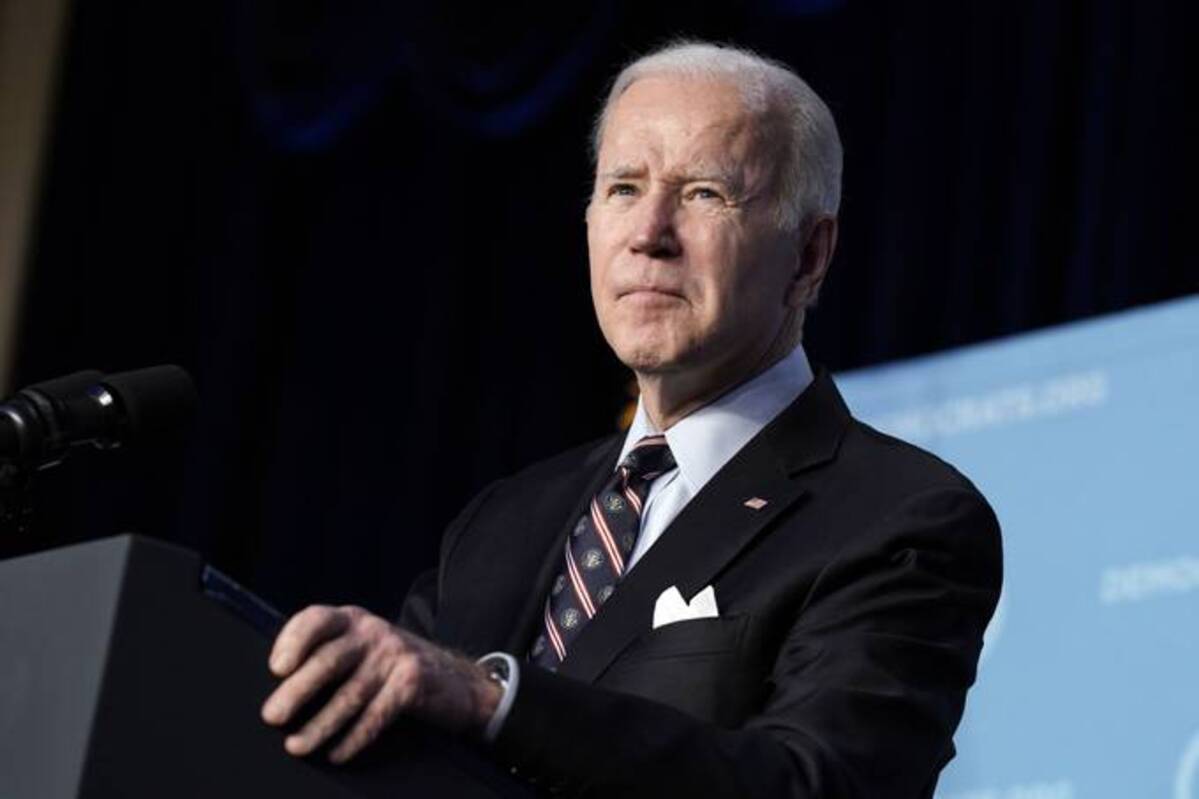 President Biden speaks at the Democratic National Committee Winter Meeting in Washington, D.C., on March 10. (Yuri Gripas/Abaca/Bloomberg News) | | A Trump-era policy could soon end, potentially attracting more immigrants to the U.S.-Mexico border | | "Top officials at the Department of Homeland Security have been planning to tell Mexico that a controversial Trump-era border policy enacted during the pandemic may come to an end as soon as April, which could lead to an increase of immigrants coming to the border and a strain on resources," BuzzFeed News's Hamed Aleaziz reports. What it means: "DHS officials in particular planned to stress to Mexico that if Title 42 is no longer in place, the agency will need to return to processing immigrants who cross the border without authorization through normal, pre-COVID practices, which would allow them to seek asylum and protection within the US." | U.S. condemns North Korea missile launches as 'serious escalation' | | "The US Indo-Pacific Command announced Wednesday that the US is intensifying 'intelligence, readiness and surveillance collection activities' related to North Korea following the recent missile launches," CNN's Betsy Klein and Maegan Vazquez report. | Covid response may have to be scaled back, White House says | | Democrats are scrambling after a $15.6 billion coronavirus aid funding plan collapsed in Congress on Wednesday, Dan Diamond and Tony Romm report. The nation is now poised to run out of tests, treatments and vaccines to fight the coronavirus. | Biden's EPA chief puts power plants on notice for pollution | | In a Thursday speech, Environmental Protection Agency Administrator Michael Regan outlined "how the Biden administration plans to cut air and water pollution spewing from the nation's electricity plants," Dino Grandoni reports. | More than 40 GOP senators urge Biden to aid 'transfer of aircraft' to Ukraine | | The plea comes in response to the United States quashing Poland's offer to send fighter jets with American help, Hannah Knowles reports. The why: "The senators said in a letter that they 'strongly disagree' with the Biden administration's stance on Poland's proposal, and that the Ukrainian military is in 'dire need of more lethal aid.'" | | |  | Possible 'hydraulic warfare' near Kyiv, visualized | | | |  | Hot on the left | | John Eastman and Jeffrey Clark breathed life into Trump's 'big lie.' Did they even believe it? | | Eastman: "Multiple sources who worked with or have known Eastman for years uniformly told The Daily Beast this week that they simply did not buy, based on their personal interactions with Eastman over the years, that the attorney actually believed what he was pushing to then-President Trump," the Daily Beast's Jose Pagliery and Asawin Suebsaeng report. A softer interpretation: "One common view among officials in then-Vice President Pence's office was that Eastman was 'an academic who thought this was just a novel exercise. He didn't appreciate the gravity of a potential constitutional crisis.'" Clark's role: He was a "high-ranking Justice Department official who was willing to use the nation's top law enforcement agency to intimidate state-based officials and cast doubt over election results." His endgame? Leveraging his efforts into a promotion. | | |  | Hot on the right | | Some truckers in the D.C. convoy are worried they're being lured into a trap |  Sen. Ted Cruz (R-Tex.) arrives for a news conference about the "People's Convoy" near the U.S. Capitol on March 10. (Matt McClain/The Washington Post) | | | "Since Friday, the convoy has been stationed in Hagerstown. Conspiracy theories that House Speaker Nancy Pelosi has set a 'false flag' trap for the convoy in D.C. are common, and some organizers seem to have gotten cold feet about venturing too close to the U.S. capital city," Tess Own and Mack Lamoureux write for Vice News. One researcher said that "a pervasive sense of paranoia regarding being tricked into a January 6-esque event has, in a sense, hobbled the convoy." | | Convoy organizer Brian Brase | "A lot of questions have been asked on the name," Brase said, speaking about meeting with politicians. "I don't want to release the name of the (politician) we're meeting with until I know without a doubt that these people will actually talk to us." "I am fearful of them trying to do to us what they did to those involved in January 6." | | | | | | | | |  | Today in Washington | | | Biden will deliver remarks at the House Democratic Caucus Issues Conference at 12:15 p.m. At 2:10 p.m., the president will tour an elementary school. Biden will depart Philadelphia for Camp David at 3:50 p.m. | | |  | In closing | | Corden on the Russia-Ukraine peace talks | | James Corden | "I can't even imagine how strange these meetings must be. It'd be like trying to have a conversation with someone who's actively setting your house on fire." | | | | | | Also: Daylight saving time begins this weekend. (We spring forward one hour on Sunday at 2 a.m.) Time to figure out how to adjust your car's clock again. | | Thanks for reading. See you next week. | | |


