 | | Maxine Joselow | | | Good morning and welcome to The Climate 202! Today we're watching videos of "CERAWeek Sings," a 30-minute Broadway show at the CERAWeek energy conference in Houston, via The New Republic's Kate Aronoff. 🎵😅 But first: | You might be paying for a trade group to fight climate policy. FERC wants to change that. | 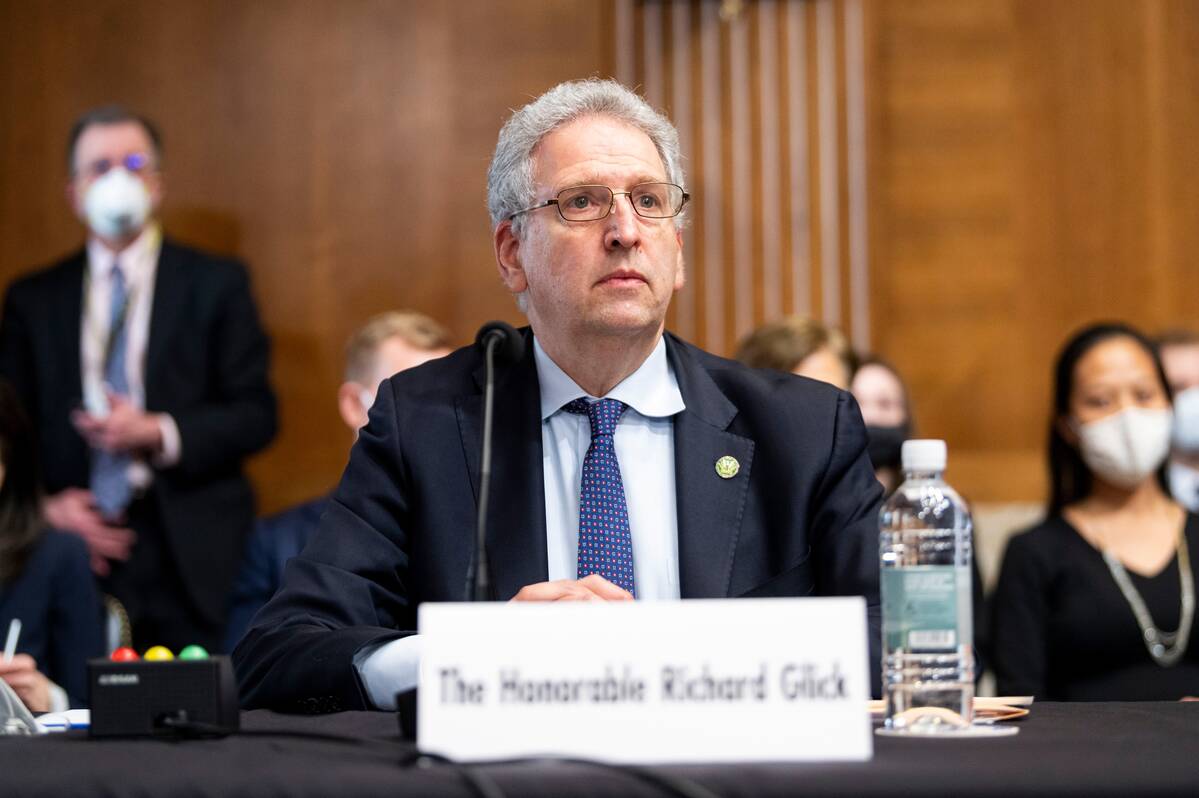 Richard Glick, chairman of the Federal Energy Regulatory Commission, testifies on Capitol Hill. (Bill Clark/CQ-Roll Call/Getty Images) | | | The Federal Energy Regulatory Commission has attracted headlines and congressional attention in recent days for its new guidance on considering the climate effects of pipelines. But the commission's work on another important climate-related issue has largely flown under the radar, despite its potential to affect anyone who pays a utility bill. What's happening: The five-member commission is weighing whether utility companies should be allowed to continue charging customers for their trade association dues. Under the current accounting system, utilities are allowed to pass on these costs to customers, even if the trade associations are fighting climate policies and the customers oppose these activities. | - The Center for Biological Diversity, an environmental group, submitted a petition in March urging the commission to reconsider this system. The petition argued that customers have a First Amendment right not to bankroll anti-environment activities that they oppose.
- FERC issued a notice of inquiry on the matter in December, asking the public and trade groups to weigh in. An initial round of public comments was due last month; responses to those comments are due on March 23.
| | "It's time to stop forcing people to support anti-environment trade groups that stand in the way of the urgently needed transition to clean energy," said Howard Crystal, legal director of the Center for Biological Diversity's Energy Justice program. "Often those groups are working directly against the customers' own interests, as well as the future wellbeing of their children." | | In its petition, the Center for Biological Diversity named Edison Electric Institute and the American Gas Association as two examples of trade groups that have fought climate policies and stuck ratepayers with the bill. | - The Edison Electric Institute, the leading industry association for utility companies, sought to delay implementation of the Clean Power Plan, Barack Obama's signature rule for reducing greenhouse gas emissions from power plants. In 2015, the institute gave $7.7 million to the Utility Air Regulatory Group, a now-defunct group that argued against the Clean Power Plan before a federal appeals court.
- The American Gas Association, meanwhile, has lobbied state lawmakers across the country to prohibit local governments from banning natural gas in new buildings. Arizona, Louisiana, Oklahoma and Tennessee passed laws last year protecting gas in new construction, and similar laws are being considered in 12 other states.
| | In its own public comments, the institute insisted that it has been "fully transparent" about its lobbying and advocacy, including in a new report on the topic. Emily Sanford Fisher, the institute's general counsel and senior vice president for clean energy, told The Climate 202 that she thinks the Center for Biological Diversity has misrepresented the trade group's involvement in the Clean Power Plan fight. "I'm well aware of what [the center] has been saying," she said. "I guess my current response to that would be the facts just don't actually bear that argument out." Sanford Fisher said the trade group filed comments on the Clean Power Plan in 2014 with the goal of helping the Environmental Protection Agency craft a legally durable regulation. More recently, the institute filed an amicus brief in West Virginia v. EPA, a Supreme Court case challenging the EPA's authority to regulate greenhouse gases from power plants, in support of the Biden administration. Karen Harbert, president and CEO of the American Gas Association, said in a statement to The Climate 202 that the petition is "an effort to silence the voice of the American Gas Association and reduce our ability to share leading practices around safety, reliability, customer service and strong financial and environmental stewardship." Harbert added that "the petitioners' goal — to get rid of natural gas altogether — will raise energy prices for all customers, endanger vulnerable communities and undermine America's ambitious greenhouse gas reduction goals." | Senate Democrats weigh in | | Meanwhile, a coalition of Democratic senators sent a letter to FERC Chairman Richard Glick last month urging him to change course. "For too long, utilities have financed the political activities of trade associations using funds from captive ratepayers," they wrote. "These trade associations then lobby for policies that frequently run counter to ratepayers' interests." | | Signing the letter were Sens. Sheldon Whitehouse (R.I.), Edward J. Markey (Mass.), Elizabeth Warren (Mass.), Jeff Merkley (Ore.) and Dianne Feinstein (Calif.), as well as Bernie Sanders (Vt.), an independent who caucuses with Democrats. A FERC spokeswoman did not respond to a request for comment. | | |  | On the Hill | | Democrats unveil bill to tax big oil companies' windfall profits | 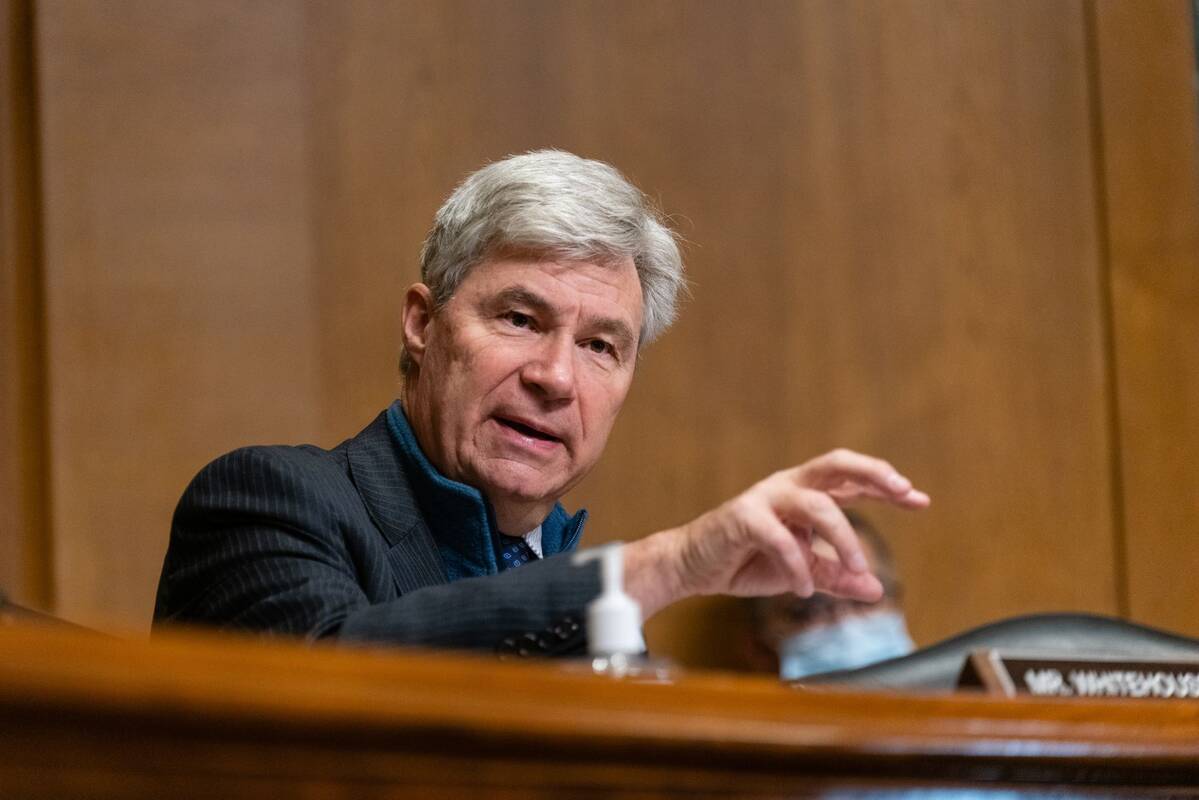 Sen. Sheldon Whitehouse (D-R.I.) at a hearing in 2021. (Eric Lee/Bloomberg News) | | | Sen. Sheldon Whitehouse (D-R.I.) on Thursday introduced legislation to tax the profits that big oil companies have reaped amid soaring crude prices sparked by the war in Ukraine. The measure would return the revenue to consumers to offset high prices at the pump. The "Big Oil Windfall Profits Tax Act" is co-sponsored by Democrats including Sens. Elizabeth Warren (Mass.), Sherrod Brown (Ohio), Edward J. Markey (Mass.), Michael Bennet (Colo.) and Robert P. Casey Jr. (Pa.). Rep. Ro Khanna (D-Calif.) plans to introduce the measure in the House. On a call with reporters yesterday, Whitehouse accused oil companies of "war profiteering," noting that several firms have raked in record profits and engaged in stock buybacks amid the Ukraine crisis. Whitehouse added that the bill could pass as part of Democrats' stalled reconciliation package, although he cautioned that he hadn't done a whip count or spoken with the Senate parliamentarian yet. | | Warren had taken to Twitter on Wednesday to tease the measure: |  | | | | Manchin pushes Defense Production Act for natural gas pipeline, not heat pumps | 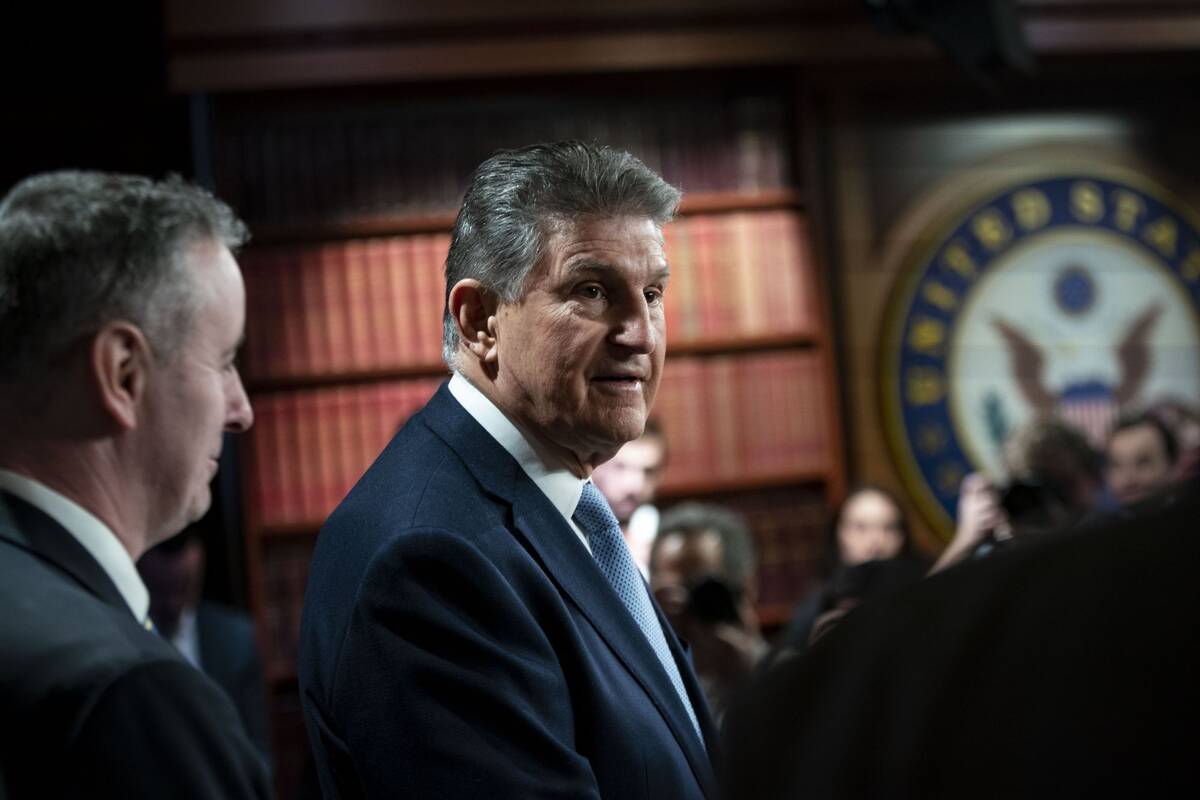 Sen. Joe Manchin III (D-W.Va.) speaks during a news conference at the Capitol on March 3. (Al Drago/Bloomberg News) | | | Sen. Joe Manchin III (D-W.Va.) on Thursday called on President Biden to invoke the Defense Production Act to rush completion of the Mountain Valley Pipeline, Bloomberg's Steven T. Dennis reports. | | The under-construction natural gas pipeline, which would cross from Virginia to West Virginia, could help Europe replace Russian gas supplies, Manchin said during a hearing held by the Senate Energy and Natural Resources Committee, which he chairs. Climate activists have urged Biden to invoke the Defense Production Act, an emergency national defense law, to boost U.S. manufacturing of heat pumps rather than new fossil fuel infrastructure, The Climate 202 reported yesterday. | | |  | International climate | | Russian official says Belarus restored power to Chernobyl site, but IAEA awaits confirmation | 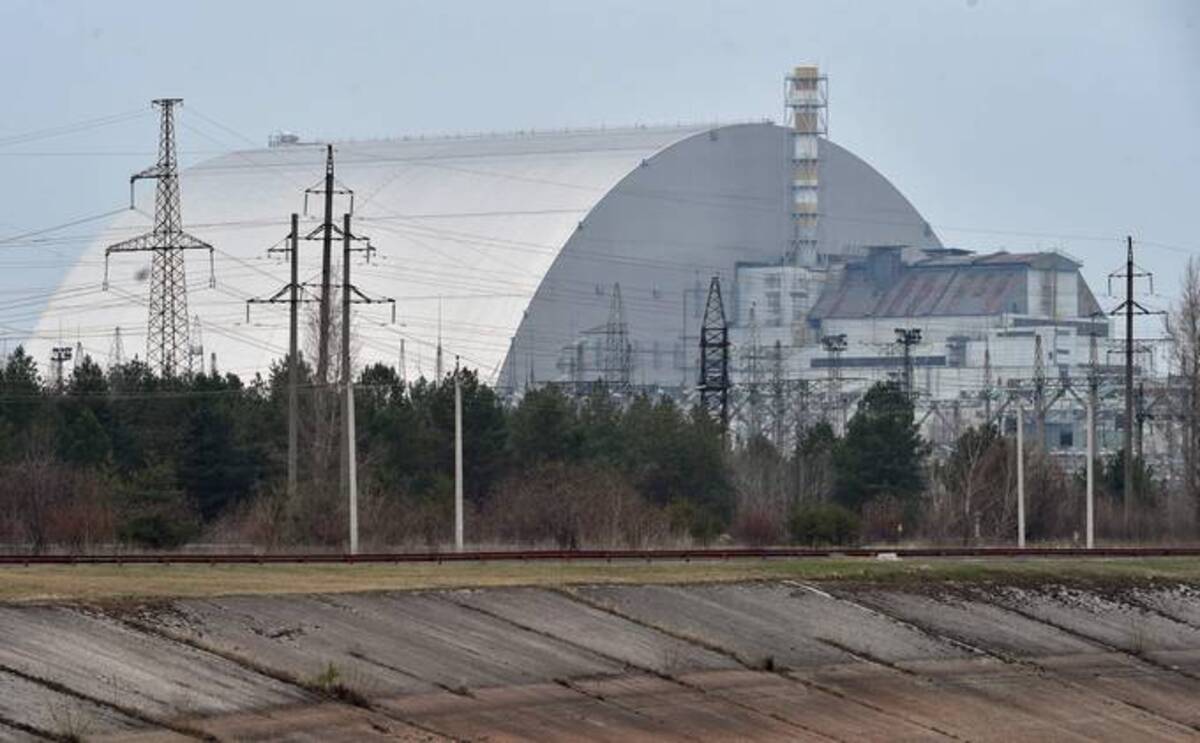 A protective dome at the Chernobyl nuclear power plant site. (Sergei Supinsky/AFP/Getty Images) | | | Russia's deputy energy minister said Thursday that electrical lines to the Chernobyl nuclear power plant site had been repaired, but the head of the International Atomic Energy Agency said there was still no confirmation that power to the closed facility had been restored, Adela Suliman, Annabelle Chapman and David L. Stern report for The Washington Post. Chernobyl, the site of a catastrophic 1986 nuclear accident, was disconnected from the grid by Russian forces Wednesday, Ukrainian officials said, potentially jeopardizing the cooling of nuclear material still stored at the site. The national electricity grid operator of Ukraine, Ukrenergo, said it was ready to restore power at the facility but was waiting for a safe corridor to be created. The utility rejected an offer from neighboring Belarus, a staunch Russian ally, to send specialists to help fix the high-voltage power transmission line. | | |  | Agency alert | | SEC to consider new climate risk rule this month | 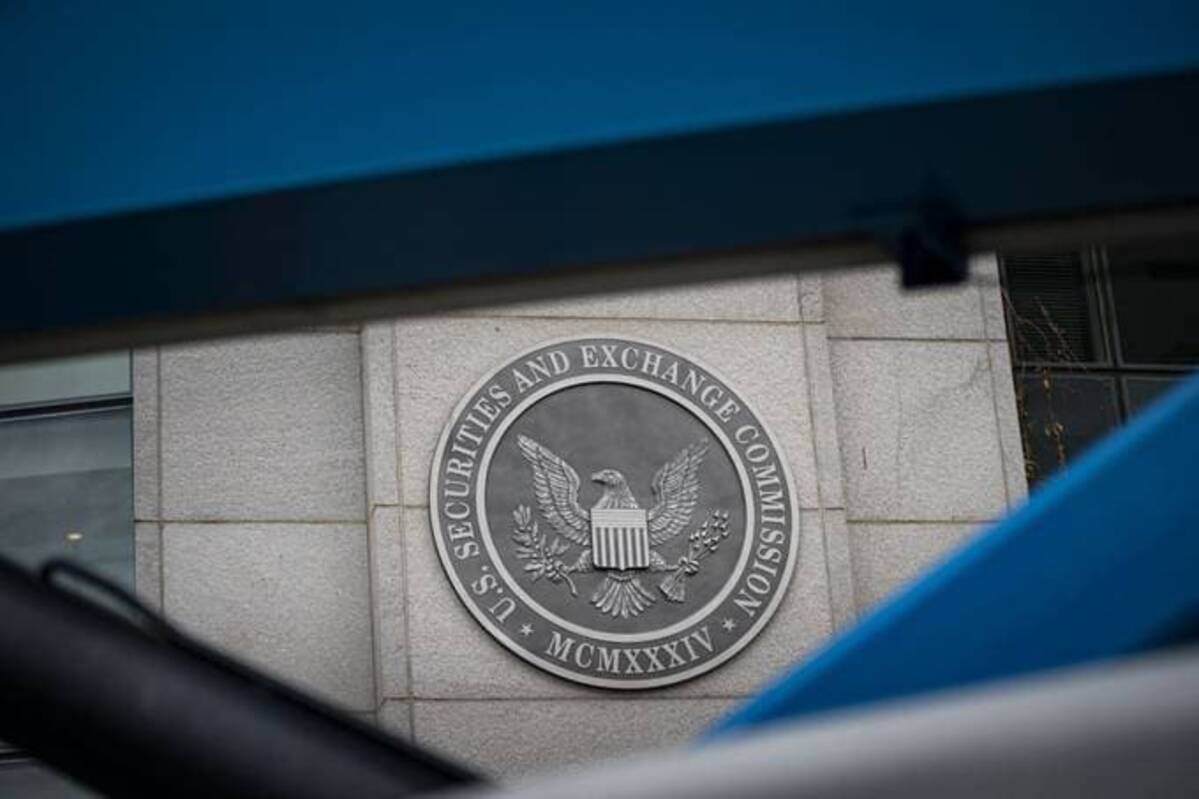 The D.C. headquarters of the Securities and Exchange Commission. (Al Drago/Bloomberg News) | | | The Securities and Exchange Commission on Thursday announced it is set to vote on a rule that would require companies to disclose their greenhouse gas emissions and the risks they face from climate change, E&E News's Avery Ellfeldt reports. The agency will meet on March 21 to evaluate proposed provisions that would "enhance and standardize" companies' climate-related disclosures for investors. The move comes after years of calls from finance-focused environmentalists for regulators to mandate reporting on how climate change affects the institutions they oversee. Sen. Elizabeth Warren (D-Mass.) last month urged the commission to release its proposed rule as quickly as possible, saying the lack of a rule leaves shareholders in the dark about significant climate vulnerabilities, in a letter to SEC Chairman Gary Gensler. | EPA chief puts power plants on notice for pollution |  Environmental Protection Agency Administrator Michael Regan in Houston for the CERAWeek conference. (F. Carter Smith/Bloomberg News) | | | Environmental Protection Agency Administrator Michael Regan on Thursday addressed oil executives and outlined how the Biden administration plans to cut air and water pollution spewing from power plants, The Post's Dino Grandoni reports. "While we continue to see the important leadership you're demonstrating to reduce pollution, power plants remain the largest stationary sources of harmful pollutants like nitrogen oxide and sulfur dioxide," Regan said during his keynote speech at the CERAWeek energy conference in Houston. The EPA chief laid out a suite of regulatory actions that the agency will take in the coming months to crack down on toxic mercury, smog-forming compounds and other pollutants, as the Biden administration pushes to kickstart the nation's clean energy transition despite recent opposition in Congress and on the Supreme Court. | | |  | Pressure points | | Gas leak at ConocoPhillips drilling site in Alaska forces evacuations | 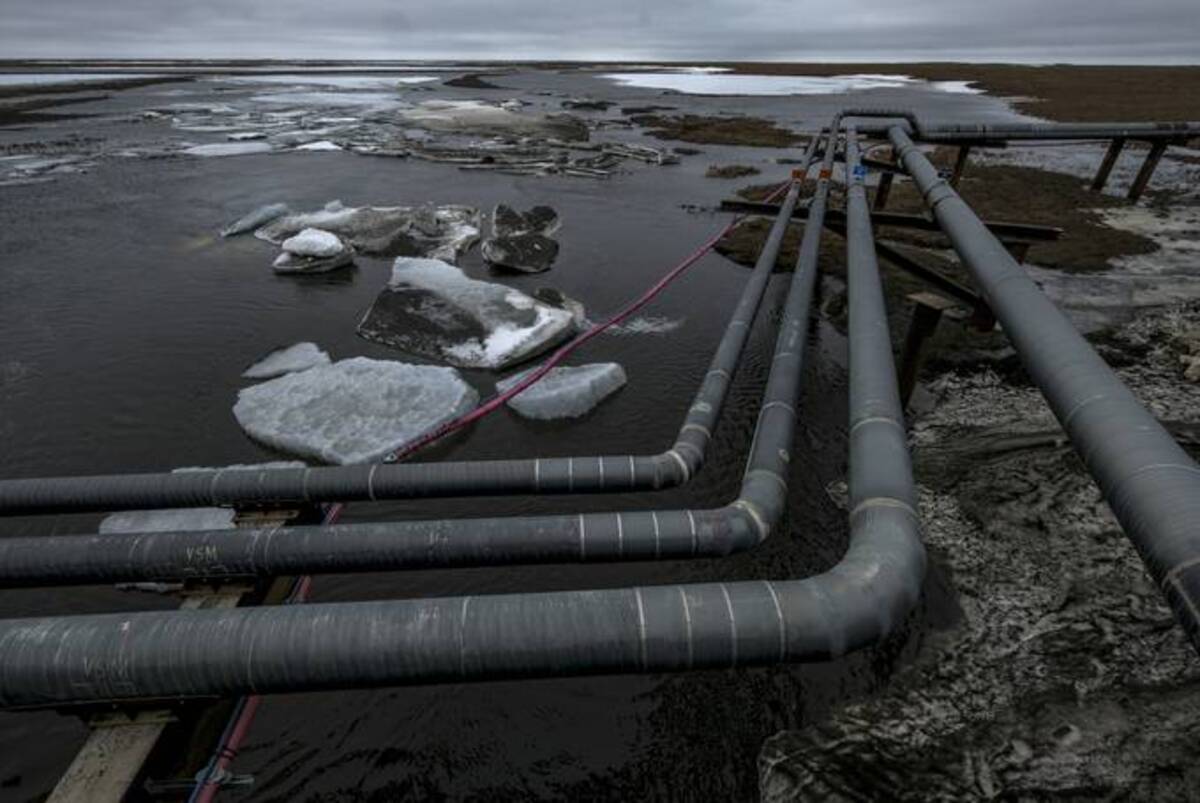 Pipelines extend across the landscape outside Nuiqsut, Alaska. (Bonnie Jo Mount/The Washington Post) | | | Natural gas has been leaking from a ConocoPhillips drilling site outside an Alaska Native village in the Arctic for nearly a week, prompting the company to evacuate nonessential personnel and causing some residents to flee, our colleague Joshua Partlow reports. An unknown amount of gas is leaking from multiple wellheads at ConocoPhillips's Alpine Central Facility, about eight miles from the village of Nuiqsut. The leak comes as the company is proposing a new drilling project nearby, the Willow project, which has sparked concerns from environmentalists who warn that it will harm wildlife and drive up carbon emissions. ConocoPhillips spokesman Michael Walter said in a statement that the company has not identified any significant damage at this point. "There are no reports of injury or environmental impact to the tundra or wildlife," he said. "Air quality continues to be monitored, and no natural gas has been detected outside of the CD1 pad," the drill pad where the gas was first found. | | |  | Viral | | |