| Today, Ukrainian President Volodymyr Zelensky got something he really wanted: a U.S. ban on Russian oil imports. Once skeptical, President Biden announced the ban today, acknowledging it would probably raise gas prices but saying it was necessary. In addition, the European Union could soon start to cut off most of its Russian oil intake. But something Zelensky wants more than an oil ban is a no-fly zone over Ukraine. And that's a much harder sell for Biden. Here's why. What is a no-fly zone? A no-fly-zone order bans aircraft in a specified area. So if a no-fly zone was imposed over Ukraine (or certain parts of Ukraine), Russia wouldn't be allowed to fly warplanes there — and therefore wouldn't be able to target civilians or military bases from the sky. 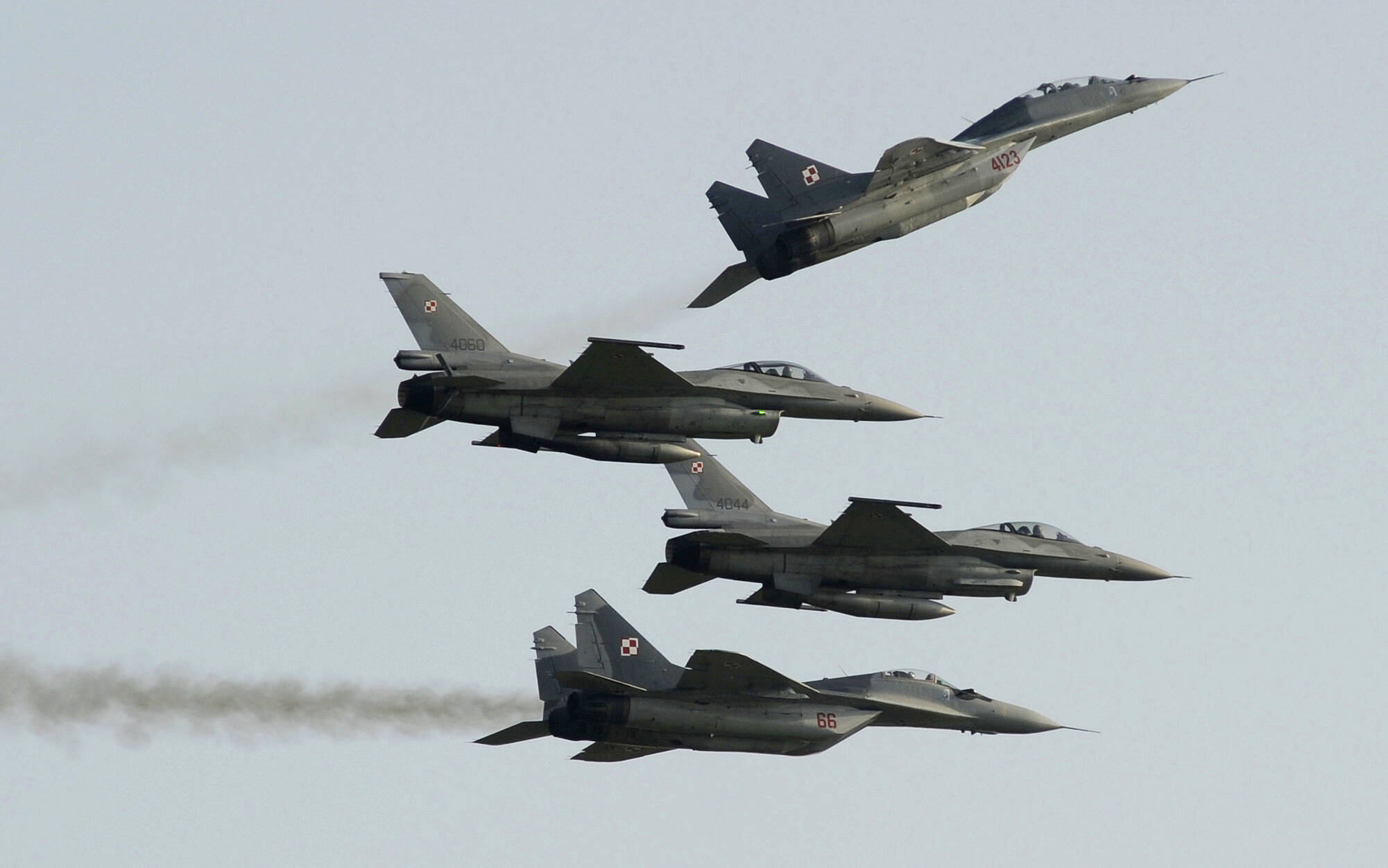 Jets in a Polish air show in 2011. (Alik Keplicz/AP) | The catch: For a no-fly zone to work, someone needs to be able to enforce it. So if NATO imposes a no-fly zone over Ukraine, NATO would be responsible for patrolling the area and shooting down Russian planes that enter it, which would risk pulling the United States or other allies directly into the war. A lot of American leaders are opposed to this: Sen. Marco Rubio (R-Fla.) put it this way: "It means starting World War III." Secretary of State Antony Blinken said Sunday that the United States is trying to "end this war in Ukraine, not start a larger one." Rubio also said that leaders are very worried about how this war could quickly escalate. Russian President Vladimir Putin is feeding into those fears. He's talked about his country's nuclear power and warned that he would view any nation that declared a no-fly zone "as participants of the military conflict." But: An increasingly desperate Zelensky is upping the pressure. He recently framed the West's refusal to institute a no-fly zone as giving "the green light" for Russia to bomb Ukrainian towns. And as civilians — including children — die while trying to flee in supposed humanitarian corridors, some in the United States feel it's tougher to just stand by. Today, two dozen big names in U.S. foreign policy, including former top government officials, released a letter calling for at least a partial no-fly zone to enforce civilian escape routes. "It is to save civilian lives, prevent them from being bombarded by the sky," Kurt Volker, a diplomat in the Bush and Trump administrations, said on "PBS NewsHour" recently. And not all lawmakers in Congress are opposed. Rep. Adam Kinzinger (R-Ill.), who fought in the Iraq War, has called for a no-fly zone, and Sen. Joe Manchin (D-W.Va.) indicated he'd be open to it. White House press secretary Jen Psaki has stopped short of completely ruling it out. What now?: It seems unlikely that as long as the fighting stays in Ukraine, the Biden administration will shift its stance on no-fly zones (even limited ones), since the risk of escalation is so high. But it seemed unlikely a few days ago that Biden would ban Russian oil imports, and here we are — though that policy shift carried much less risk of war than instituting a no-fly zone. Violence in modern American politics "We need to build more gallows." That's Wendy Rogers, a Republican state senator in Arizona, talking recently at a white-nationalist conference. "Make an example of these traitors who have betrayed our country." Rogers has become a star on the far right, more popular (and more well financed) than some of Arizona's top Republican politicians, report The Post's Beth Reinhard and Rosalind Helderman. She says and does things that even Rep. Marjorie Taylor Greene (R-Ga.) won't quite embrace (such as unapologetically speaking at this white-nationalist conference, where Hitler was spoken of fondly). 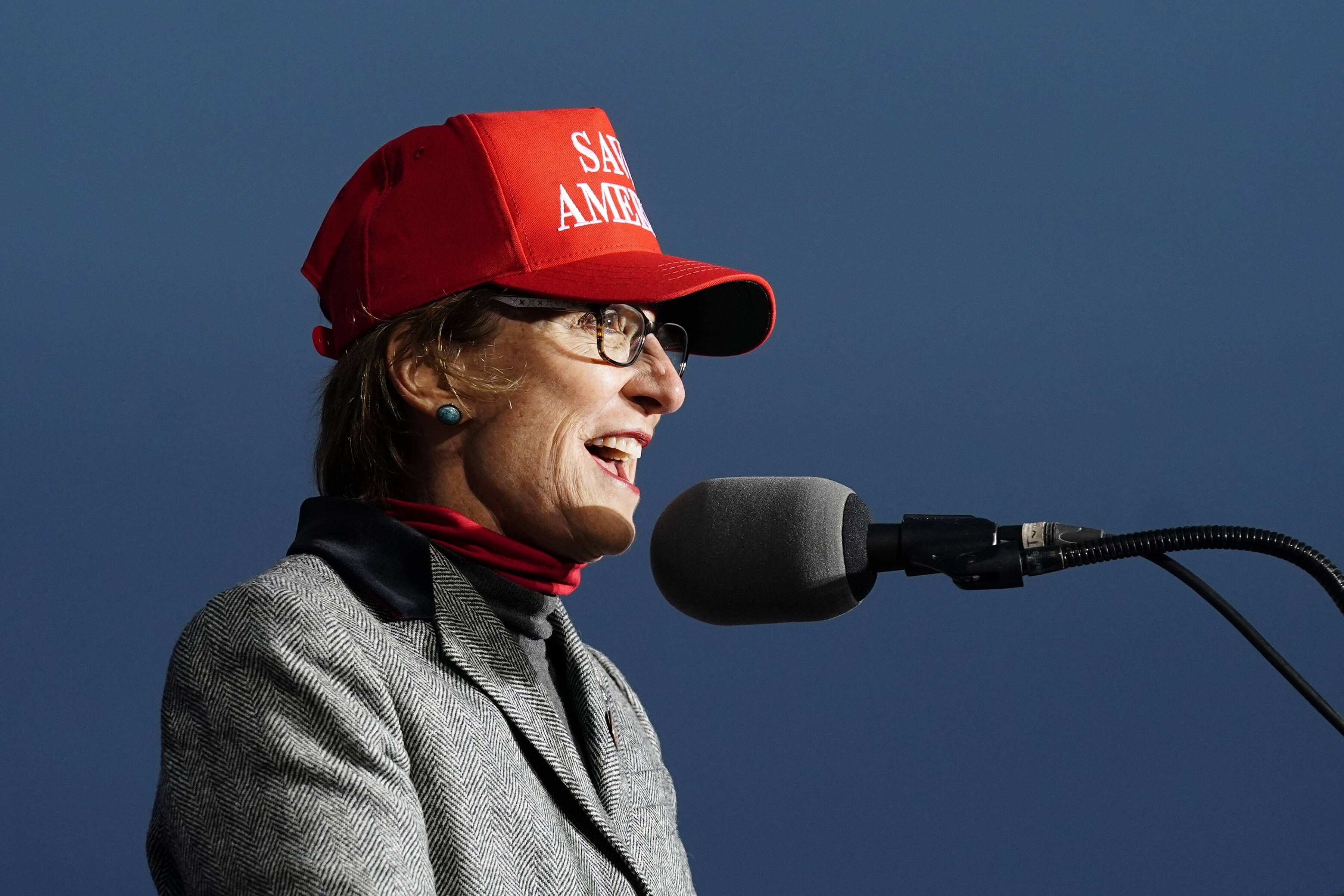 Arizona state Sen. Wendy Rogers (R) in January. (Ross D. Franklin/AP) | Rogers is on the front edge of the escalating violent rhetoric in politics. It's not like there are beatings on the Senate floor anymore, but a number of politicians across the country, at all levels, have recently described feeling unsafe in their jobs. After he voted to impeach Trump, Rep. Anthony Gonzalez (R-Ohio) said he and his family were greeted by police officers at the airport for added safety. He said it was "eye-opening" and announced his retirement soon after. Last week, Boise, Idaho, Mayor Lauren McLean (D) became the rare politician to talk openly about how this dynamic shaped her life. She said that she and her children have received death threats; that people tied to militia-style groups have stood outside her home regularly, sometimes with torches and pitchforks; and that she no longer feels safe walking to work alone or jogging in the early morning hours. "I understand the decision to leave public office because I still feel intensely the fear, frustration, and helplessness of watching my two children quietly take in news of thwarted threats against me and learning that they, too, were being targeted and tracked online," she said in a statement. Political threats — and even acts of violence — are not just the domain of the right. But the current trend of such increasingly violent public rhetoric seems driven by the right, by characters such as Rogers and Trump, who at times openly encouraged violence by his supporters. And early signs point to it escalating before the 2022 elections. "This trend of violent intimidation has resulted in a wave of officials stepping away from public service, which puts our entire democracy in danger," McLean warned. | 



 Email
Email 
