| Did a friend forward this to you? Sign up here. Herby beans and greens for Nowruz Some of my earliest memories are of my mother making yogurt. I remember her pouring a gallon of whole milk into her biggest pot and setting it over a flame on the stove. She'd stir it with a wooden spoon, and use her pinky finger to check the temperature. When it was warm enough, she'd turn off the heat and add a couple of spoonfuls of the last batch of yogurt. Then, she'd cover it, wrap it in a towel, and place it in the turned-off oven to set into silky curd overnight. We'd eat that yogurt — maast, in Persian — morning, noon and night. It found its way into salads and stews, sandwiches and sauces. If I had an upset stomach, she'd serve me a bowl of warm rice with a dollop of cool yogurt on the side. Often, it was stirred into soups, turning them creamy while adding a welcoming touch of tang. There are many kinds of soup in Iran — brothy, meaty, starchy, thick — but the style that's most celebrated in Persian cuisine is ash. "Ash is so integral to Iranian cuisine that the word for 'cook' is ash paz — the maker of ash," writes Naz Deravian in her poignant cookbook "Bottom of the Pot: Persian Recipes and Stories." The word for 'kitchen' is ash paz khaneh — the house or room where ash is prepared." I reach for Deravian's book often — not just because it's full of wonderful recipes, but because it's full of stories and recent history that add context to my own childhood memories. "In the midst of the Iranian Revolution, uncertainty and long food lines dominated our kitchen table talks as we sought comfort in a pot of ash topped with a big dollop of maast," Deravian writes. "The strength of the economy, and in turn the stability of the country, was determined by the price of oil and the price of yogurt. The longer the yogurt line, the pricier the yogurt, the more unstable the country … In our new peaceful hometown of Vancouver, British Columbia, yogurt lines were of no concern, because there just wasn't any to be found." So Deravian's mother, in Vancouver, did just as my mother, in Chicago, did in the early 1980s. She made her own. Deravian also loves yogurt stirred into ash. One of the most famous recipes for ash is one that's sometimes served during Nowruz, the Persian New Year: Ash Reshteh. Deep green and rich with herbs, it's also incredibly hearty thanks to the addition of beans and reshteh, an Iranian noodle. Yogurt or kashk, a sort of reconstituted and super-fermented whey, swirled in at the end, turns it the prettiest shade of spring green. But traditional ash, like a lot of Iranian recipes, can be an all-afternoon or all-day affair. This recipe, which I developed one day when I was in the mood for the soup, but feeling impatient, is inspired by ash reshteh. It features shortcuts, like using fried onions instead of caramelized, canned beans instead of dried, and suggests chopping the herbs and greens in a food processor to save time. Whatever you do, don't skip the yogurt.  | Today's recipe | 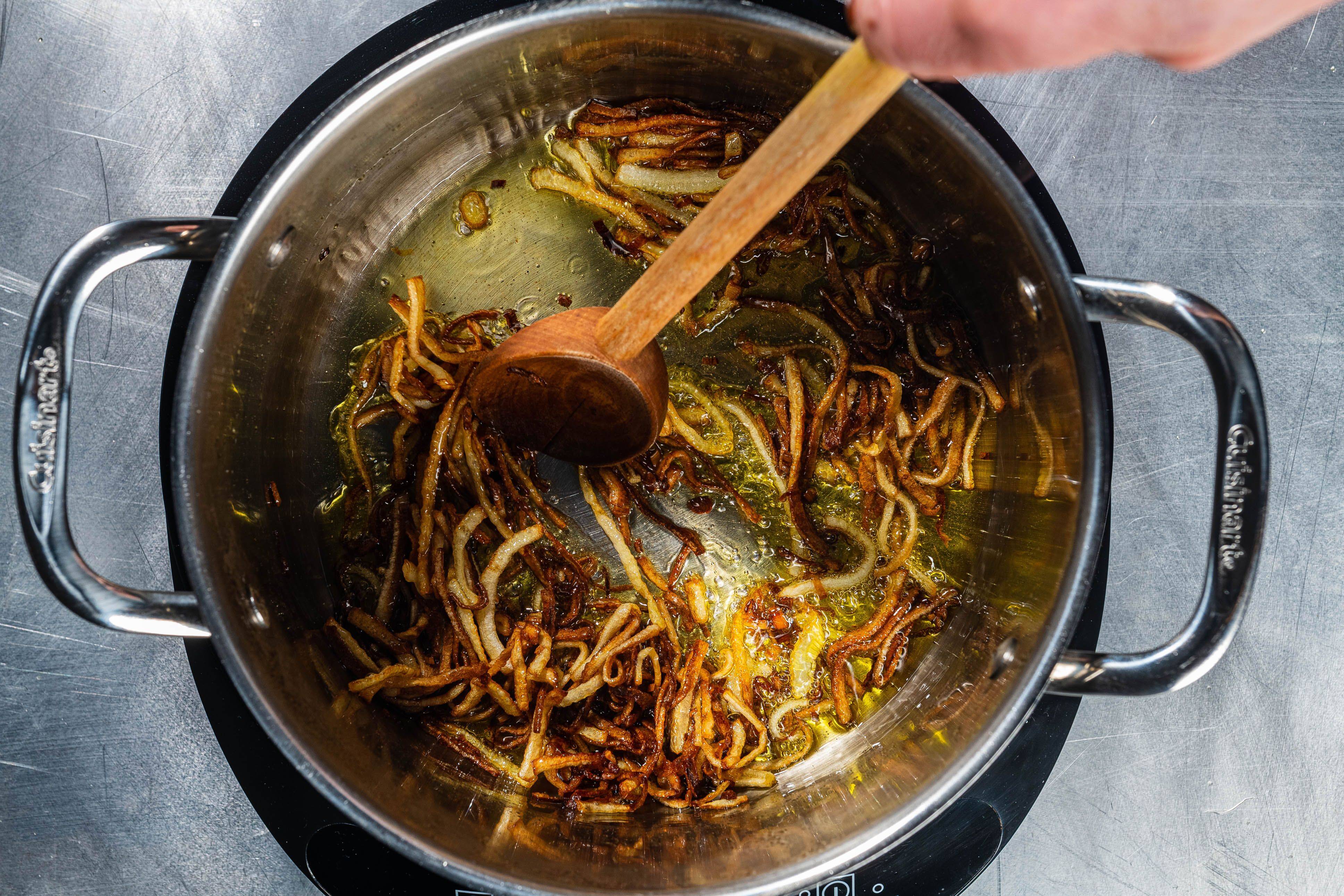 Photos by Rey Lopez for The Washington Post; food styling by Lisa Cherkasky for The Washington Post | Herby Beans and Greens SoupThis riff on ash reshteh includes a few substitution suggestions within the recipe. Here are a few more: - If you can't find dried mint in the spice aisle >> open a bag of mint tea.
- To make this recipe vegan >> use olive oil, vegetable stock or bean broth and a non-dairy plain yogurt, such as one made from coconut milk, instead of dairy yogurt or kashk.
- Want to avoid cilantro? >> Skip it and use another bunch of parsley or dill.
Storage: Refrigerate for up to 4 days.Make Ahead: The soup, without the noodles, can be made up to 3 days in advance. Cook the noodles separately, and add them to each bowl before serving. Want to save this recipe? View it on Voraciously here and click the bookmark icon below the serving size at the top of the page to add it to your Reading List. For easy printing and scaling, view this recipe in our Recipe Finder. Servings: 4 to 6
Active time: 45 mins
Total time: 1 hour Ingredients - 1/4 cup ghee or olive oil, plus more as needed
- 1 medium (6 to 8 ounces) yellow onion, halved and very thinly sliced
- 1/4 teaspoon fine salt, plus more to taste
- 3 cloves garlic, thinly sliced
- 2 teaspoons dried mint
- 4 ounces (4 packed cups) baby spinach, chopped
- 1 bunch fresh dill (about 1 ounce), tender stems and sprigs, chopped
- 1 small bunch fresh cilantro (about 1 ounce), tender stems, sprigs and leaves, chopped
- 1 small bunch fresh parsley (about 1 ounce), tender stems, sprigs and leaves, chopped
- 1/2 teaspoon ground turmeric
- 1 (15-ounce) can chickpeas, preferably no-salt, in its canning liquid
- 1 (15-ounce) can lentils, preferably no-salt, in its canning liquid
- 6 cups vegetable or beef broth
- 3 ounces dried linguine or Iranian reshteh noodles
- 2 tablespoons fresh lemon juice, or to taste
- Freshly cracked black pepper
- 1/2 cup plain yogurt or kashk
Steps1. In a large pot over high heat, heat the ghee or oil until it shimmers. Add the onion, season it with salt and fry, stirring occasionally and adding more fat if needed, until brown and crisp, about 8 minutes. Decrease the heat to medium and, using a slotted spoon, transfer the onion to a bowl. Add the garlic to the fat and fry until pale golden, about 30 seconds. Using a slotted spoon, transfer the garlic to the bowl with the onion. 2. Add the mint to the remaining fat in the pot and fry until it darkens, about 30 seconds. Increase heat to medium-high and stir in the spinach, dill, cilantro and parsley. Cook, stirring occasionally, until the greens turn bright and become very fragrant, about 5 minutes. Add the turmeric, letting it warm up in the oil at the bottom of the pot for about 1 minute. Stir in the chickpeas and their liquid, and lentils and their liquid. Add the broth, increase the heat to high, and bring to a boil. Reduce the heat to achieve a steady simmer and cook for 10 minutes — and up to 30 minutes — to let the flavors of the herbs and beans meld. The broth should turn green and thicken slightly. (The soup may be made up to 3 days ahead up to this point. Bring it back to a boil before you proceed.) 3. Add the linguini or reshteh to the pot, and season the broth with additional salt, until it tastes slightly salty. Let the noodles cook in the broth, stirring occasionally, until tender, about 7 minutes. Add the lemon juice, black pepper, and then taste. Adjust the seasonings as desired. 4. Serve in bowls topped with the fried onions, garlic and yogurt or kashk. Tested by Kara Elder. Nutrition information per serving (1 1/2 to 2 cups soup per person; based on 6): Calories: 310; Total Fat: 12 g; Saturated Fat: 7 g; Cholesterol: 26 mg; Sodium: 665 mg; Carbohydrates: 41 g; Dietary Fiber: 10 g; Sugars: 7 g; Protein: 12 g.  | Dessert | 🎧 Héloïse de Jenlis performing Debussy's "Deux Arabesques" on the harp.
📺 Japan's largest cat cafe.
📖 The Legacy Quilt Project by MOFAD, and my colleague Aaron Hutcherson's story about it.
👀 "These homes are off-grid and climate resilient. They're also built out of trash." by Nick Aspinwall in The Post.
🗣 If you liked this newsletter, please forward it to a friend! |




 Email
Email 


