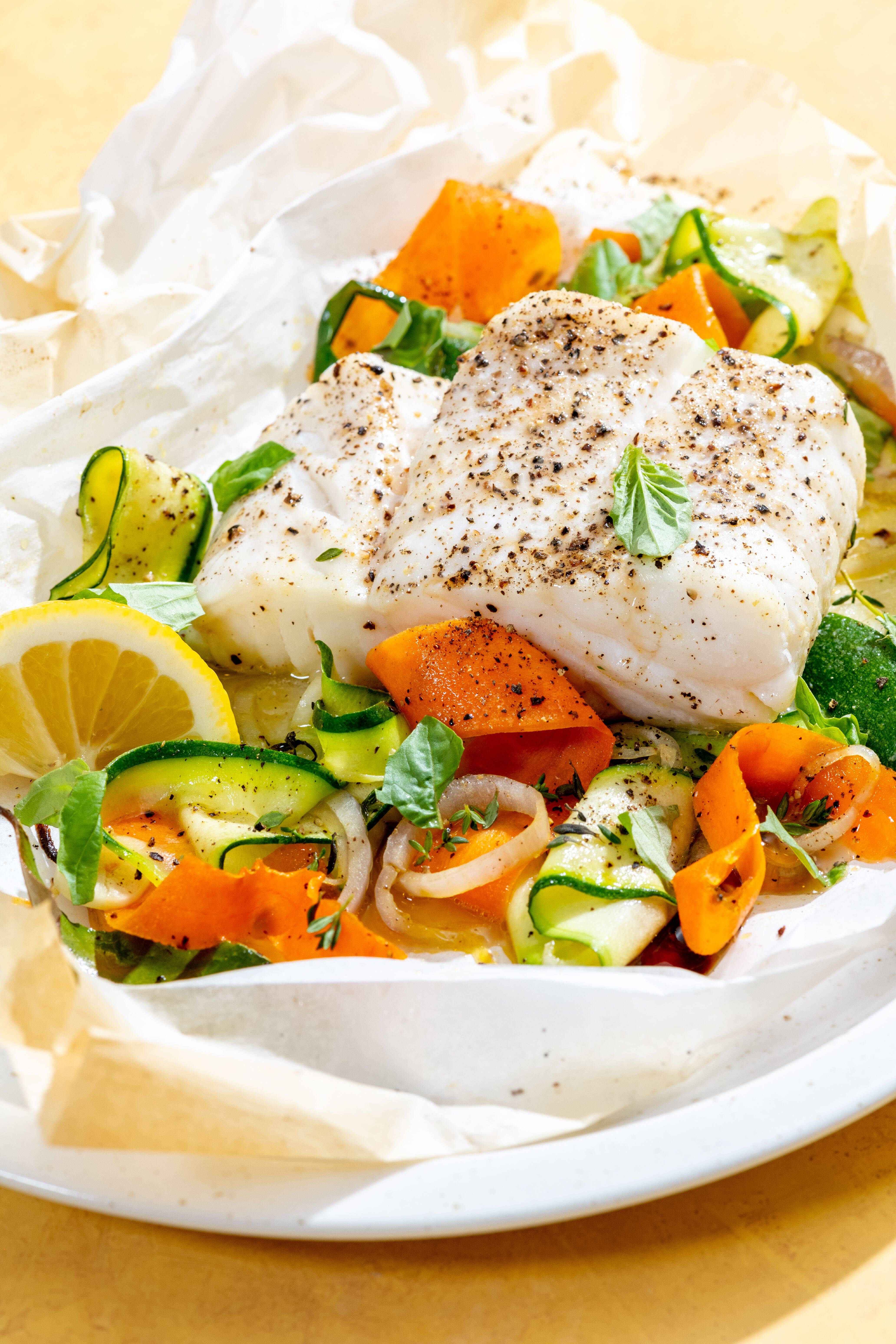
| Did a friend forward this to you? Sign up here. en Papillote Probably the first time I heard about the technique of baking something in a parchment or foil packet, or en papillote, was when I was a kid, watching Jacques Pépin on PBS. He has made it with sausage and salmon, bass and shellfish, chicken and pork. Theoretically, anything can be cooked en papillote, but fish might be one of the best options, because it cooks quickly, and the method ensures that everything that emerges from the enclosed packet turns out especially luscious and full of flavor. This recipe, for Fish Fillets en Papillote, was brought to The Post by recipes editor Ann Maloney, and it's incredibly versatile. But it's also nothing new, as Ann wrote. "It is just one example of paper-bag cookery, as the 'The Oxford Companion to Food' calls it: The method of sealing proteins up in paper with a bit of liquid for moist heat and aromatics for flavor has been used by many cultures for centuries for varying types of foods. Fish may be the classic protein, but most lean proteins can be cooked this way," Ann noted. She's made this recipe with trout, salmon and cod, but almost any fish would work. Ann's one rule of thumb? "The fish should be no thicker than about 1 inch." What else should go into each packet? Ann says you want thinly sliced vegetables, and suggests a vegetable peeler for ease. Here, she calls for zucchini and carrots, but fennel, potatoes, spinach, bell pepper, spring onions, garlic or asparagus would be great, too. You'll also need a splash of flavorful liquid. Wine is traditional, but vinegar, citrus juice or watery sauces like soy sauce can be excellent, too. Finally, don't forget seasonings and herbs. Use a combination of your favorites, or stick to one for a singular scent. Ann says fresh is best here, but dry herbs will work in a pinch. Finally, she suggests a pat of butter atop each fillet, though that's optional. Then, all you need to do is fold the parchment or foil around each packet. You can cut large circles, fold them in half and crimp them all around, or cut one big rectangle for each packet, and fold it over on itself. Try to leave a little room for steam. "The steam needs room to push the paper into a bit of a balloon," Ann advises. En papillote: It's like a craft project and dinner in one!  | Today's recipe | 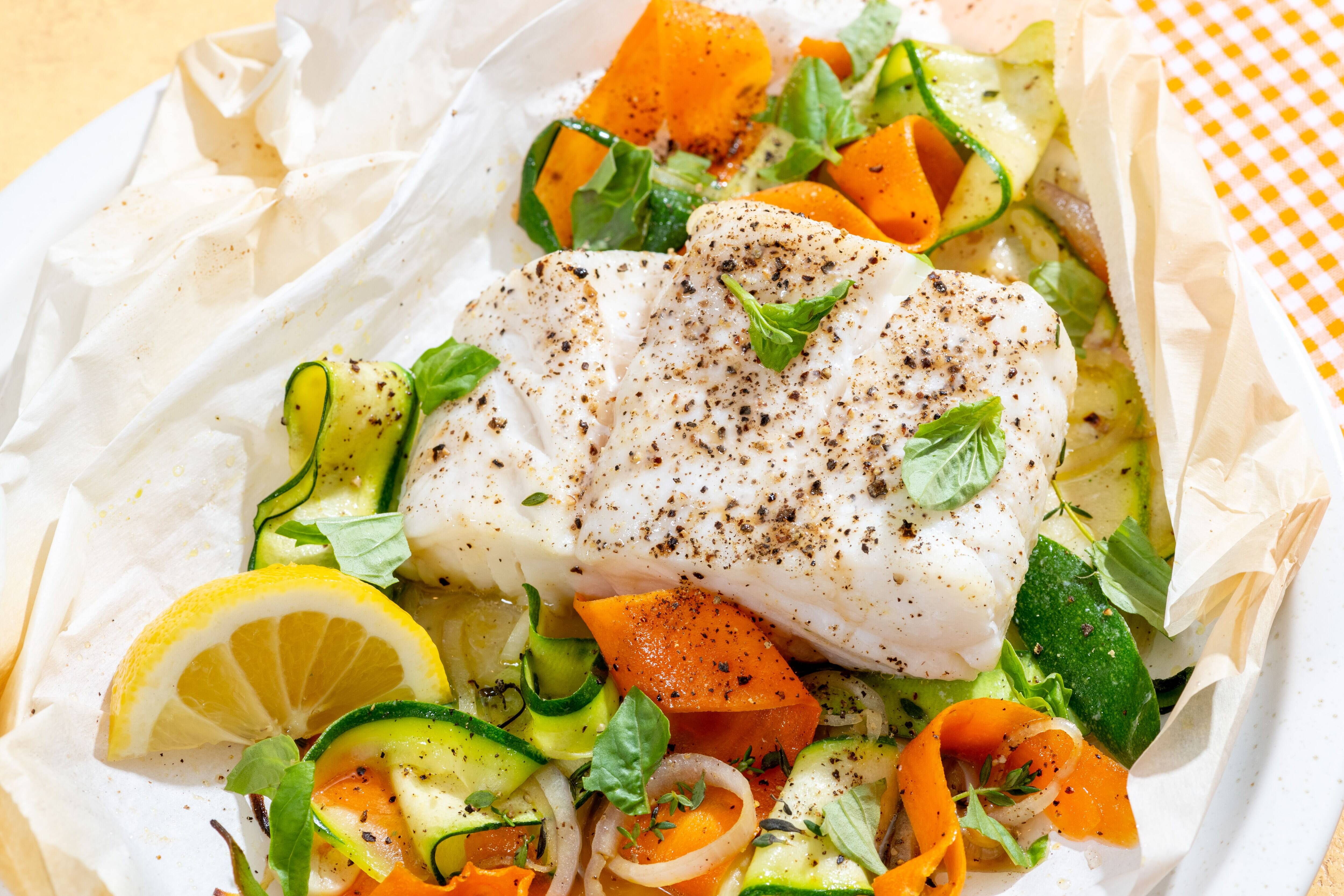 Photos by Laura Chase de Formigny for The Washington Post; food styling by Lisa Cherkasky for The Washington Post | Fish Fillets en PapilloteThis is an excellent method for cooking tender-fleshed fish, such as snapper, cod (pictured) or trout, because steaming the fillets with aromatics infuses the fish with flavor. Serve with a green salad, rice or crusty bread. - If you can't have fin fish >> try this with scallops or thin slices of pork loin.
- To make this vegan >> wrap the vegetables along with cooked, drained white beans or sliced mushrooms.
- Instead of the shallot >> use a spring onion, 1/4 a medium yellow onion, or skip it.
Want to save this recipe? View it on Voraciously here and click the bookmark icon below the serving size at the top of the page to add it to your Reading List. For easy printing and scaling, view this recipe in our Recipe Finder. Servings: 4
Active time: 20 mins
Total time: 35 mins Ingredients - 1 lemon
- 1 zucchini (about 10 ounces), peeled and trimmed
- 1 carrot (about 4 ounces), trimmed
- 1 shallot (about 1 1/2 ounces), peeled and thinly sliced
- 3 tablespoons extra-virgin olive oil, divided
- 1 teaspoon fresh thyme leaves or 1/4 teaspoon dry
- 3/4 teaspoon freshly ground black pepper, divided, plus more as needed
- 1/2 teaspoon fine salt, divided
- 2 garlic cloves, thinly sliced
- 4 bay leaves (optional, see NOTE)
- 4 (7- to 9-ounce) skinless, boneless fish fillets, such as cod, pompano or trout
- 1 tablespoon unsalted butter, cut into small pieces
- 1/4 cup dry white wine, such as sauvignon blanc (optional)
- Torn fresh basil leaves, for serving (optional)
Steps1. Position two racks so they are roughly in the center of the oven, with space between them, and preheat to 400 degrees. 2. Halve the lemon and juice one half; reserve the other half for serving. 3. Using a vegetable peeler, slice the zucchini and carrot into thin, wide ribbons. In a large bowl, toss the zucchini, carrot, shallot and 1 tablespoon of the olive oil, the lemon juice, thyme, 1/4 teaspoon of pepper and 1/8 teaspoon salt until evenly coated. 4. Cut four (12-by-15-inch) pieces of parchment paper. (The size of the parchment needed may vary depending on the shape of the fillets.) Fold each sheet in half lengthwise; and then open flat. Evenly divide the vegetables, garlic and bay leaves, if using, on one half of each piece of parchment, near the fold. Drizzle a bit of the drippings from the vegetable bowl on top of each pile of vegetables. 5. Pat each fish fillet dry. Use the remaining oil to coat each fillet and sprinkle each with the remaining salt and pepper. Place the fillets on top of the vegetable piles, then dot the fish with butter. Drizzle 1 tablespoon of wine, if using, over each fillet. 6. Fold the empty parchment half over the top of the fillets and roll the edges, crimping to seal tightly. The paper can touch the fish, but should not be pressed against it, so the packets have room to expand. 7. Using a spatula, carefully transfer the 4 packets to one or two rimmed baking sheets (depending on the size of fillets you may need a second baking sheet). Bake for about 12 minutes for thin fillets, 15 minutes if the fillets are more than 1-inch thick. The fish will be opaque and flake and the vegetables will be crisp-tender. To check, remove one packet and gently use a fork to flake the fish, resealing and returning to the oven as needed. 8. Meanwhile, slice the remaining lemon half into 4 wedges. 9. To serve, place a packet on each dinner plate. Using scissors or a very sharp paring knife, cut open the packet and fold back the opened flap, being careful of any hot steam that escapes. Sprinkle over the fresh basil and a few more grounds of fresh pepper, if using, and serve with a wedge of lemon. NOTE: If using bay leaves, discard them before eating. Adapted from the Blue Dog Cafe's recipe in "The Eat Fit Cookbook" by Molly Kimball (River Road Press, 2020). Tested by Ann Maloney. Nutrition information per serving: Calories: 319; Total Fat: 9 g; Saturated Fat: 2 g; Cholesterol: 5 mg; Sodium: 280 mg; Carbohydrates: 41 g; Dietary Fiber: 9 g; Sugar: 5 g; Protein: 10 g.  | Dessert | 🎧 Beethoven Piano Concerto No. 5 performed by Alina Bercu.
📺 "Jolene" by Dolly Parton.
📖 "National Cuisine Is a Useful Illusion" by Reem Kasis in the Atlantic.
👀 Tamal de tichinda.
🗣 If you liked this newsletter, please forward it to a friend! |



 Email
Email 


