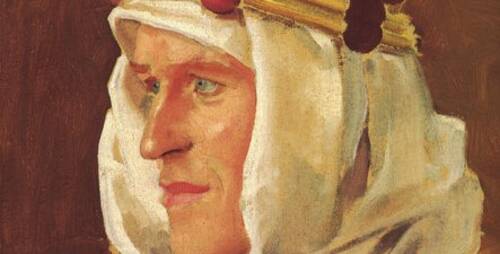
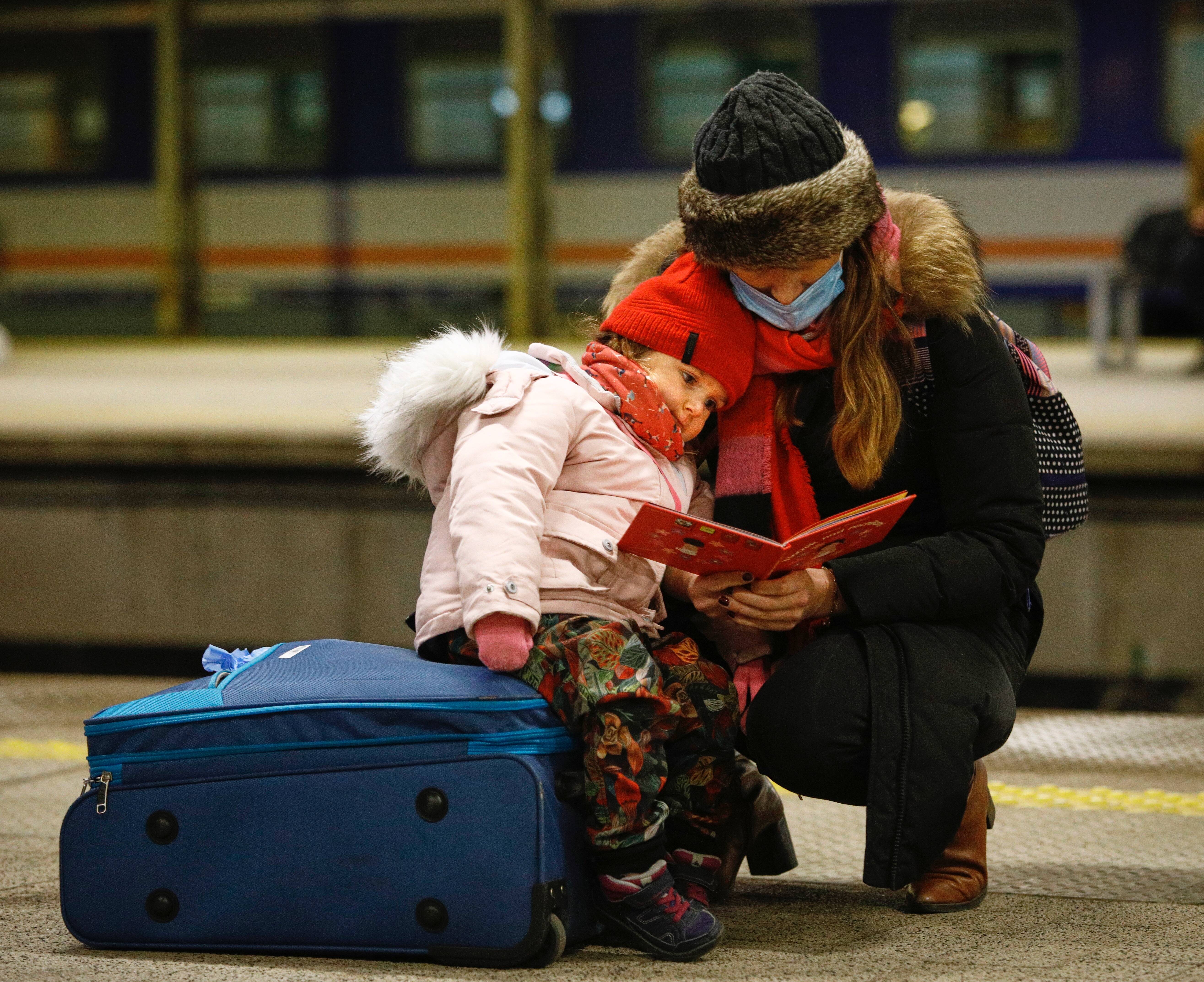
 A woman reads a book while holding a child after the arrival of a train with 350 refugees from Kyiv, Ukraine at the Warsaw East train station in Poland on March, 4, 2022. (Photo by STR/NurPhoto via Getty Images) | The plight of hundreds of thousands of children displaced by Vladimir Putin's invasion of Ukraine is beyond comprehension. It's tempting to feel paralyzed with despair about the escalating humanitarian crisis, but giving money to experienced aid organizations really does help (start here). In such horrific conditions, periods of imaginative escape are essential for children — and books are the perfect vehicle. With lightning speed, a group of Polish publishers called the Universal Reading Foundation has sprung into action to buy and distribute Ukrainian children's books for the youngest refugees taking shelter in Poland. Maria Deskur, CEO of the Universal Reading Foundation, says her group has reached out to about 40 Ukrainian publishers. Given the deadly circumstances, only about a dozen have been able to respond. "Some have fled," Deskur tells me. "Some are fighting." But the Universal Reading Foundation managed to find a warehouse in Lviv, Ukraine, that could help. In the next few days, children's publishers in the besieged country will send the first batch of about 25,000 books. The journey to Poland is not long, but with pained understatement Deskur acknowledges, "We might have issues." If and when the books arrive, they will be distributed to orphanages, social care institutions, kindergartens, schools and libraries. "We will do as many rounds as needed and possible," she says. "This is to help Ukrainian children and Ukrainian publishers at the same time. The survival of the book industry is crucial for the future." "The emotional level of the situation is truly unimaginable," Deskur says. Three days ago, a hotel near Warsaw welcomed more than 1,600 orphans, ages 3 to 18. "I am too tired to even try to imagine what that means – psychologically, emotionally, logistically." Deskur knows of a cloister in Warsaw that has agreed to accept the displaced residents of an entire Ukrainian orphanage, almost 100 children, "all under 2 years old — with no clothes, diapers, nothing." Books are uniquely designed to offer comfort. "A joyful moment of book sharing and talking with a close person is the definitive moment of safety, which builds the fundamentals of our social competence, self-esteem and psychological well-being," Deskur says. "No toy, no movie, no game can give all that to a child. This is true for every child, but for these young Ukrainians who have just lived through a trauma, I would be ready to argue that their future psychological stableness depends on it." Older children will benefit from these donated books, too. "Teenage Ukrainians who have just come to Poland have to redefine themselves, process what they have seen, find strength to move forward," she says. "Whenever you take a book in your hand, it is an act of openness to someone else's thoughts and emotions; an opening to listen to other points of view; an entering through the door to dialogue and mutual understanding. Building fundamentals for that state of mind is crucial for the future." Asked how Americans can help, she says, "Here you are, straight: We need a lot of money to save literacy, the psychological stableness of the next generation of Ukrainians and – as a result – democracy in Ukraine." A little abashed at her own directness, she adds, "Sorry for my totally straightforward answer. You Americans taught me that." (Donate here.) Signing off, Deskur says, "Read to your kids. Take care of each other and your beautiful and democratic country."  Penguin Classics; Jack Kerouac c. 1956 (Photo by Tom Palumbo); Library of America | Tomorrow, the cool kids will celebrate Jack Kerouac's 100th birthday. The famous Beat writer was born in Lowell, Mass., to French Canadian parents. English was his second language, but he left an indelible mark on it. Fame came slowly to Kerouac. Then it arrived all at once and blew up his life. In 1957, when he was 35, he published his second novel, "On the Road," a lightly fictionalized version of his shambles across America. The New York Times called the publication "a historic occasion." For an author who was "mad to live" that was a heavy cross to bear. (The accidental book review that made Jack Kerouac famous.) Kerouac became a tremendous influence on the 1960s, but he was not destined to survive the decade. After years of alcohol abuse, he died in 1969 at the age of 47, when most of his books were already out of print. Since then, however, his star has risen higher than ever. (For regular hits of Beat wisdom, follow @DailyKerouac on Twitter. As Jack once asked, "Isn't this the time now to start following what I know to be true?") I've tried "On the Road" a couple of times but never inhaled. I'm consoled by the fact that Robert Giroux, the legendary editor at Farrar, Straus and Giroux, rejected it. John Updike wrote a little parody titled "On the Sidewalk" ("I got my tricycle out of the garage, and he was off!") And the New Yorker writer Amanda Petrusich once confessed, "At a certain point in a person's life, liking Kerouac — and liking 'On the Road,' especially — becomes embarrassing." - On Sunday, Petrusich is participating in a virtual discussion, sponsored by Politics & Prose, to consider the question "Does Jack Kerouac Still Matter?" The other guests will be Holly George-Warren, who's working on a new biography of Kerouac; the novelist A.M. Homes; and New York Times reporter John Leland, author of "Why Kerouac Matters: The Lessons of On the Road" (tickets).
- The New York Public Library has a small exhibit of Kerouac materials on display, including a segment of the rolled paper on which the spontaneous writer liked to type out his thoughts (through April 3).
- The Jack Kerouac Foundation is raising money to establish a museum and performance center in the empty St. Jean Baptiste Church in Lowell (donate). That setting is appropriate. "I'm not a Beatnik," Kerouac once said. "I'm a Catholic."
- Kerouac@100 — a committee that includes the Kerouac Estate and the Lowell National Historical Park — is celebrating the writer's centennial all year in Lowell (full list of activities). The fun kicks off tonight with music and a reading of Kerouac's poems at the Pollard Memorial Library. For any latter-day member of the Beat Generation, this is the year for a pilgrimage to the writer's birthplace where he became "desirous of everything at the same time."
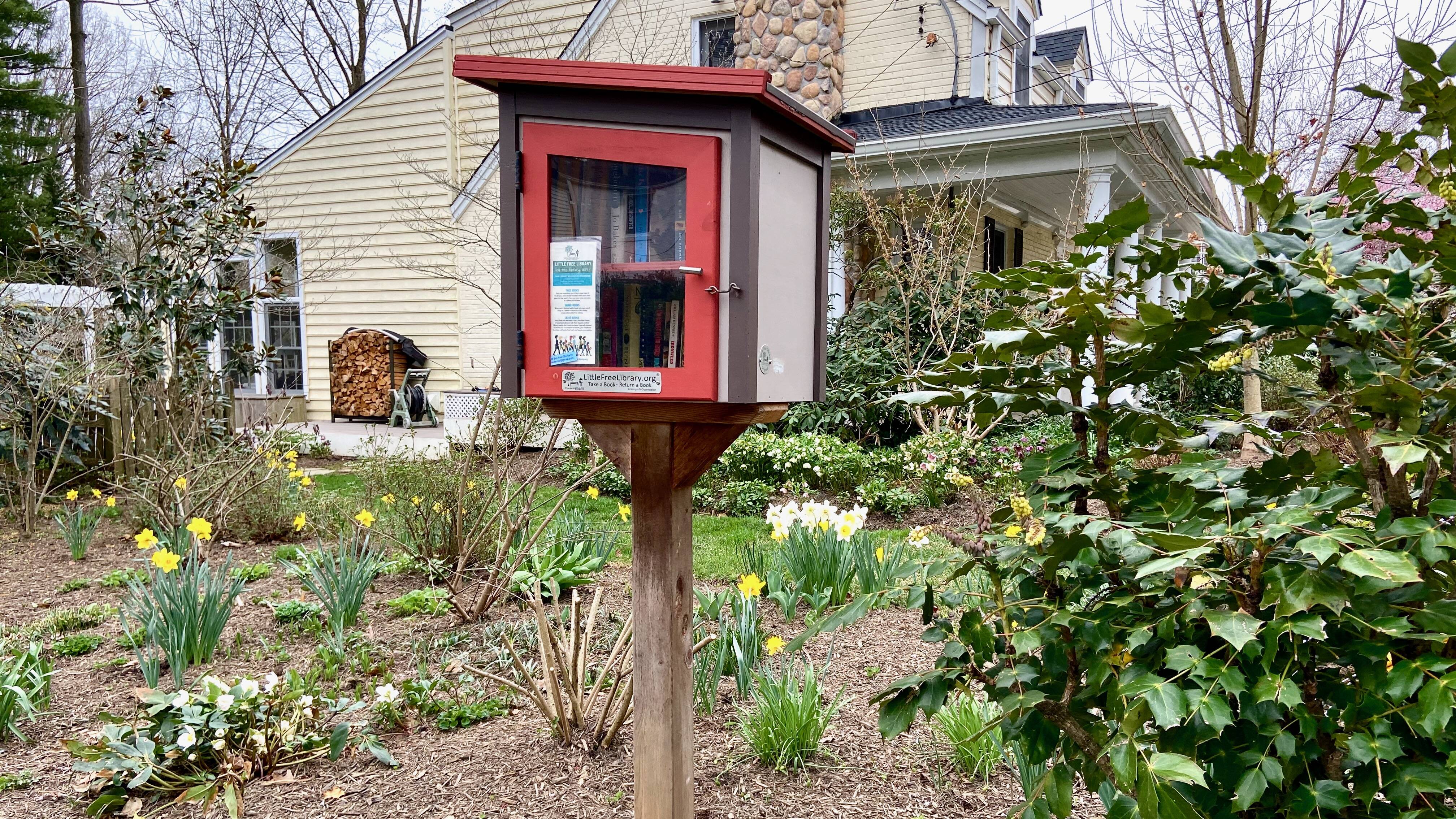 One of several Little Free Libraries that I've found in Bethesda, Md. (Ron Charles/The Washington Post) | If Kerouac's peripatetic spirit inspires you, you'll want something to read on the road. But you don't need money, man. There are more than 125,000 Little Free Libraries on planet Earth. Each box offers a constantly changing, wildly idiosyncratic selection of donated books. Yes, that could mean another copy of "Dianetics" and a 2018 version of "J.K. Lasser's Your Income Tax," but you might also find an old classic you've always wanted or a new bestseller everybody's talking about (particularly if the box is near my house). This week, Washington Post writer Austin Graff checked in with six delightful Little Free Libraries from D.C. to San Jose. He spotted kids books, puzzles, craft books (and yarn!), dog treats and poetry (story and photos). The serendipity of discovering these cleverly designed book boxes as you walk around your neighborhood is wonderful (essay). But sometimes, you want to know exactly where a Little Free Library is. You're in luck: This week, LFL released a free mobile app (download). It's an easy way to locate Little Free Libraries no matter where you are. The app even offers a map to take you to whichever box you'd like — around the block or around the world. You can keep a record of your favorite Little Free Libraries, see photos of the boxes and send messages to LFL hosts. And attentive hosts can post details about the books available in real time. Honestly, even if you never leave the sofa, it's surprisingly fun to scroll around on this app and see all the boxes out there promiscuously giving books away. 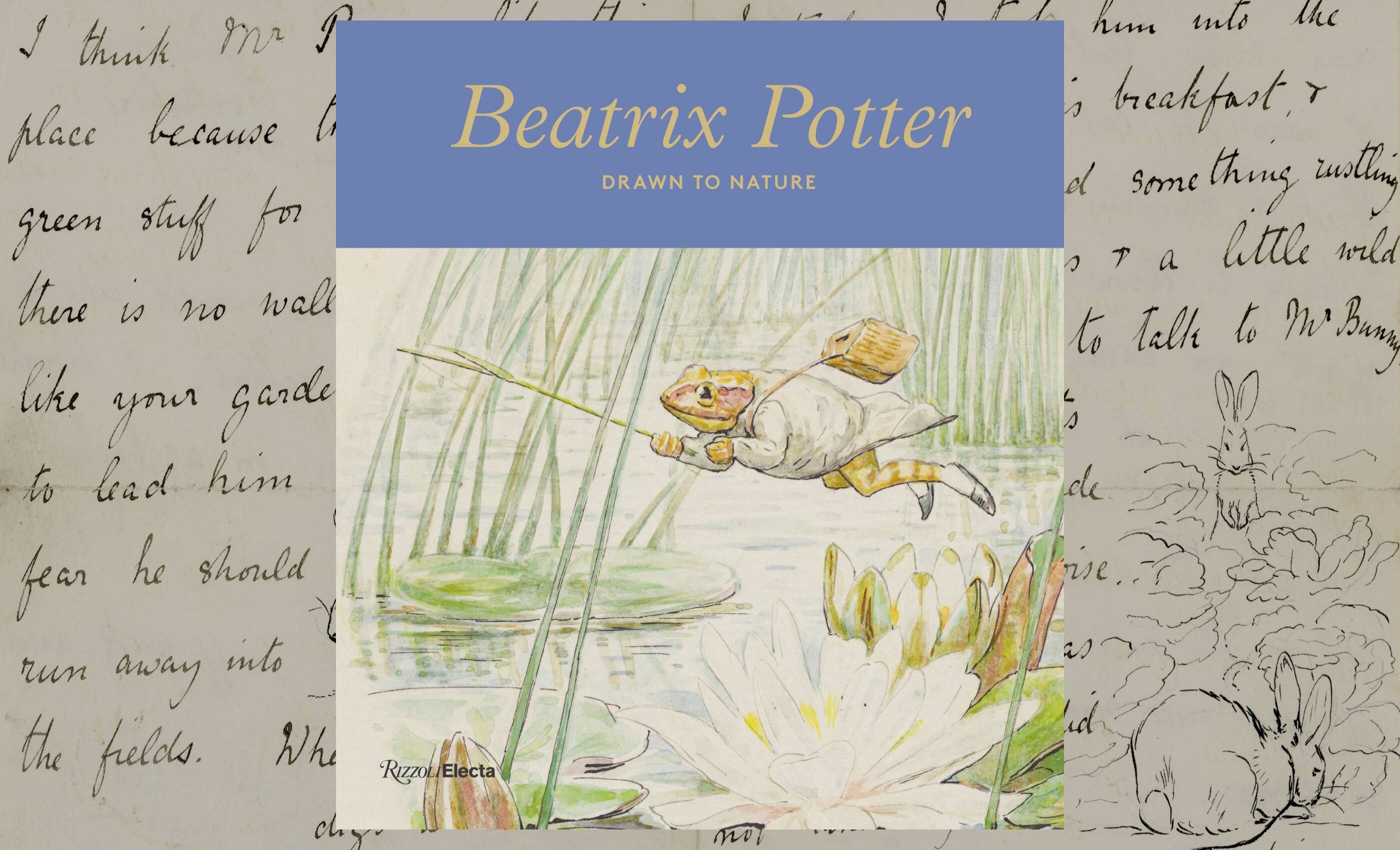 "Beatrix Potter: Drawn to Nature," edited by Annemarie Bilclough et al (Rizzoli, 2022). Background image is a letter by Beatrix Potter sent to Noel Moore in 1892 (Cotson Children's Library, Special Collections, Princeton University Library) | You may not think you can name any mycologists, but you can. Had she been born in a more enlightened age, Beatrix Potter would be known for her work on mushrooms. Potter is now the subject of "Drawn to Nature," an exhibit at the Victoria & Albert Museum in London. The show covers "Potter's life as a scientist and conservationist and explores the places and animals that inspired her most beloved characters." The exhibit includes over 200 sketches, paintings, letters, manuscripts, diaries and family photographs, covering her childhood and her later life as a savvy businesswoman and an accomplished student of nature. You can also see the letters that Potter sent in the 1890s to the son of her former governess. Those letters included illustrations of a rabbit named Peter. Eventually, Potter thought Peter might make a fun character for a children's book, but she couldn't get a publisher interested. Undeterred, she self-published her book, and Peter Rabbit quickly hopped into literary history: Potter's books have since sold more than 250 million copies. But her influence on our modern world is even larger than that. When Potter sewed a Peter Rabbit doll and patented it, she became a pioneer of character merchandising, which is now a massive market that includes story-related toys, figures and costumes from Warner Bros., Disney and more. If you're not lucky enough to get to London, don't despair. Annemarie Bilclough, a curator at the Victoria & Albert Museum, has just published "Beatrix Potter: Drawn to Nature." It's a gorgeously illustrated volume packed with more than 200 color photographs of botanical drawings, illustrated letters, Lake District paintings and, of course, picture book sketches. I always thought I was more a Winnie-the-Pooh man, but this adoring and scholarly book is more irresistible than Mr. McGregor's carrots. 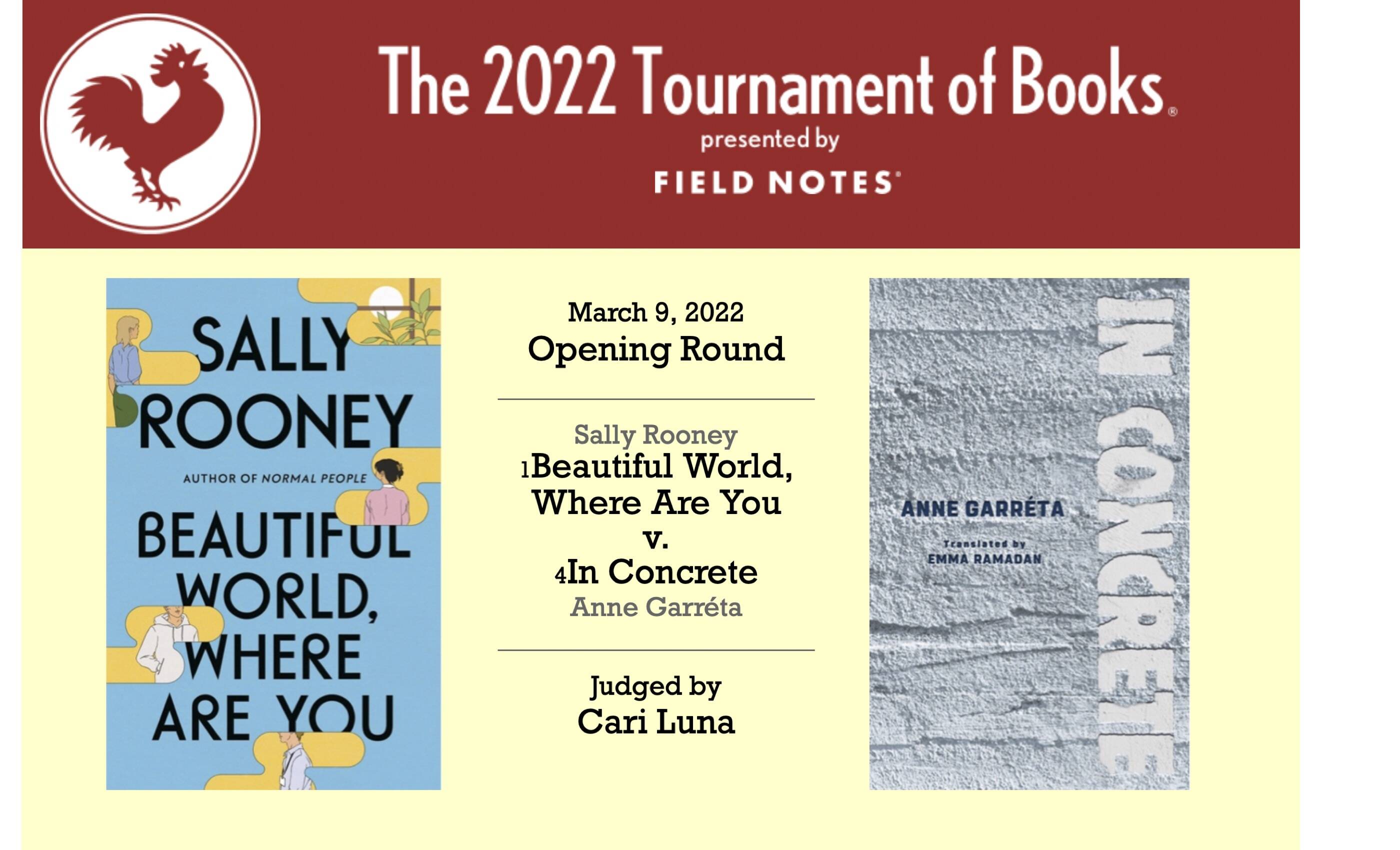 Courtesy of Tournament of Books | It would come as no surprise to my middle school gym teacher that everything I now know about sports brackets I learned from the Tournament of Books. The annual contest, sponsored by clever folks at the Morning News, is back for its 18th year. I love it because the founders proudly admit that book awards are absurd and corrupt and can't be stopped. For each round of this "literary bloodsport," a different ToB judge chooses between two novels and explains how their totally arbitrary decision was made. Play-by-play commentary is provided by the ToB chairs, acerbic critics and a large number of witty readers. The winners of the opening matches progress to the next round and so on until the ultimate winner is crowned and takes home the Rooster. First up: Sally Rooney's "Beautiful World, Where Are You" v. Anne Garréta's "In Concrete." It's an indication of how brutal this match is that judge Cari Luna begins her commentary with a profane exclamation that we can't print in a family newsletter. In a dramatic upset, Rooney's bestseller was defeated by Garréta's French novel (translated by Emma Ramadan), which Luna calls "unabashedly playful; insistently, raucously, lovingly itself." Yesterday, Katie Kitamura's "Intimacies" beat Kaitlyn Greenidge's "Libertie." And today, Lauren Groff's "Matrix" confronts J. Robert Lennon's "Subdivision." (Here's a list of all 18 contenders.) The ToB directors concede that the Tournament of Books is "fundamentally stupid." Writers and editors themselves, they go on to say, "We don't see any value in calling one novel the best of the year, or trying to turn art into sports." But if the final judgments are absurd, the discussion of those judgments is illuminating, entertaining and even valuable. Last year's winner was "Interior Chinatown," by Charles Yu, which had already won a National Book Award (rave). Over the years, several Rooster winners have gone on to win Pulitzer Prizes. Love it or hate it, you can watch the daily thrill of victory and the agony of defeat here. 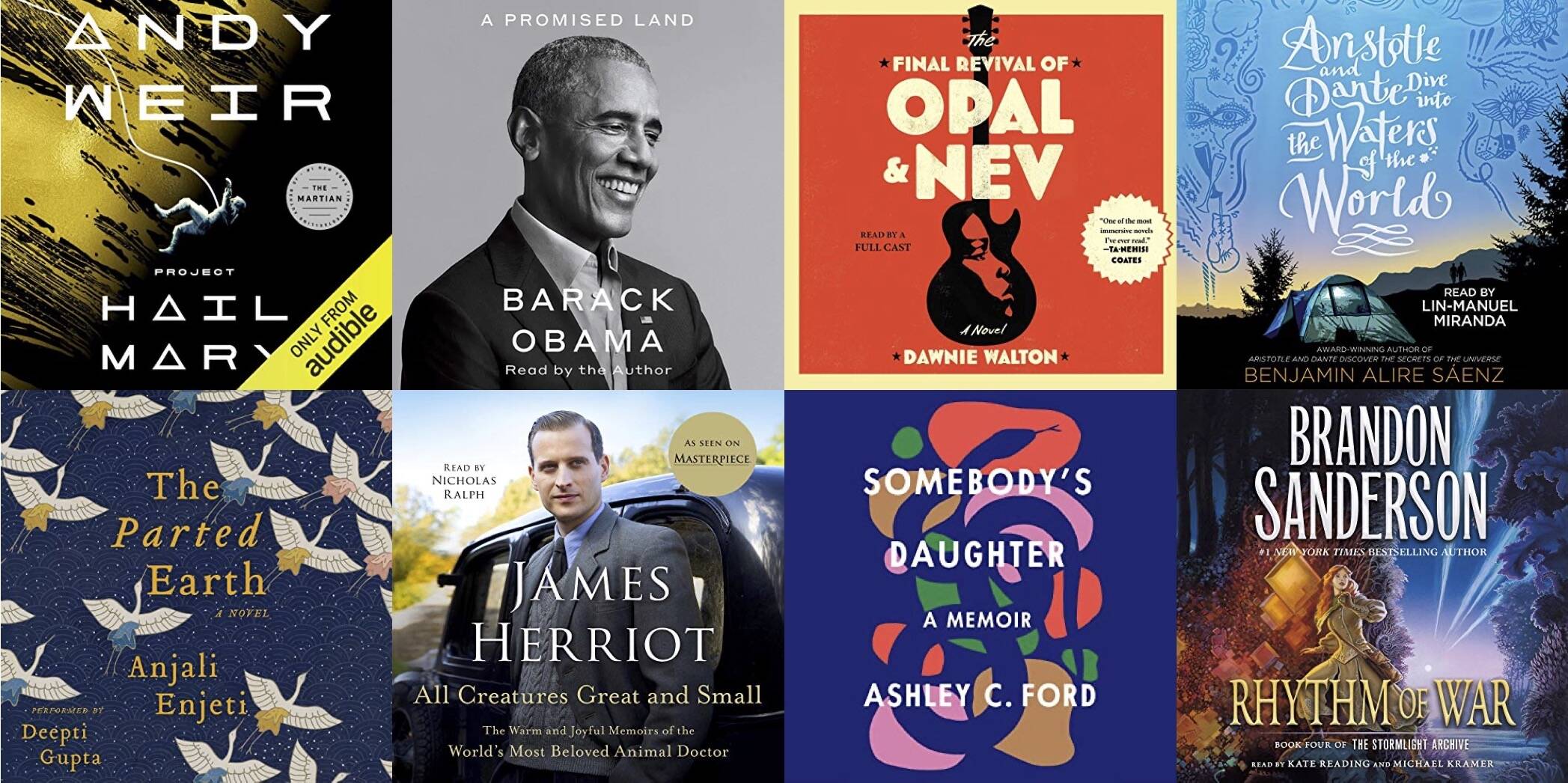 Audie Award winners (top row): Audible Studios, Penguin Random House Audio, Simon & Schuster Audio, Simon & Schuster Audio; (bottom row): Novel Audio, Macmillan Audio, Macmillan Audio, Macmillan Audio. | Listen up: The Audio Publishers Association announced the winners of the Audie Awards, celebrating the best audiobooks in 25 categories (full list). Among the highlights: - Audiobook of the Year: "Project Hail Mary," written by Andy Weir and narrated by Ray Porter. It also won the Audie for Science Fiction, but this novel has some problems.
- Narration by the Author: "A Promised Land," written and narrated by Barack Obama (review).
- Fiction: "The Final Revival of Opal & Nev," written by Dawnie Walton and narrated by Janina Edwards, Bahni Turpin, James Langton and a full cast (rave).
- Male Narrator: Lin-Manuel Miranda for "Aristotle and Dante Dive into the Waters of the World," written by Benjamin Alire Sáenz.
- Female Narrator: Deepti Gupta for "The Parted Earth," written by Anjali Enjeti.
- Literary Fiction & Classics: "All Creatures Great and Small," written by James Herriot and narrated by Nicholas Ralph, the star of the wonderful new PBS adaptation. (Charming profile from our archives: James Herriot at Home in Yorkshire.)
- Autobiography/Memoir: "Somebody's Daughter," written and narrated by Ashley C. Ford (review).
- Fantasy: "Rhythm of War," written by Brandon Sanderson and narrated by Michael Kramer and Kate Reading. (By the way, Sanderson's Kickstarter campaign, which I mentioned last week, has now raised more than $27 million!)
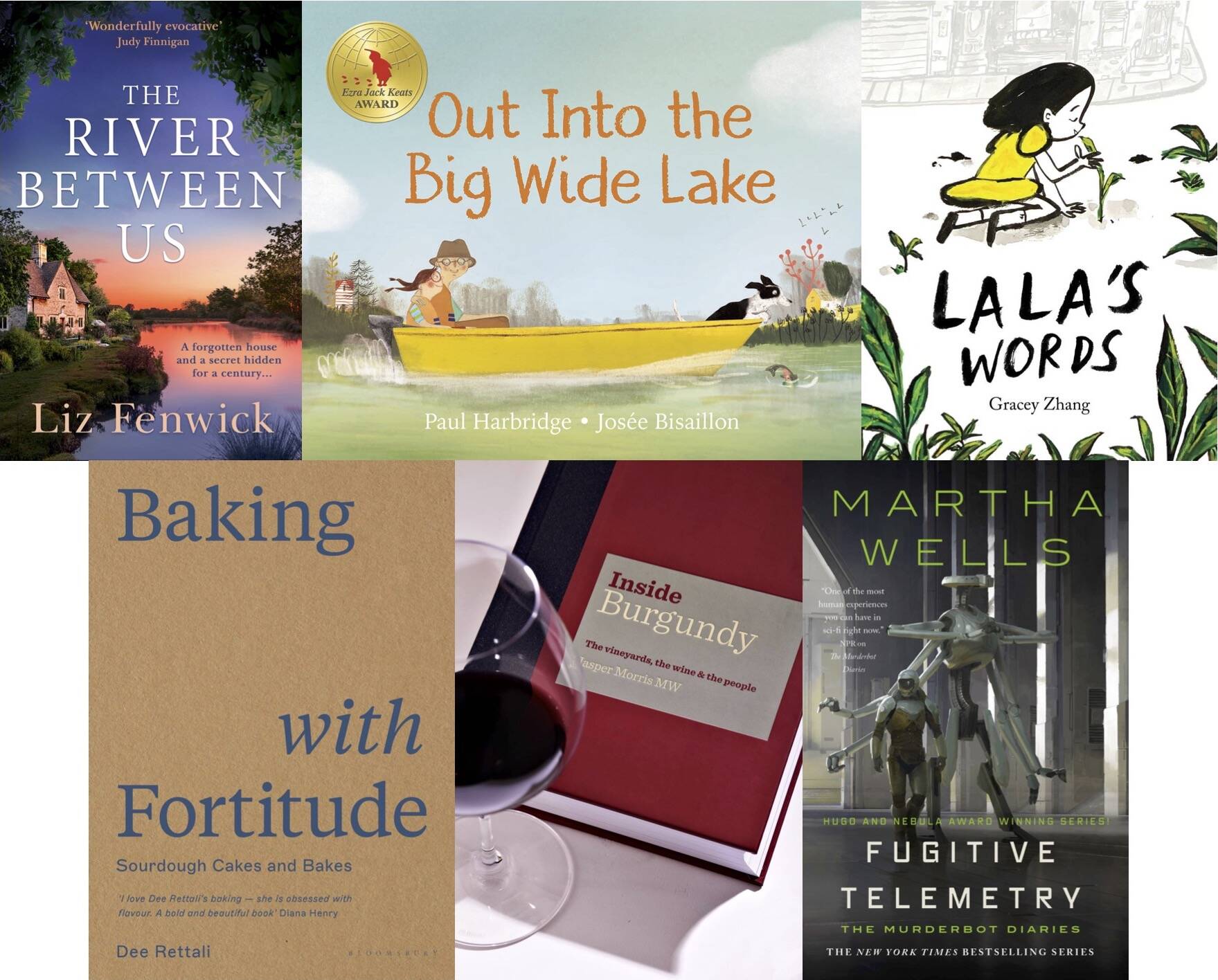 (Top row) HQ; Tundra Books; Scholastic; (bottom row) Bloomsbury; Berry Bros & Rudd Press; Tordotcom | More literary awards and honors this week: - "The River Between Us," by Liz Fenwick, won the Popular Romantic Fiction Award from the Romantic Novelists' Association in England (full list of winners).
- "Out Into the Big Wide Lake," written by Paul Harbridge and illustrated by Josée Bisaillon, won the Ezra Jack Keats Award for Writer. "Lala's Words," written and illustrated by Gracey Zhang, won the Ezra Jack Keats Award for Illustrator. A virtual award ceremony will be held during the Fay B. Kaigler Children's Book Festival at the University of Southern Mississippi on April 7. (Free, but you must register here.)
- Dee Rettali's "Baking with Fortitude," a guide to "sourdough cakes and bakes," won the André Simon Food Award; Jasper Morris's "Inside Burgundy," "a serious book for serious wine lovers," won the Drink Award.
- For a change, the best-selling Murderbot Diaries series by Martha Wells will not win a Nebula award. The Science Fiction and Fantasy Writers of America announced that Wells has "graciously declined her nomination as a novella finalist this year for 'Fugitive Telemetry: The Murderbot Diaries.'" The sf series of novellas and novels, which began in 2017, quickly developed a gravitational pull that Nebula and Hugo awards couldn't escape. No more. The judges said, "Wells felt that the Murderbot Diaries series has already received incredible praise from her industry peers and wanted to open the floor to highlight other works within the community." The Nebula Awards will be presented in a virtual ceremony on May 21 (full list of finalists).
 (iStock/Washington Post illustration) | Next week, after two years in pandemic exile, Book World staff members are going back to the office. To celebrate, we want to talk with you about all things books. Please join us for a chat at noon ET on Monday, March 14. My colleagues and I will be online to answer any questions you may have. Looking for the next confounding mystery novel? Trying to find a fun book for your reluctant reader? Need an audiobook to keep the family entranced during a long car trip? We're ready with suggestions for spring. Or maybe you just want to tell us what we're doing well — or not so well. We're eager to hear whatever you've got. (Send us your questions early.) 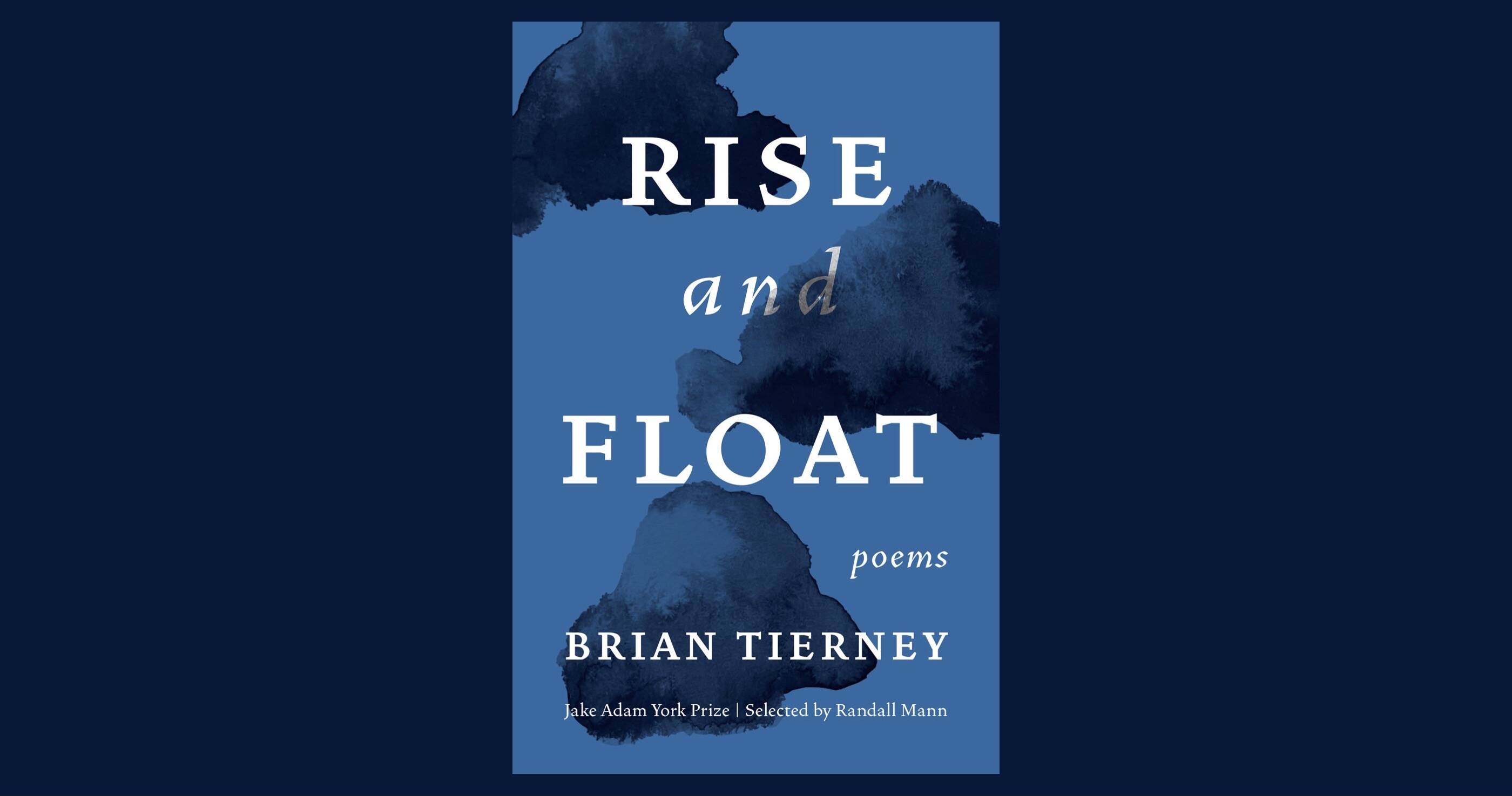 Milkweed Editions | In his debut collection, "Rise and Float," Brian Tierney remembers "the opening lines of a friend's poem / that once saved your life." The stakes are that high in Tierney's verse. "Rise and Float," which won the Jake Adam York Prize, pushes back against depression and grief with only the tools at a poet's disposal: patience, insight and the beauty of a thought perfectly expressed. You're the One I Wanna Watch the Last Ships Go Down With for Jess Dr. Redacted will tell me not to tell you
this, like this,
in a poem: how it's all right, love, that we don't love
living. Even actors don't
exactly love the spotlight they move through,
as your sister, the actor,
has told us; they just need to be lit
for narrative motion
to have meaning. As such it is,
with artifice, and embarrassment,
that I move through fear
to you, tonight, where I had dreams,
a short nap ago, about lines
of poetry I struck through
with everyday blues, month after
month, in the dream
after dream; an attempt
I guess to forget, if I could: defeat
sometimes is defeat
without purpose. The news at least tells me that
much. I know now,
in fact, we don't have to be brave,
not to survive a night
like any we've looked on
together, seeing blue-tinted snow
once in a K-mart
parking lot's giant, two-headed lamp –
and my father hooked up,
up the street, with no chance
of waking—as many years ago now
as how much longer I've lived
with you than without.
Forgive me, again, that I write you an elegy
where a love poem should be. From "Rise and Float," by Brian Tierney (Minneapolis: Milkweed Editions, 2022). Copyright © 2022 by Brian Tierney. Reprinted with permission from Milkweed Editions. 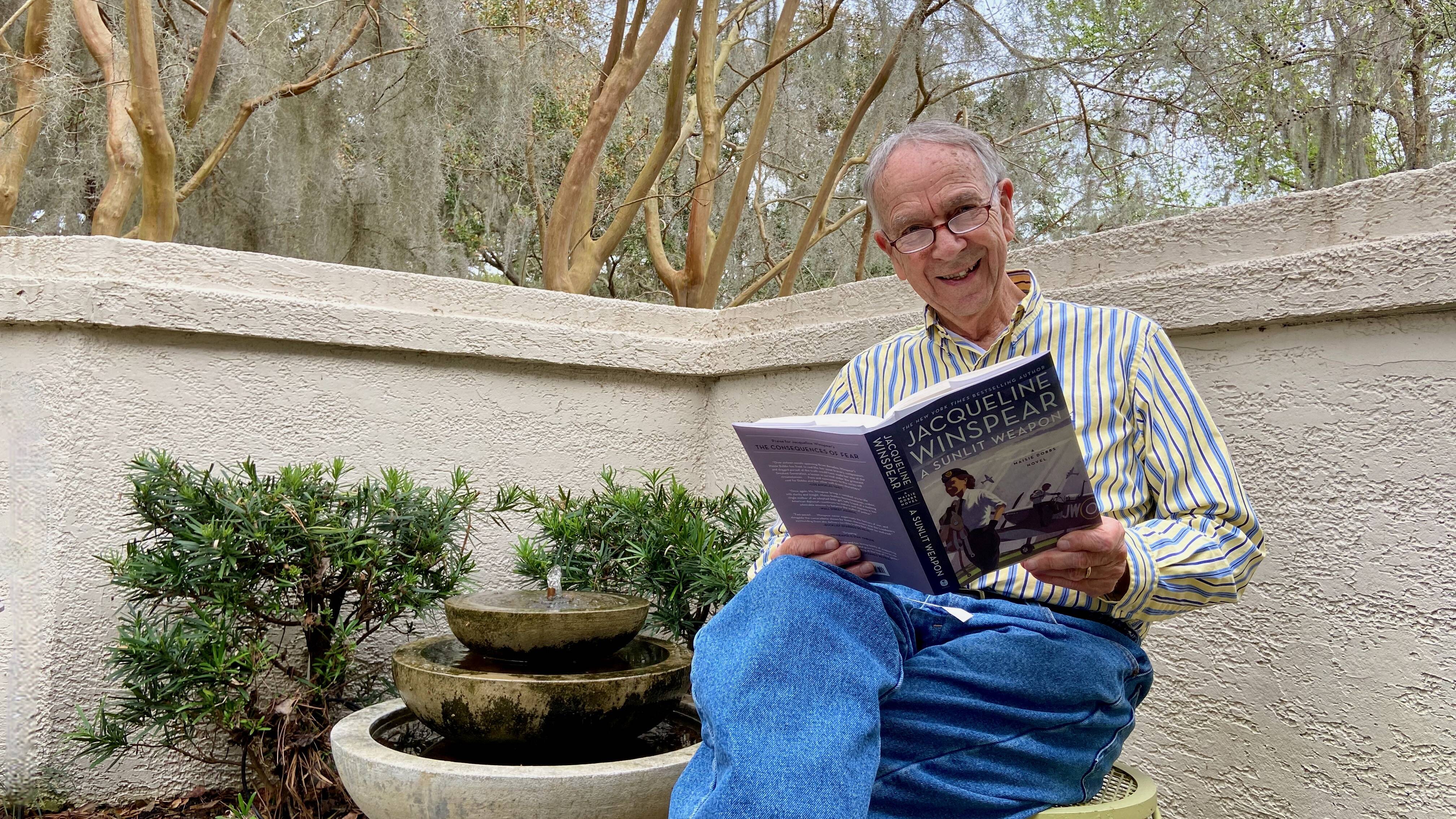 Don't bother my dad when he's reading a new Maisie Dobbs book by Jacqueline Winspear. (Ron Charles/The Washington Post) | For this last week of fully remote work, I came down to South Carolina to see my folks. They're happy to see me, particularly because I arranged for the delivery of an early copy of Jacqueline Winspear's "A Sunlit Weapon." Forthcoming March 22, this is No. 17 in the best-selling historical series about Maisie Dobbs, the British psychologist and investigator. My mom discovered the novels first and then got my dad hooked; now they're a walking marketing campaign for the books. This time around, Maisie must stop villains from shooting down planes, assassinating Eleanor Roosevelt and bullying her adopted daughter. (The inspiration for Maisie Dobbs.) Fortunately, my time here with my folks has been considerably less stressful than anything Maisie must confront. It's been a week of leisurely meals, long walks in the nearby nature preserve and lots of time to read. If the large alligator in the backyard doesn't eat me, I'll consider this trip a success. Meanwhile, send any questions or comments about our book coverage to ron.charles@washpost.com. You can read last week's issue here. Friends who might enjoy this free newsletter can subscribe by clicking here. And don't forget the Book World chat on Monday.
Interested in advertising in our bookish newsletter? Contact Michael King at michael.king@washpost.com. |




 Email
Email