| Did a friend forward this to you? Sign up here. Sweet soy Have you ever had tempeh? I used to eat it on a regular basis when I lived in a vegetarian co-op in college, but it had fallen off my regular rotation until recently, when I saw it at the store and decided to reintroduce myself. Back in January of 2015, tempeh sparked Joe Yonan's fascination, leading him on a reporting quest to understand its origin, history and potential. "Tempeh was born on the island of Java, Indonesia, at least several centuries ago (and possibly longer ago than that), for the same reason virtually all fermented products came to be: as a method of preservation," he wrote. Sold as bricks or thick patties, it's made when hulled and cooked soybeans — though other beans can be used — are introduced to a mold and then ripened. After a few days in a warm place, the mold grows around the beans, forming a dense but airy cake. Besides preserving and tenderizing the beans, fermentation reduces the amount of phytic acid in soy, which makes it easier to digest. It also means tempeh is full of complex flavors. "Fermentation makes tempeh quite possibly the most nutritious, digestible form of soy around," Joe wrote. Last year, Joe brought another tempeh recipe to The Post: Tempe Manis or Sweet Soy Tempeh, from "Coconut & Sambal," one of my favorite cookbooks of 2019. (I featured author Lara Lee's recipe for Sate Skewers With Peanut Sambal in the newsletter last summer.) As it's originally an Indonesian ingredient, Indonesian cooks know best how to infuse the plant-based protein with flavor. This quick saute relies on what Joe calls one of Indonesia's "greatest culinary exports: kecap manis, sweetened soy sauce." (If you don't have any, don't worry, we've got a substitute within the recipe, below.)  | Today's recipe | 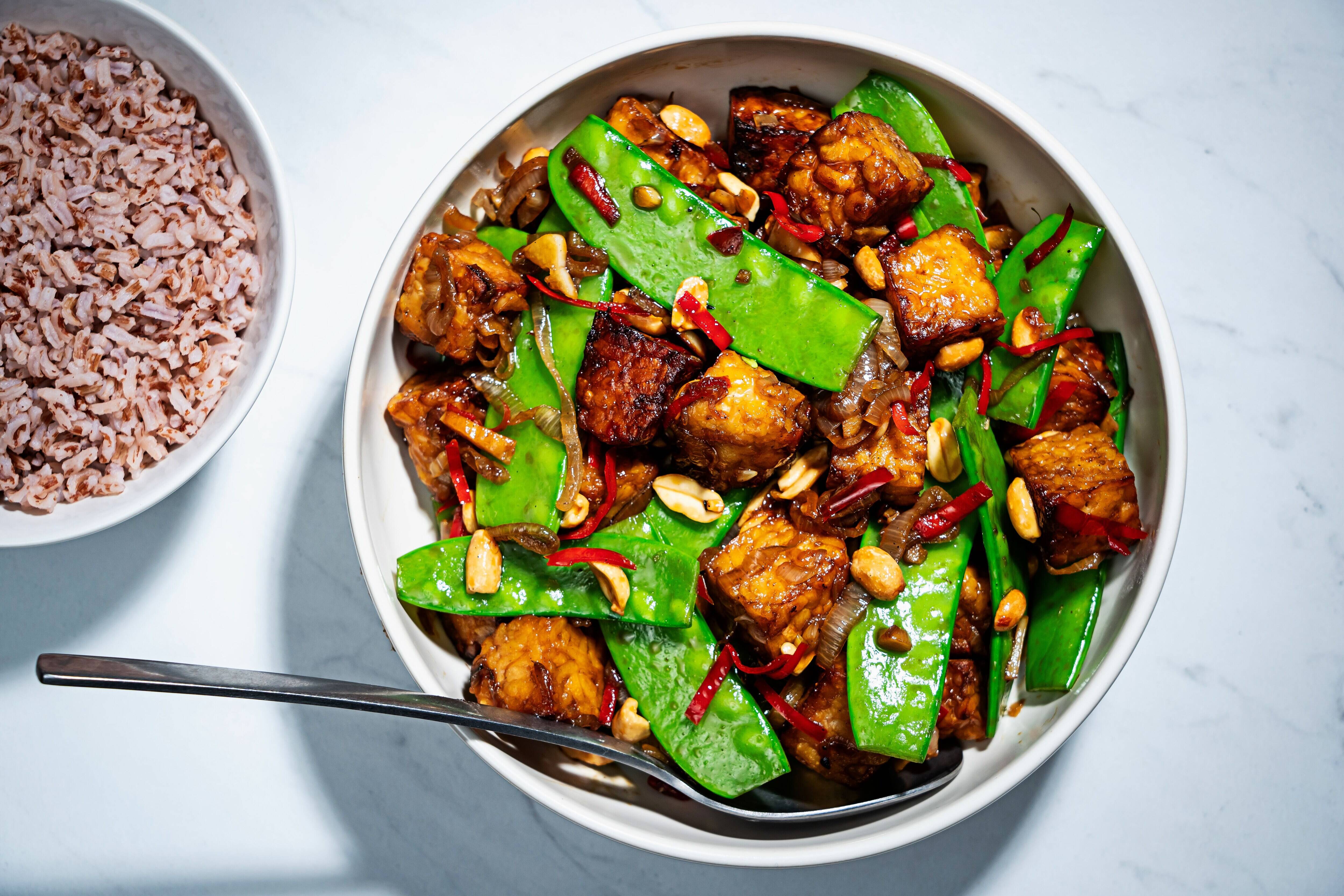 Photos by Scott Suchman for the Washington Post; food styling by Carolyn Robb for The Washington Post | Sweet Soy Tempeh (Tempe Manis) - Not into tempeh? >> You could make this recipe with chicken, pork or firm, pressed tofu.
- In place of brown sugar >> try honey or maple syrup.
- Out of lemongrass? >> Use extra ginger.
- No snow peas? >> Snap peas or asparagus spears cut into 2-inch pieces would also work here.
- Allergic to peanuts? >> Use cashews or sunflower seeds.
Storage Notes: The finished tempeh can be refrigerated in an airtight container for up to 3 days. Where to Buy: Kecap manis can be found in Asian and large international supermarkets. If you don't see a bottle with that name, look for something labeled "sweet soy sauce" or "dark sweet soy sauce" from Indonesia. Want to save this recipe? View it on Voraciously here and click the bookmark icon below the serving size at the top of the page to add it to your Reading List. For easy printing and scaling, view this recipe in our Recipe Finder. Servings: 4
Total time: 20 mins Ingredients - 1/4 cup coconut oil or sunflower oil, plus more as needed
- 1 pound tempeh, cut into 1-inch cubes
- 1/2 teaspoon fine sea salt, divided, plus more to taste
- 2 tablespoons light or dark brown sugar
- 2 tablespoons water
- 3 large shallots (6 ounces), thinly sliced
- 4 garlic cloves, thinly sliced
- 4 long red chiles, such as Asian finger peppers, thinly sliced (deseeded if you prefer less heat)
- 1 lemongrass stalk, smashed and tied in a knot
- 4 makrut lime leaves (may substitute 2 bay leaves)
- 6 thin slices unpeeled fresh ginger
- 8 ounces snow peas, trimmed
- 3/4 cup (4 ounces) unsalted roasted peanuts
- 3 tablespoons kecap manis (may substitute 1 tablespoon soy sauce plus 2 tablespoons brown sugar)
Steps1. In a large skillet over medium-high heat, heat the oil until shimmering. Add half the tempeh and fry until golden, turning as needed to get most sides browned, 3 to 4 minutes. Using a slotted spoon, transfer to a plate lined with paper towels or a clean dish towel, and sprinkle with 1/4 teaspoon salt. Repeat with the remaining tempeh and salt, adding a little more oil, if needed. 2. In a small bowl, stir together the brown sugar and water. 3. Add the shallots, garlic, chiles, lemongrass, lime leaves and ginger slices to the now-empty skillet and cook, stirring, until the shallots soften, about 2 minutes. Add the snow peas and cook, stirring, until they are barely crisp-tender, about 1 minute. Add the fried tempeh and peanuts, then add the kecap manis and sugar-water mixture, stirring until the sauce is bubbling and clinging to the other ingredients, about 1 minute. Taste, and season with more salt, if needed. 4. Discard the lemongrass stalk, lime leaves and ginger slices, and serve hot. Adapted from "Coconut & Sambal" by Lara Lee (Bloomsbury, 2020). Tested by Joe Yonan. Nutrition information per serving: Calories: 650; Total Fat: 40 g; Saturated Fat: 16 g; Cholesterol: 0 mg; Sodium: 648 mg; Carbohydrates: 51 g; Dietary Fiber: 5 g; Sugar: 25 g; Protein: 31 g.  | Dessert | 🎧 "Lotus Flower" by Radiohead.
📺 The moment a river finds its way into the ocean.
📖 "Doctors call out Spotify for letting Joe Rogan spread 'false and societally harmful' covid-19 claims" by Timothy Bella in The Post.
👀 A game that shows how politicians tilt elections.
🗣 If you liked this newsletter, please forward it to a friend! |



 Email
Email 


