 |  | | 435 districts, 50 states, one campaign newsletter. | | | | | | | In this edition: The fight over what happened on Jan. 6, a nonpartisan redistricting commission gets accused of racism, and the first negative ads of the year. We should have known that Lin-Manuel Miranda was going to show up eventually, and this is The Trailer. 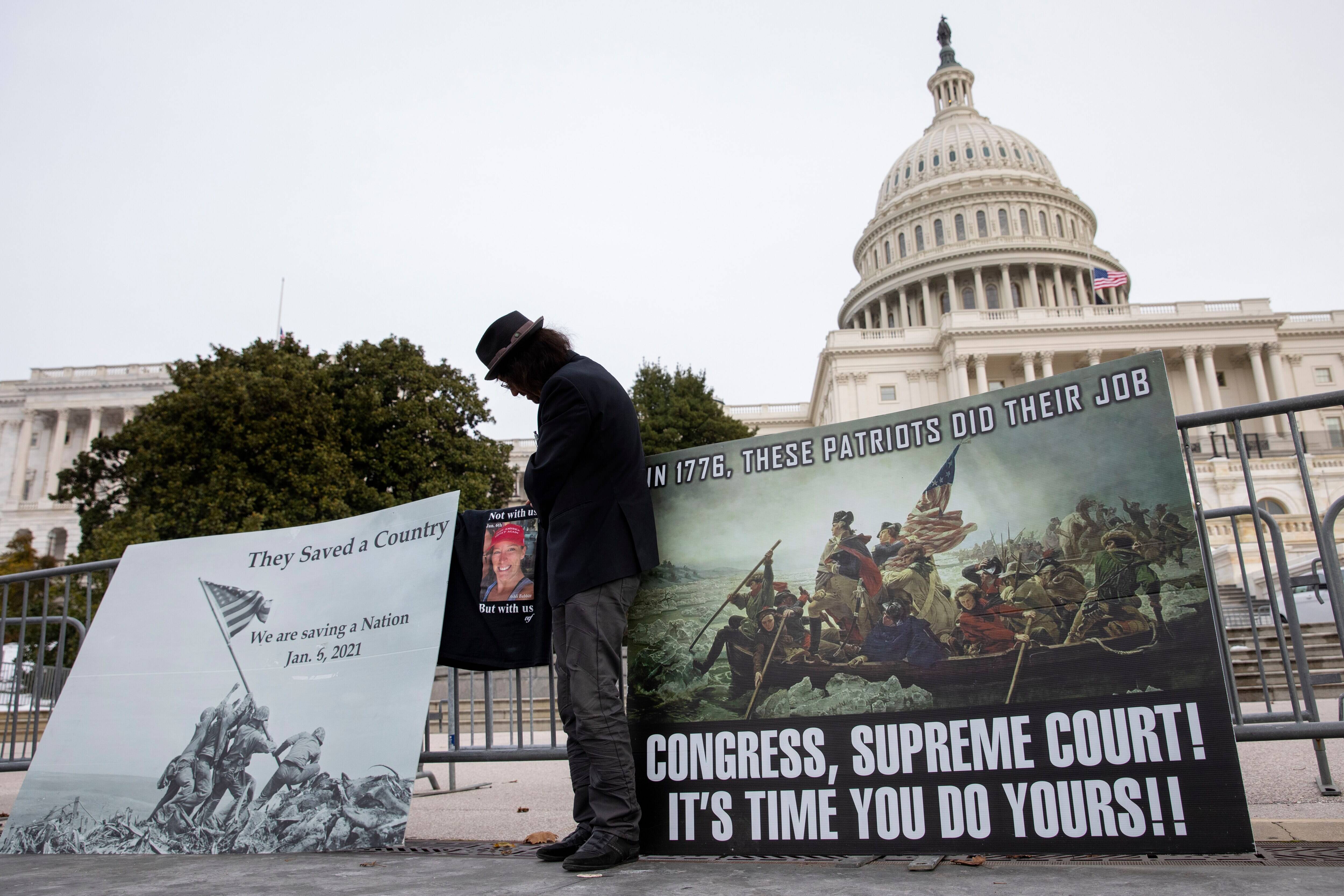 A man poses with pro-insurrection signs in front of the Capitol on Thursday. (Amanda Andrade-Rhoades for The Washington Post) | What happened at the Capitol on Jan. 6, 2021? Donald Trump urged supporters to come to Washington for a "wild protest," the final stage of a plan to disqualify enough of Joe Biden's swing-state electors to deny him the presidency. And what do Trump's supporters say happened last year? Well. The riot at the Capitol was a "violent terrorist attack," and the start of a Democratic "fear campaign" to "shut down free speech." It was a "fedsurrection," enabled by Trump's enemies inside the FBI, carried out by "hundreds of thousands of patriots" acting righteously. It was a "normal tourist visit" that caused "minimal damage," and should be celebrated like the storming of the Bastille. All of this was, according to Senate Minority Leader Mitch McConnell (R-Ky.), a "failed insurrection" that Trump was "morally responsible" for. To obsess over it, according to Florida Gov. Ron DeSantis, is to "smear anyone who ever supported Donald Trump." When the smoke cleared on Jan. 6 — literal smoke, from tear gas fired at rioters by Capitol police — Democrats and some Republicans wondered if Trump had been discredited, too toxic to lead his party. That was naive. Even the Republican National Committee's condemnation of the riots, as "an attack on our country and its founding principles," left out Trump's name. A year later, most Republicans continue to tell pollsters that the 2020 election was stolen. Many have adopted some version of an argument Trump began making nine months after Jan. 6, that the "real insurrection" was the election itself. "The former president and his supporters are trying to rewrite history," President Biden said Thursday morning, kicking off a day of Jan. 6 commemorations that most Republicans skipped. Trump, he said, wanted Americans to see the riots as "the true expression of the will of the people," and really, who were Americans supposed to believe? "Is that what you thought?" Biden asked. "Is that what you thought when you voted that day? Taking part in an insurrection? Is that what you thought you were doing?" Democrats, who constantly ask themselves why they're so bad at messaging, have won this argument with most voters. In November, while Republicans swept elections in Virginia and gained ground in New Jersey, their nominees condemned Jan. 6, and distanced themselves from the supporters who thought the "failed insurrection" was justified. But the conservatives most ready to defend the Capitol rioters and insist that 2020 was stolen — including Trump — won the argument inside the party. According to a Suffolk poll released this week, while most registered voters agreed that "those who participated in the storming of the Capitol" were "criminals," two-thirds of Republicans agreed with a different description: "They went too far, but they had a point." A smaller share of Republicans, 11 percent, said the rioters had "acted appropriately." True to the polling, most Republicans now talk about Jan. 6 as a story of left-wing overreach, which suggests they think the rioters did have a point. And they ask if liberals have given themselves a different set of rules. At least 10,000 people were arrested in last summer's racial justice protests, from rioters to criminals taking advantage of the crowds to people arrested for civil disobedience. Democrats clearly had no problem heeding people who marched for policies they weren't getting from the people they'd elected. Who were they to lecture people about democracy? "The natural tendency of the media is to sympathize with protesters, especially those bedeviling autocracies," wrote Pat Buchanan, the elder statesman of Republican nationalism, in a February 2020 column. "The media are the self-anointed judges. They decide which riots are benign and which are malignant, which should receive an empathetic response, and which should end with every participant in prison." Most Republicans who've weighed in on the Jan. 6 aftermath have taken the same view, comparing what Democrats said was unthinkable and anti-democratic to protests they'd embraced or participated in. In a column for Fox News, Sen. Josh Hawley (R-Mo.) even recast last summer's protests in Washington as a moment when "rioters tried to storm the White House." (Protesters dismantled a temporary fence around Lafayette Square but did not advance on the White House fence.) Republicans running in 2022, who say they'll shut down the House's Jan. 6 committee, now talk about turning the investigators loose on Democrats. "This entire sham trial is motivated by embarrassing political opponents, and ultimately passing a piece of legislation that will make Americans enemies of the state in their own country," author and Ohio U.S. Senate candidate J.D. Vance said Monday. In power, said Vance, Republicans needed to "go on offense" and "subpoena the people who actually made it possible to set Americans on fire without suffering any consequences," like left-wing political donor George Soros. Only a few of Trump's supporters defend the Jan. 6 participants themselves, but they do so confidently. The Biden-style liberal horror at what happened is seen, on the right, as the ultimate in cringey liberalism. In a February 2020 speech, with Rep. Paul A. Gosar (R-Ariz.) in the audience, right-wing activist Nick Fuentes called the Capitol "the seat [of] an evil empire," reminiscing about how members of Congress "scurried into their underground tunnels" when Trump supporters barged in. In this view, Democrats who were trying to turn Jan. 6 into a shared national tragedy are attempting to hold back a tide of righteous opposition to a regime that dominates pop culture, media, academia and the federal government. "The only course of action at this point is to be just as firm in our stance as the Left is," wrote conservative podcaster Eric Lendrum in the nationalist magazine American Greatness last week. "We should go forward celebrating the events of that day as our Storming of the Bastille; a day where a symbol of the degeneration of our ruling class into total corruption and tyranny was challenged, and the elites were shown just what happens when millions of freedom-loving citizens finally grow sick and tired of a boot perpetually stomping on their necks." Democrats tell one story about Jan. 6: It was a tragedy, the most destructive part of a plan to nullify the election, exploiting and ruining lives. Their critics are more scattered. In the run-up to Jan. 6 commemorations, Republicans couldn't agree on whether it was a good idea, or a historically awful one, for Trump to hold a news conference on the anniversary and counterprogram the Democrats. Trump ended up scrapping that idea, and promising to tackle the subject at a rally nine days later — as he had at every rally since the 2020 election was called against him. "When it comes to riots and revolutions, all depends on who writes the narrative of history," Buchanan wrote last year. "It is the winners." | | | Reading list "Biden goes after Trump for lies and self-aggrandizement," by Annie Linskey Talking about democracy, and seeing who's still listening. "We asked GOP Senate candidates if they would have backed Pa.'s 2020 election results. They wouldn't say," by Jonathan Tamari In his own party, Pat Toomey's would-be successors don't share his view of the last election. "The radicalization of J.D. Vance," by Simon van Zuylen-Wood Did bad movie reviews create a MAGA candidacy? They didn't hurt. "2022 House overview: Still a GOP advantage, but redistricting looks like a wash," by David Wasserman The last decade's maps were so good for Republicans that the new ones represent a small step back. "Biden faces highly charged legal fight with migrants whose children were taken away under Trump," by Sean Sullivan and Maria Sacchetti There's more going on than a political fight over payouts to separated family members. "GOP expands effort for South Texas dominance to local races," by Patrick Svitek The next moves for Project Red Texas. | | | Dems in disarray 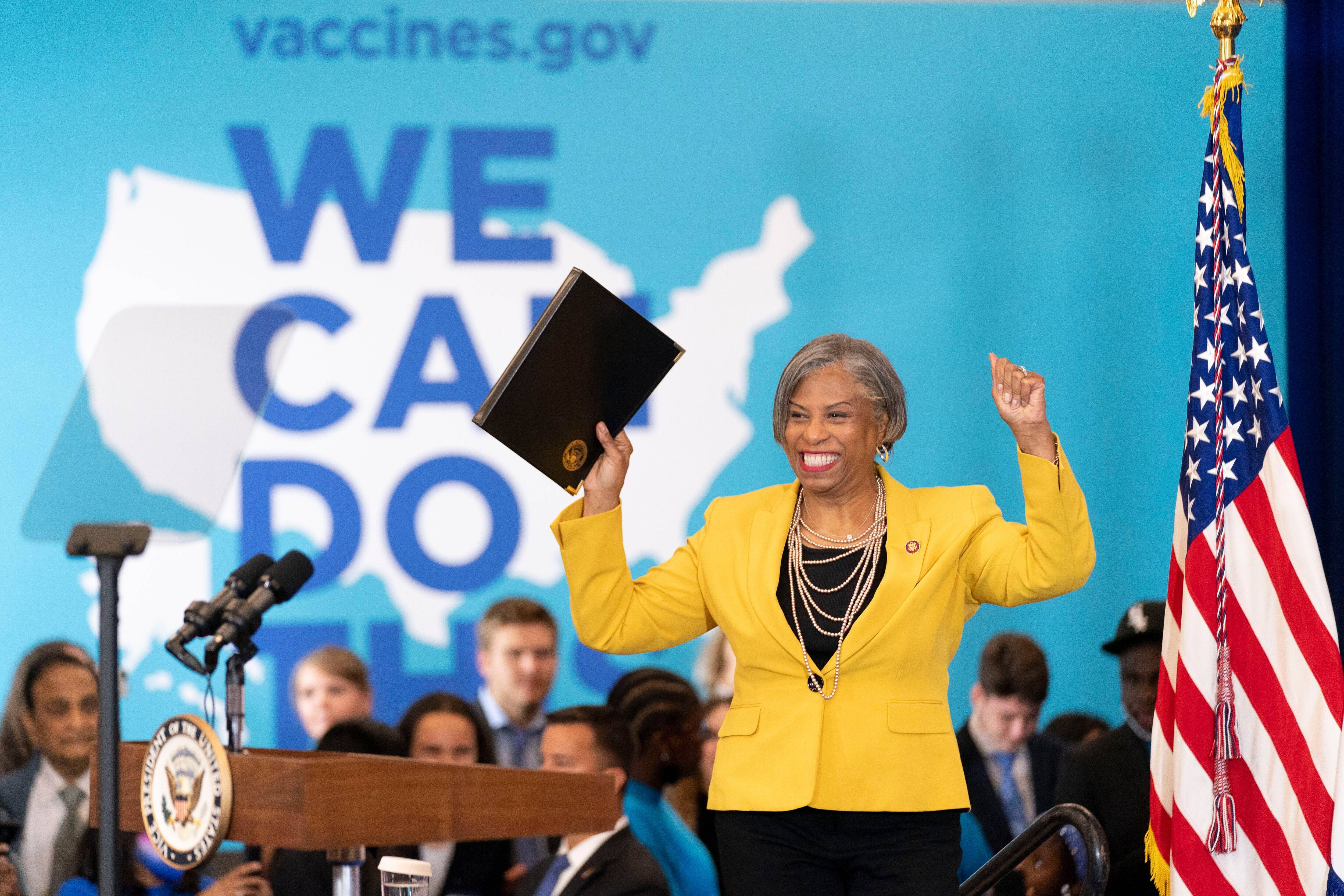 Retiring Rep. Brenda Lawrence (D-Mich.) at a vaccination mobilization event in July. (Andrew Harnik/AP) | Just one week after Michigan's redistricting commission approved new congressional maps, a group of Black legislators went to court to block them — and Rep. Brenda Lawrence (D) became the 25th House Democrat to retire in this cycle. Three events were connected. The Independent Citizens Redistricting Commission, created by a 2018 ballot measure that Democrats supported, consisted of 13 people mandated to draw fair maps without partisan favor. The way that it did so worried some Black voter advocacy organizations, and even, eventually, the state's own civil rights department. Each set of maps, for the House delegation and the state legislature, reduced the number of majority-Black districts, while increasing the number of districts where Black people made up at least 40 percent of the population. In November, a think tank at Michigan State University released a study that explained what the commissioners had done. A few weeks later, the Michigan Department of Civil Rights condemned the maps, warning that the plan would violate the Voting Rights Act's guidance on creating districts where racial minorities were the voting majority. According to the 2021 Census, around 14 percent of Michiganders are Black. The last set of maps, drawn by Republicans, created two majority-minority seats in and around Detroit, which meant in that 14 percent of the state's 14 House seats, most residents would be Black. The new map would leave just one majority-Black district in place, the 13th Congressional District, represented since 2019 by Rep. Rashida Tlaib (D). The 12th Congressional District, represented since 2015 by Lawrence, absorbed dozens of non-Black precincts, including the 90 percent White city of Livonia and the 42 percent Arab American city of Dearborn. Lawrence said in her Tuesday resignation announcement that her decision was not related to redistricting, but other Black legislators, in Lansing, had already been attacking the commission's work and laying out a case against it. On Monday, dozens of current and former legislators joined a lawsuit led by attorney Nabih Ayad designed, in his words, to "have the Michigan Supreme Court strike down the redistricting map as unconstitutional and a violation of the Voter Rights Act." Former state representative Sherry Gay-Dagnogo, joining the lawsuit, asked how Detroit might have fared during the negotiations that ended the city's bankruptcy period if it had been represented by legislators from places like Livonia. "We could potentially have people representing our community who don't have our commitment to our city," Gay-Dagnogo said. "Detroit deserves to have Black leadership." Instead, for the first time since 1964, Detroit and Michigan could have no Black Democrats in Congress. Many Republicans are urging John James, a Black businessman and veteran who lost two close U.S. Senate races, to run for a new district that Donald Trump carried in 2020. Tlaib, who won a narrow primary victory in 2018 and faced a Black primary challenger in 2020, announced Wednesday that she would seek reelection from the new 12th District, which combines areas she's represented with Dearborn, which for the first time would have Arab American representation in Congress were she to win. That kicked off a scramble for the 13th District, where state Rep. Shri Thanedar (D), a wealthy Indian American chemist and businessman, spent more than $10 million on a failed run for governor and nearly half a million dollars to win his state legislative race. He carried the city of Detroit while losing the 2018 race, and won his 2020 race with just 35 percent of the vote, as multiple Black candidates split the Black electorate. Thanedar entered the race Wednesday, and so did Gay-Dagnogo. | | | Ad watch Stop Him Now, "Marshalling." The debut ad from the new liberal PAC starts and ends with footage from Jan. 6, 2020, warning that voting for Republicans in 2022 will empower Trump's "army" of supporters who want to "return to power" by throwing out election results. "You want to risk a return to this?" a narrator asks, over footage of Capitol Police Officer Daniel Hodges being pinned between rioters and a revolving door. Friends of Dave McCormick Exploratory Committee, "Dave McCormick." On Monday, McCormick officially hung up his CEO badge at Bridgewater Associates, preparing a run for Pennsylvania's open U.S. Senate seat. Days earlier, he introduced himself to potential voters with this spot, which tells the story of his father shipping a Christmas tree from Pennsylvania to Iraq when McCormick was serving in the 1991 Gulf War. "He somehow got that tree from our farm to that desert," McCormick says. "From your home to that desert, Christmas is full of unexpected blessings." McCormick's hedge fund career and stint in the Bush administration (during the 2008 financial crisis) aren't mentioned; he's referred to as a "businessman." Conor Lamb for Senate, "Pennsylvania Democrat." This is the first TV spot for the Democratic congressman's U.S. Senate campaign, and the first positive spot Democratic voters are seeing about their options in the May 17 primary. (The first ad, which ran nine months ago, was a negative radio spot hitting Democratic Lt. Gov. John Fetterman.) "Our democracy was born here, as much in the coal mines as in the Constitution," says Lamb, picking up the theme from the launch of his campaign last summer, describing "freedoms" at risk and then getting specific about which ones he means: The "right to vote," the "right to organize and bargain," and a few synonyms for both. McKinley for Congress, "Unethical." West Virginia's member-on-member race, which pits Rep. Alex Mooney (R) against Rep. David McKinley (R), got an early intervention from Donald Trump. He endorsed Mooney, who'd opposed last year's bipartisan infrastructure package, over McKinley, who supported it. McKinley's opening argument against Mooney highlights an ethics investigation that wrapped up last summer, before the two of them were shoved into the same district, and calls him a "Maryland senator" – an accurate reference to the fact that Mooney represented western Maryland in the state legislature before moving to West Virginia to seek a safe House seat. That was a liability for Mooney in his first few elections, but no Democrat has filed to run against the winner of this May primary. You are reading The Trailer, the newsletter that brings the campaign trail to your inbox. | | | | | | Poll watch How worried are you about the future of American democracy? (Suffolk, 1,000 registered voters) Very worried: 51%
Somewhat worried: 32%
Not very worried: 8%
Not at all worried: 7% Democrats are the ones holding Jan. 6 commemorations, but Republicans are more likely to think that "democracy" is at risk. Eighty-six percent of Republicans in this poll say they're worried about "the future of American democracy," and 61 percent say they're "very" worried. Just 47 percent of Democrats say they're "very" worried, along with just 40 percent who said, in response to another poll question, that they're worried about the "direction of the country." It's not complicated: "Democracy" means different things to different people. In the same poll, 85 percent of Republicans say the country's democracy is "weaker than it was four years ago," a statement only 59 percent of Democrats agree with, even as liberal groups say that electoral democracy has never been under greater threat. Most Republicans — 58 percent of them in this poll — insist that Biden did not legitimately win the election, and that opinion is incompatible with a rosy view of electoral democracy. While the pollsters didn't drill into the definition, conservatives often describe social media censorship as tyrannical and anti-democratic. That's another factor in these answers. | | | Redistricting Kentucky. Republicans in Frankfort are moving ahead with new congressional maps that make only a few changes to the old lines, keeping a safe Democratic seat in Louisville intact while making Rep. Andy Barr (R) of Lexington a little safer. Both Barr's district and the Louisville-based 3rd Congressional District had been trending toward Democrats, and the Republican map removed Democratic precincts from Barr's 6th Congressional District by stretching the 1st Congressional District, which covers all of western Kentucky, across the state and into Frankfort. Kentucky is one of five states, including Kansas, Missouri, Nebraska and Tennessee, where Republicans control the redistricting process and could, if they chose, obliterate urban Democratic seats by splitting them into several districts. That didn't happen in Nebraska, where Republicans kept the Omaha-based 2nd Congressional District, which backed Biden in 2020, largely intact. It's also looking less likely to happen in Missouri, where instead of splitting up the Kansas City-based 5th Congressional District — a Democratic stronghold — the latest drafts would leave it intact. "Democrats are nuking about 15 Republican seats and only North Carolina, Ohio, Georgia, and Tennessee have the courage to fight back," wrote Ryan Girdusky, the founder of the conservative 1776 PAC, as Kentucky Republicans rolled out the map. "Total cowards." The "15" number is hyperbole. Illinois, so far, is the only state where Democrats have eliminated Republican districts, attempting to shrink the GOP delegation from five members to just three. But Republican majorities in Kansas and Tennessee could still split up the Democratic-trending districts currently covering Kansas City suburbs and greater Nashville. New Hampshire. As expected, the Republican-led House advanced a new map that replaces the state's two competitive House seats with one that's safe for Democrats and one that leans more toward the GOP. Democratic-trending seacoast towns and cities, like Portsmouth, were pulled out of the 1st Congressional District, represented by Rep. Chris Pappas (D), and added to the 2nd Congressional District, represented by Rep. Annie Kuster (D). So was Durham, home to the University of New Hampshire and plenty of Democratic votes. (Bernie Sanders held his final major rally before the 2020 New Hampshire primary at UNH's Whittemore Center.) Joe Biden carried this version of the 2nd District by a landslide: Donald Trump, who lost the old 1st District, easily carried the new one. | | | In the states Ohio. After considerable wooing from local and national Democrats, Cincinnati City Council member Greg Landsman entered the race for the new 1st Congressional District, which narrowly went for Joe Biden in 2020. Republicans in Columbus, who'd split the city in their last map and kept Rep. Steve Chabot (R) safe, were prevented from doing that again by a 2018 ballot initiative that added new rules for redistricting. "For the first time, the entire city of Cincinnati is in this district," Landsman told the Enquirer. "There are 100,000 new voters in this district that have never voted for Steve Chabot." Democrats won an old version of the district in 2008, but Chabot regained it in 2010, and a new Republican majority added deep-red Warren County to make it safe for him. Republican losses in the suburbs made the seat competitive during Donald Trump's presidency, but Warren County kept it red. In 2010, Democratic nominee Kate Schroder won the Hamilton County part of the district, which includes most of Cincinnati, by a bit more than 18,000 votes. Chabot overwhelmed her with a 45,000-vote margin in Warren County, as Trump narrowly carried the district. California. Conservative commentator Larry Elder ruled out a 2022 run for governor, after sending mixed signals about whether he'd challenge Gov. Gavin Newsom (D) again — and whether he actually lost last September's recall election. (On Dec. 12, he asked Twitter followers whether or not he should run, adding that "according to an opinion survey, the majority of respondents believe that the 2021 recall election … was fraudulent.") Instead of running in the June primary, Elder filed paperwork to create Elder for America, a PAC to aid Republican candidates down the ballot this year. "While I may not know what the future holds for me politically, our campaign's ability to attract millions of votes and millions of dollars in a very short time demonstrates we have a message that resonates with Americans," Elder said in a statement. "I believe we can put that to good use." Michigan. The House seat shuffle continued this week, even as Black legislators took the state's new map to court. Paul Junge, a former local Fox anchor and Trump immigration official who lost a 2020 race against Rep. Elissa Slotkin (D), announced a move to the new 8th Congressional District. That district, most of it now represented by Rep. Dan Kildee (D) (who's running inside these new lines), backed Biden by two points last year, and has been shifting right as Democratic strength waned outside the cities of Flint and Saginaw. Pennsylvania. State Rep. Austin Davis entered the Democratic primary for lieutenant governor, standing beside Attorney General Josh Shapiro, who's running for governor with no primary challenge. "Austin is going to be at the table when we make big decisions," Shapiro told reporters in Pittsburgh on Tuesday, adding that the Black legislator would "make history" if elected in November. Davis, elected four years ago at age 28, had worked with Shapiro on a headline-grabbing new database for reporting police misconduct. In some states, candidates for governor pick their own running mates; in Pennsylvania, both sides of the ticket run in their own primaries. Austin is entering the race just five months before the primary, and 11 months after state Rep. Bryan Sims declared his own campaign for lieutenant governor. Sims, the first openly gay man elected to the state legislature, has built an image as a take-no-prisoners liberal, condemned by some Republicans in 2019 after being filmed shouting at protesters outside an abortion clinic. Nevada. State Rep. Annie Black (R) entered the GOP primary in the 4th Congressional District, becoming at least the sixth congressional candidate who attended pro-Trump rallies in D.C. on Jan. 6, 2021. Iowa. Former state representative Mary Ann Hanusa (R) ended her bid for Congress to run for state auditor, giving Democrat Rob Sand his first opponent of 2022. Hanusa entered the race for the 3rd Congressional District when it still stretched from the Des Moines area to her Council Bluffs base. The new map draws a more compact district around the briskly growing city and its suburbs, cutting out Hanusa's home. | | | Meet a PAC What it's called: Stop Him Now. Who's behind it: Five longtime Democratic strategists who did not work on the 2020 Joe Biden campaign: Saul Shorr, Mandy Grunwald, Jimmy Siegel, Miriam Hess and Teddy Goff. In a joint interview, Shorr and Grunwald said the PAC came together after Democratic defeats in Virginia led to a quick conventional wisdom that running against Trump was a losing strategy. "We thought it was a mistake to walk away from this entire line of argument," said Grunwald. "Other people are going to make sure there's a positive national message." What it's doing: Running ads to tie Republican candidates this year to Donald Trump and his efforts to overturn the 2020 election and change voting and certification rules in key states ahead of 2024. In a four-page memo, the PAC's founders argue that "we can and we believe must create a national narrative on the negative side about who the Republican Party is and how it leads to more Donald Trump and more chaos and divisiveness — very scary thoughts to both our base and suburban voters." Its first spot warns that "Republicans in '22 means Trump in '24." That ad is running just two months after Virginia Democrats lost, narrowly, with nominees who warned that a Republican victory in 2021 would launch Trump's comeback. Shorr and Grunwald pointed to data from former governor Terry McAuliffe's campaign that showed "Trump" dominating when voters were asked what they didn't like about the Republican ticket, and emphasized that McAuliffe, while losing, turned out roughly 200,000 more voters than Gov. Ralph Northam (D) had in his victory four years earlier. "If Terry McAuliffe had won by a point instead of losing by a point, the need for Trump messaging would be obvious to everyone," they argue in the memo. (The margin in Virginia was 1.9 points, or a bit more than 63,000 votes out of the 3.2 million cast in the race.) To motivate "soft Biden" voters, said Grunwald, the PAC would run ads designed to reach them, and to reach the majority of voters in swing states who disapprove of Trump. "If this guy gets back in, there aren't going to be any Rex Tillersons in the Cabinet," said Shorr, referring to Trump's first secretary of state, who lasted less than a year in the job and went on to criticize his former boss. "Think about what he was willing to do in the first week of January last year. Look, I've got to say: I thought it was Kabuki theater, what he was doing after the election. I've have been shocked at the level at which it was for real." | | | Countdown … five days until the special election in Florida's 20th Congressional District
… 40 days until school board recall elections in San Francisco
… 54 days until the first 2022 primaries
… 306 days until the midterm elections | | | | | | | | |


 Email
Email 
