| Happy Monday! Below: Google is hit with a lawsuit from state attorneys general, and regulators look to boost Internet competition. First: | The House is poised to get an infusion of tech talent | 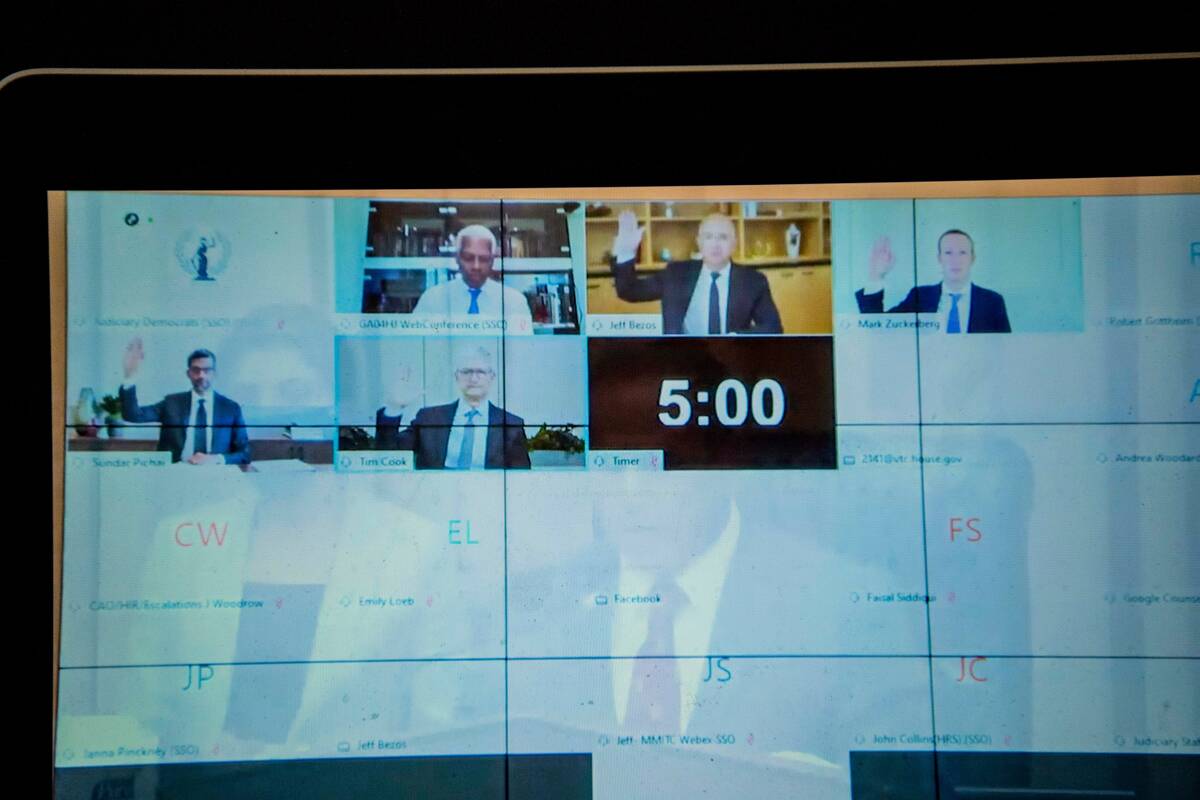 Jeff Bezos of Amazon, Tim Cook of Apple, Mark Zuckerberg of Facebook and Sundar Pichai of Google are sworn in before a House hearing on July 29, 2020, as seen via YouTube on a laptop. (Carolyn Van Houten/The Washington Post) | | | Ninety minutes into the blockbuster antitrust hearing with the CEOs of Amazon, Facebook, Google and Apple in July 2020, the session came to an abrupt halt. "The committee will stand in recess for 10 minutes while we fix a technical feed with one of our witnesses," Rep. David Cicilline (D-R.I.) said, referring to one of the executives testifying remotely via Cisco's Webex video platform, before resuming shortly afterward. The snafu was one of countless instances of officials on Capitol Hill running into technical difficulties during the covid-19 pandemic, which has forced many activities online and tested lawmakers' ability to keep up technologically. Travis Moore, executive director and founder of the nonprofit TechCongress, ran into a similar issue two months prior while testifying on the very topic of Congress' "tech capacity." Moore was set to appear by video, but a mix-up with the platform's security settings forced him to dial in. But late last week, he and others leading the charge to modernize how Congress functions celebrated a major milestone: a top congressional official announced that the House will be creating a new House Digital Service. The group, styled after the executive branch's own U.S. Digital Service, will be made up of "technology experts" and tasked with helping lawmakers to update the tools they use to engage with constituents and perform other duties, House Chief Administrative Officer Catherine Szpindor said in recent public testimony. The creation of the group, which has been months in the making, was touted by House leadership. Majority Leader Steny Hoyer (D-Md.) on Friday: | | For years, Moore has worked to place technologists, engineers and other scientists on Capitol Hill in the hopes of boosting Congress' technical chops — and maybe preventing those flubs. | | But the pandemic, he told me Sunday, "exposed Congress' digital lack of capacity." "It was urgent and a crisis for literally every staffer," said Moore, a former House staffer, noting that for weeks in 2020 Congress' functions slowed to a crawl as officials struggled to pivot to their new covid-imposed virtual reality. Moore said the new House Digital Service is a game-changer for the "under-resourced" officials on Capitol Hill who haven't had the benefit of a specialized outfit to build out how they use tech in government. "It'll be a place where Congress can bring in tech expertise in different domains," he said. Two key areas where the group's impact is likely to be felt, according to Moore: making the often opaque nature of the House's legislative process more transparent and making it easier for lawmakers to engage with the public. While the group and its specific priorities are only just beginning to take shape, it could experiment with ways to make more information about how lawmakers change or propose to change bills more easily accessible to the public, for example. It's a process that at times is nearly impossible to track in real-time. Just last week across the Capitol, Senate lawmakers spent hours debating a high-profile antitrust bill and dozens of amendments proposed for it — none of which were posted online before or during the markup. "Only a fraction of the information and the content that Congress produces becomes public, and that's not … because Congress doesn't want you to be able to, for example, see the track changes on a bill," Moore said. "It's because nobody's figured out how to do it, and they don't have the resources to do it in-house." An infusion of experts with technological chops could also improve the way Congress interfaces more directly with the public, including by tweaking how lawmakers host virtual town halls, or how they reach out to constituents to field their thoughts on specific issues. The reason many of those changes haven't happened, Moore said, is because "there isn't an office that's in charge of thinking about the big picture, systemwide challenges." | | But for Moore and others pushing to modernize Congress, the House is only half the battle. In the Senate, he said, there's been little-to-no talk of creating a counterpart. He's not giving up hope just yet, though. "The truth is, though, all it takes is one member or one staffer that feels strongly about this and wants to push for it … this is not a controversial thing." "It's another capacity issue," he said. | | |  | Our top tabs | | Four attorneys general are suing Google, arguing it misled consumers about location data profits |  Washington D.C. Attorney General Karl A. Racine (D) called Google a "flagrant violator of privacy" and laws. (Jabin Botsford/The Washington Post) | | | The lawsuits filed in Indiana, Texas, Washington D.C. and Washington state allege Google made misleading promises about how consumers can protect their privacy, Cat Zakrzewski reports. It also argues that Google employed "dark patterns," or design tricks that can subtly influence consumers. "Google uses tricks to continuously seek to track a user's location," said Washington D.C. Attorney General Karl A. Racine (D). "This suit, by four attorneys general, on a bipartisan basis, is an overdue enforcement action against a flagrant violator of privacy and the laws of our states." Google has previously defended itself against such accusations, with the company arguing in 2020 that a similar lawsuit by Arizona's attorney general "mischaracterized" its privacy protections. "We have always built privacy features into our products and provided robust controls for location data. We look forward to setting the record straight," Google spokesman José Castañeda said at the time. | Advocates argue Senate antitrust bill could make it riskier for platforms to deplatform rule violators | 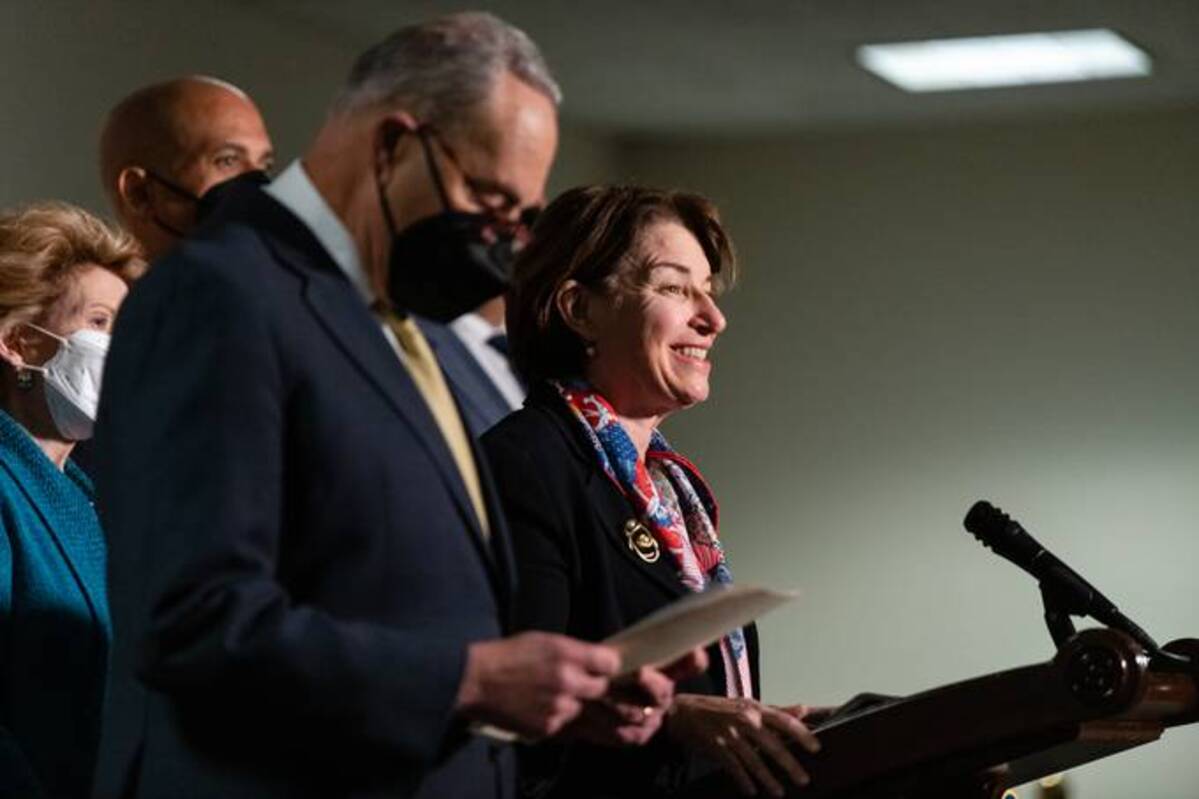 The criticism came as a Senate committee considered Sen. Amy Klobuchar's legislation last week. (Eric Lee/Bloomberg News) | | | The groups say that language in the bill that doesn't let platforms "discriminate" against "similarly situated business users" as they enforce their terms of service could lead to lawsuits where tech giants are accused of anticompetitive behavior after deplatforming sites, Protocol's Issie Lapowsky reports. The Senate Judiciary Committee last week advanced the bill, which prohibits major tech companies from giving their products and services an advantage over those of their competitors. A spokesperson for Sen. Amy Klobuchar (D-Minn.), who introduced the bill, told Lapowsky deplatforming companies over hate speech wasn't likely to lead to material harms to competition. They also said a platform could show that it was trying to protect their users' safety if someone were to sue using that argument. Arguments over content moderation could be difficult for lawmakers to agree on as they try to iron out the bill, Lapowsky reports. "If an antitrust crackdown on Big Tech is the glue holding Democrats and Republicans together, content moderation is a surefire wedge," she writes. | The chair of the FCC is taking aim at Internet providers' holds over apartment buildings | 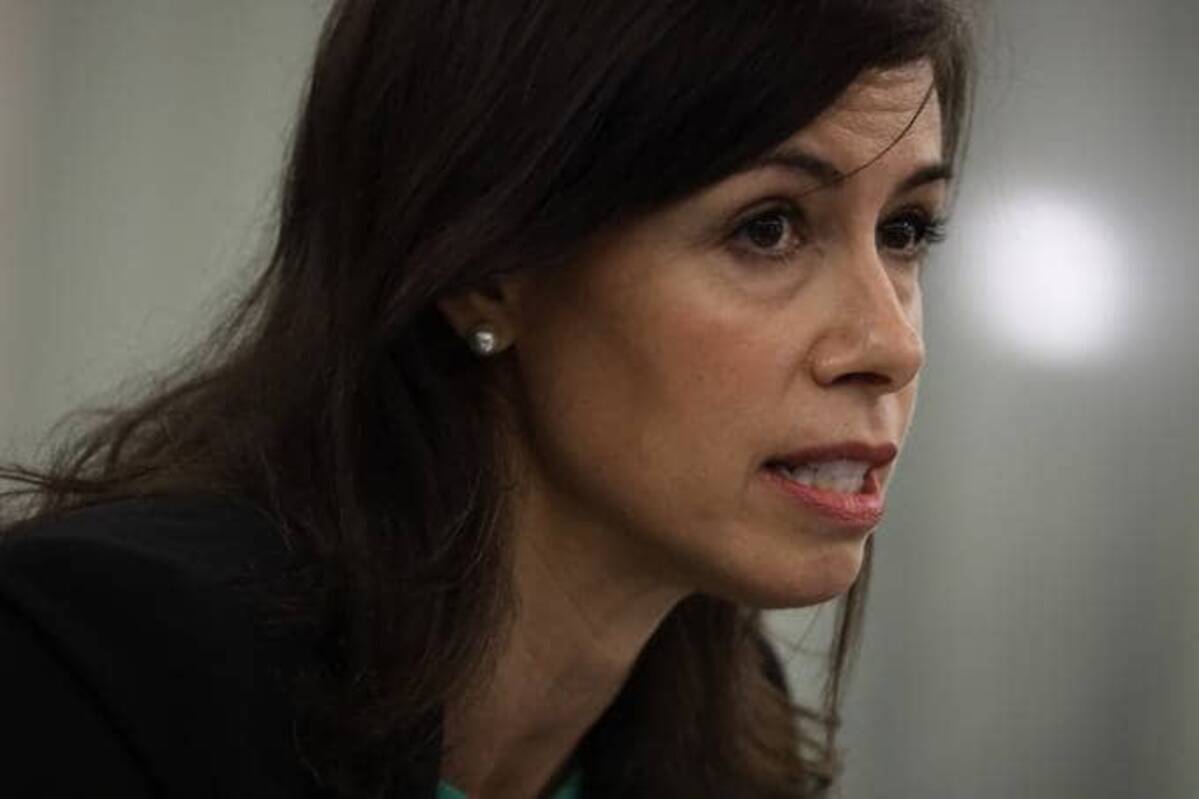 FCC Chairwoman Jessica Rosenworcel wants the FCC to adopt the proposal. (Alex Wong/Getty Images) | | | Federal Communications Commission Chairwoman Jessica Rosenworcel says her proposal would "crack down on practices that lock out broadband competition and consumer choice," Bloomberg News's Todd Shields reports. Rosenworcel said the "order would prohibit cable service providers from entering into certain revenue sharing agreements with a building owner, and seek to ease alternative providers' access to the wiring of buildings," Shields writes. It would have to get bipartisan support at the FCC, which is split 2-to-2 between Democrats and Republicans as the Senate weighs President Biden's nominee Gigi Sohn. | | |  | Rant and rave | | | Another television character — this time on Showtime's "Billions" — suffered a heart attack on a Peloton bike. Peloton Senior Vice President Dara Treseder: | | "Dickinson" writer Ken Greller: | | Timescale's Drew Olanoff: | | |  | Inside the industry | | | |  | Hill happenings | | | |  | Workforce report | | | |  | Agency scanner | | | |  | Trending | | | |  | Daybook | | - Microsoft holds a conference call on its earnings on Tuesday at 5:30 p.m.
- FTC Commissioner Noah Phillips discusses data privacy at an event hosted by the National Cybersecurity Alliance and LinkedIn on Wednesday.
- Sens. Ron Wyden (D-Ore.) and Marsha Blackburn (R-Tenn.) speak at an R Street Institute event about a future federal privacy law on Thursday at 2:30 p.m.
- Apple holds a conference call to discuss its earnings on Thursday at 5 p.m.
| | |  | Before you log off | | | That's all for today — thank you so much for joining us! Make sure to tell others to subscribe to The Technology 202 here. Get in touch with tips, feedback or greetings on Twitter or email. | |


