 | | Maxine Joselow | | | Good morning and welcome to The Climate 202! Today we're wondering what an Infrastructure Bill burger tastes like and if there's a veggie version. But first: | Conor Lamb, leading Democratic candidate for Senate in Pa., opposes a fracking ban | 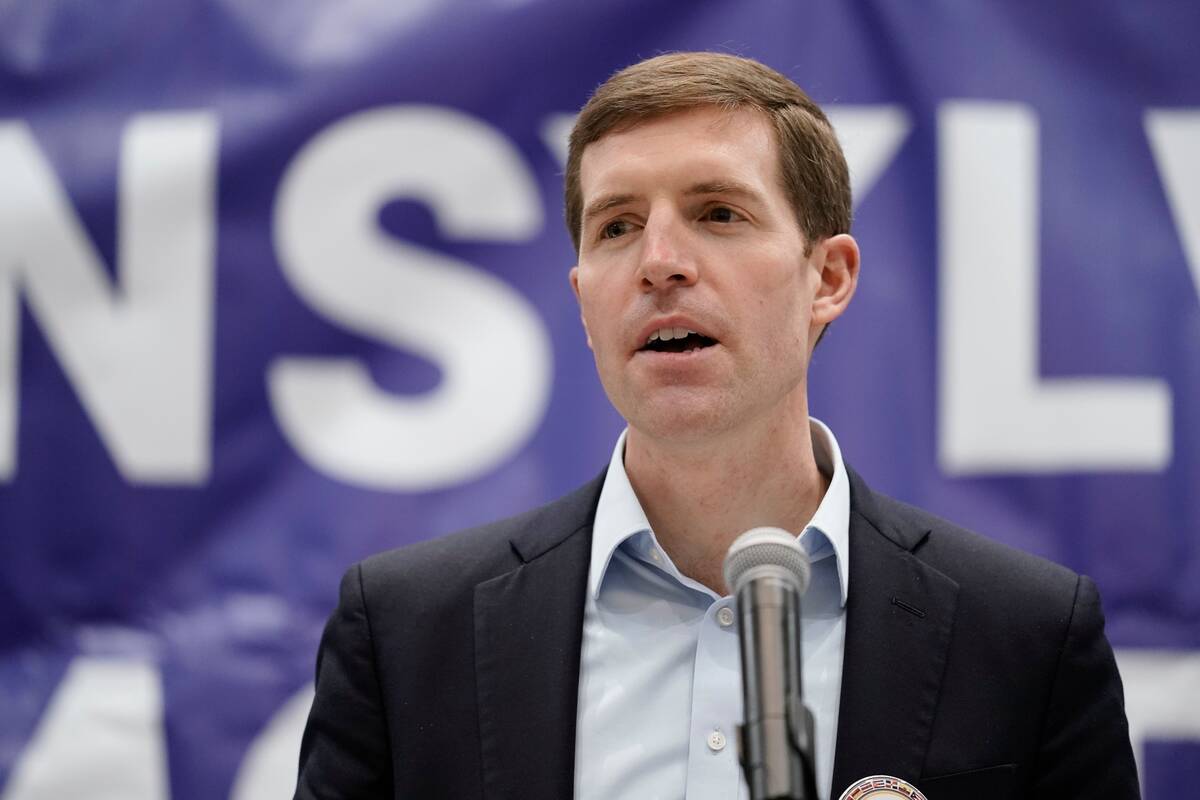 Rep. Conor Lamb during a meeting of the Pennsylvania Democratic Committee in Harrisburg on Jan. 29. (Matt Rourke/AP) | | | One of the leading Democrats in one of the most competitive Senate contests in the midterm elections opposes a ban on hydraulic fracturing, or fracking. Environmentally, fracking poses a clear risk to the climate and clean water. Politically, the issue is much more complicated in Pennsylvania, where fracking has long been considered a third rail of state politics. The details: On Saturday, the state Democratic Party declined to make an official endorsement in the high-profile Senate race ahead of the May primary, although it gave Rep. Conor Lamb a big show of support, the Pittsburgh Post-Gazette reports. | - At a Pennsylvania Democratic Committee meeting in Harrisburg, Lamb received the most votes (169) but fell short of the committee's self-imposed threshold of a two-thirds majority.
- Pennsylvania Lt. Gov. John Fetterman came in second with 64 votes, while state Rep. Malcolm Kenyatta was third with 42 votes.
- The Democrats are seeking to flip the seat of Sen. Patrick J. Toomey (R-Pa.), who is retiring at the end of his term. It's seen as a critical race for Democrats if the party hopes to retain control of the Senate.
- Yes, this is the seat where Mehmet Oz and David McCormick, a hedge fund manager, are also running, as Republicans.
| | Lamb and Fetterman have both voiced opposition to a ban on fracking, the controversial process in which liquid is blasted underground to create cracks through which oil and natural gas can escape. In particular, Lamb has argued that support for fracking is a prerequisite for any Democrat seeking to win a statewide election in Pennsylvania. And he has taken some credit for getting President Biden to back away from a fracking ban during the 2020 presidential campaign. By contrast, Kenyatta does support a nationwide moratorium on fracking and has said the state should be "doubling down on clean energy," according to the Post-Gazette. | | "A more moderate stance on fracking by the eventual Democratic nominee is a smart position politically," Jeff Brauer, a political science professor at Keystone College in La Plume, Pa., said in an email to The Climate 202. "For many moderate PA voters, who ultimately decide statewide races, fracking and all the industries around it are an economic lifeline, and they will not vote for any candidate who threatens to end the practice, especially too brashly," Brauer added. | - Environmentalists have condemned the practice over its contribution to climate change and contamination of air and groundwater. Living near fracking operations is also linked to premature deaths among senior citizens, according to a Harvard University study published last week.
- However, labor unions and other advocates for fracking have hailed the jobs it has created. Federal employment data shows that Pennsylvania's oil and gas industry supported about 26,000 jobs last year.
| | This month, the Philadelphia Building & Construction Trades Council unanimously endorsed Lamb for the Senate. Ryan Boyer, the council leader, made clear that fracking was a factor in the decision. "He understands that we work in the energy industry, that we want to protect the environment, but we also want to protect our jobs," Boyer said. | Lamb's climate bona fides | | Despite his stance on fracking, Lamb has supported climate legislation aimed at curbing carbon emissions from the fossil fuel industry. | - Lamb has backed the climate provisions in Democrats' Build Back Better bill, which does not include a fracking ban.
- Last year, he introduced a resolution to overturn Donald Trump's rollback of methane emissions standards for the oil and gas industry.
- More recently, the House Science, Space and Technology Committee passed Lamb's bill to provide more than $162 million over five years to find and monitor abandoned oil and gas wells.
| | "I believe that well-regulated natural gas drilling improves our national security, brings jobs, lowers prices and reduces our carbon footprint. But our climate policy must always focus on using the best technology available for reducing carbon emissions, which involves gas in some circumstances, nuclear in others," Lamb said in an emailed response to The Climate 202. "There is no question that climate change is the existential threat of our generation and generations to come, and I believe we need to and can pass actual practical solutions that move us to carbon zero while protecting and expanding good union jobs in Pennsylvania," he added. "Passing Build Back Better is a huge first step in that effort." | - Less is known about Oz's positions on environmental issues than about his support for alternative medicine, although he told Fox News's Sean Hannity that he is focused on energy independence.
- Other candidates in the Republican primary include Carla Sands, a former U.S. ambassador to Denmark, and businessman Jeff Bartos.
| | Oz's campaign did not respond to a request for comment. | | |  | On the Hill | | Congress returns this week. Can Democrats revive Build Back Better? | 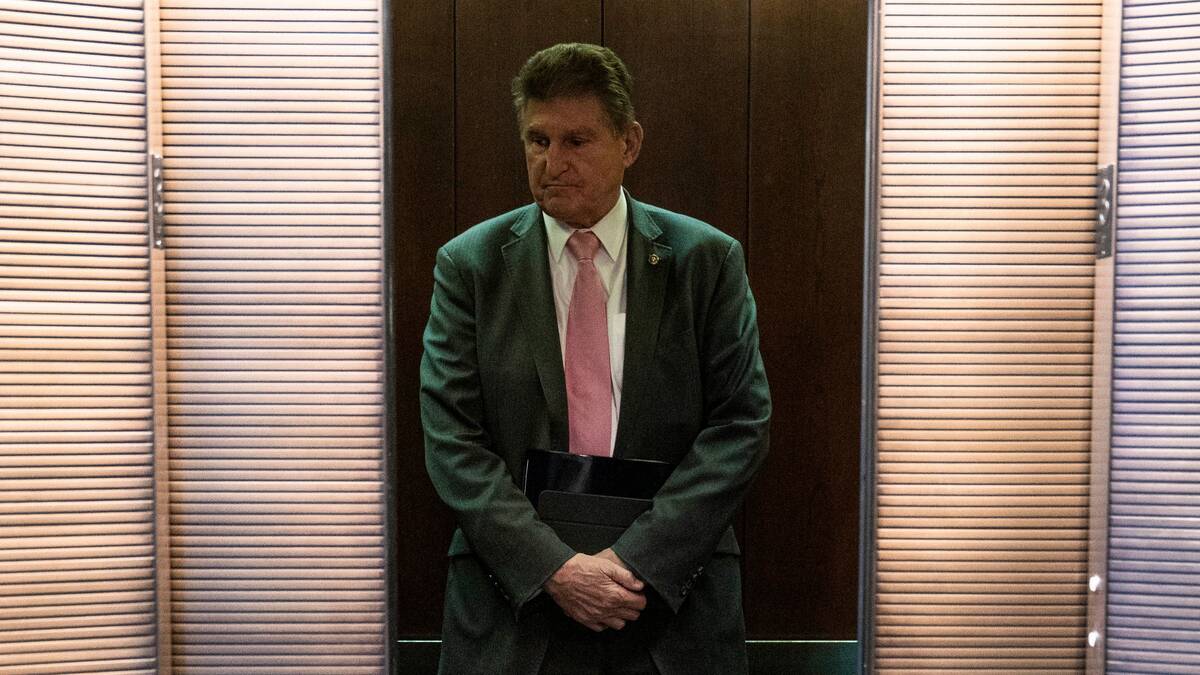 Sen. Joe Manchin III (D-W.Va.) leaves his Capitol Hill office on Jan. 20. (Sarah Silbiger for The Washington Post) | | | As members of the House and Senate return this week, it remains unclear whether Democrats' Build Back Better legislation is mostly dead or slightly alive, The Washington Post's Paul Kane reports. While Biden and Democrats insist that they are still pushing for the roughly $2 trillion climate and social spending plan, House Speaker Nancy Pelosi (D-Calif.) omitted the bill from a Jan. 21 "Dear Colleague" letter on four top priorities, while Senate Majority Leader Charles E. Schumer (D-N.Y.) must now devote significant energy to approving Biden's eventual Supreme Court nominee. Meanwhile, talks have not resumed between the White House and Sen. Joe Manchin III (D-W.Va.), the last crucial vote needed to advance the measure. For Washington insiders, the murky fate of Biden's legislative agenda is a stark contrast to the summer of 2017, when then-Sen. John McCain (R-Ariz.) flashed a thumbs-down on the Senate floor, clearly dooming Donald Trump's quest to repeal the Affordable Care Act. Relatedly, my colleagues at The Early 202 report that roughly 20 House Democrats are today sending a letter to Biden urging him to pass the climate provisions in BBB. "These provisions are necessary for our districts and what constituents are demanding," Rep. Mike Levin (D-Calif.), who flipped his coastal district in 2018, told The Early. "Climate change doesn't discriminate between red states and blue states and red and blue districts." | Infrastructure law programs on hold amid spending fight | 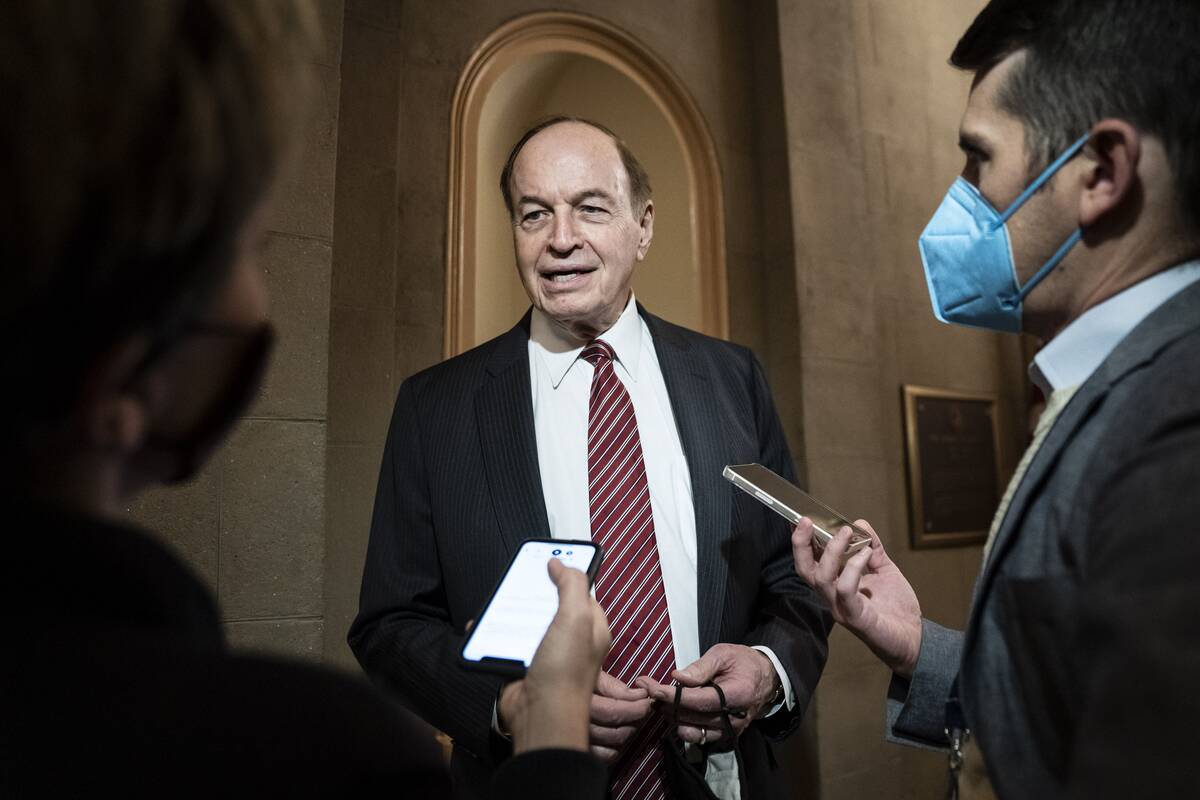 Sen. Richard C. Shelby (R-Ala.) speaks with reporters on Capitol Hill. (Jabin Botsford/The Washington Post) | | | Nearly three months after Biden signed a roughly $1.2 trillion infrastructure bill into law, federal transportation officials say many of the programs the law funds — including climate programs — are on hold because of a congressional spending fight, The Post's Ian Duncan and Tony Romm report. The result is that the Transportation Department cannot immediately spend $1.2 billion on reducing greenhouse gas emissions or $1.4 billion on fortifying roads and bridges against the effects of climate change. Democrats and Republicans in both chambers of Congress have voiced a desire to strike a deal and avert a government shutdown before the existing federal spending agreement expires on Feb. 18. But the appropriations process is bogged down in the evenly divided Senate, where Republicans — led by Sen. Richard C. Shelby of Alabama — have objected to the scope of Democrats' spending plans. | | |  | Extreme events | | Global warming fueled the 'bomb cyclone' in the Northeast | 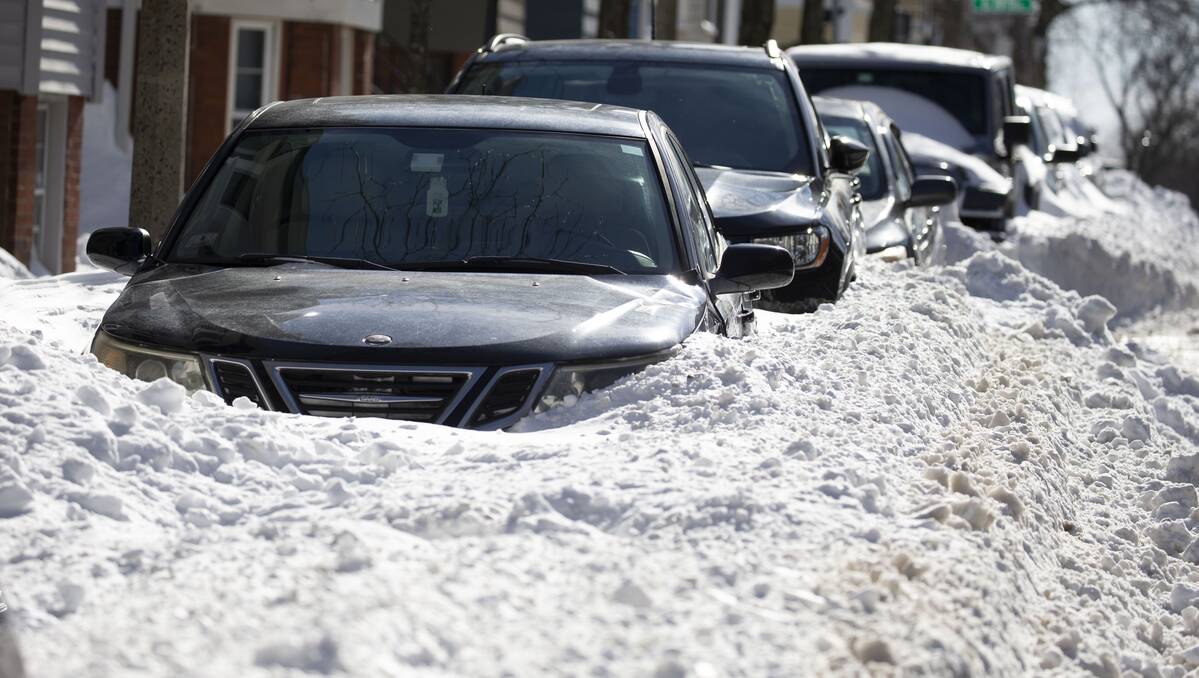 The street scene in Boston on Jan. 30. (CJ Gunther/EPA-EFE/Shutterstock) | | | Global warming played a role in the winter storm that pummeled the Northeast with heavy snow and punishing winds over the weekend, The Post's Brian Murphy, Paulina Firozi and Jason Samenow report. Scientists say that warmer air and ocean temperatures linked to climate change increase the amount of moisture available to storms, potentially boosting their snow production. Ocean temperatures along the Mid-Atlantic and New England were above normal ahead of Saturday's storm. "This blizzard was driven by a combination of favorable meteorological conditions and a warmer Atlantic, the latter of which is a signature of global warming and likely intensified the storm above and beyond what it would have been," Justin Mankin, assistant professor of geography at Dartmouth College, wrote in an emailed statement. "Extreme snowstorms, even in the face of longer-term declines in winter snow, are entirely consistent with the effects of global warming." The storm met the criteria of a "bomb cyclone," a meteorological term for storms that strengthen with unusual speed. As of Sunday, more than 40,000 customers in Massachusetts were still without power. | TV meteorologists are confronting the climate crisis |  (iStock) | | | As the climate changes, so is the job of TV weather reporters, who are increasingly covering the link between global warming and extreme weather events, the New York Times's Marc Tracy reports. ABC News's chief meteorologist, Ginger Zee, explained to "Good Morning America" viewers last year that human-induced climate change led to warmer ocean temperatures, which caused Hurricane Ida to be more destructive. And CNN weather anchor Derek Van Dam reported in October on the ways in which climate change threatens global security and fuels more migration. "During the weathercast, you generally want to give people what they're looking for at that moment," Jeff Berardelli, who moved to NBC's Tampa affiliate in November after serving as a national meteorologist for CBS News, told the Times. "But when the opportunity presents itself, I will put it into its climate context." | | |  | International climate | | European energy crisis threatens Venetian glassmakers | 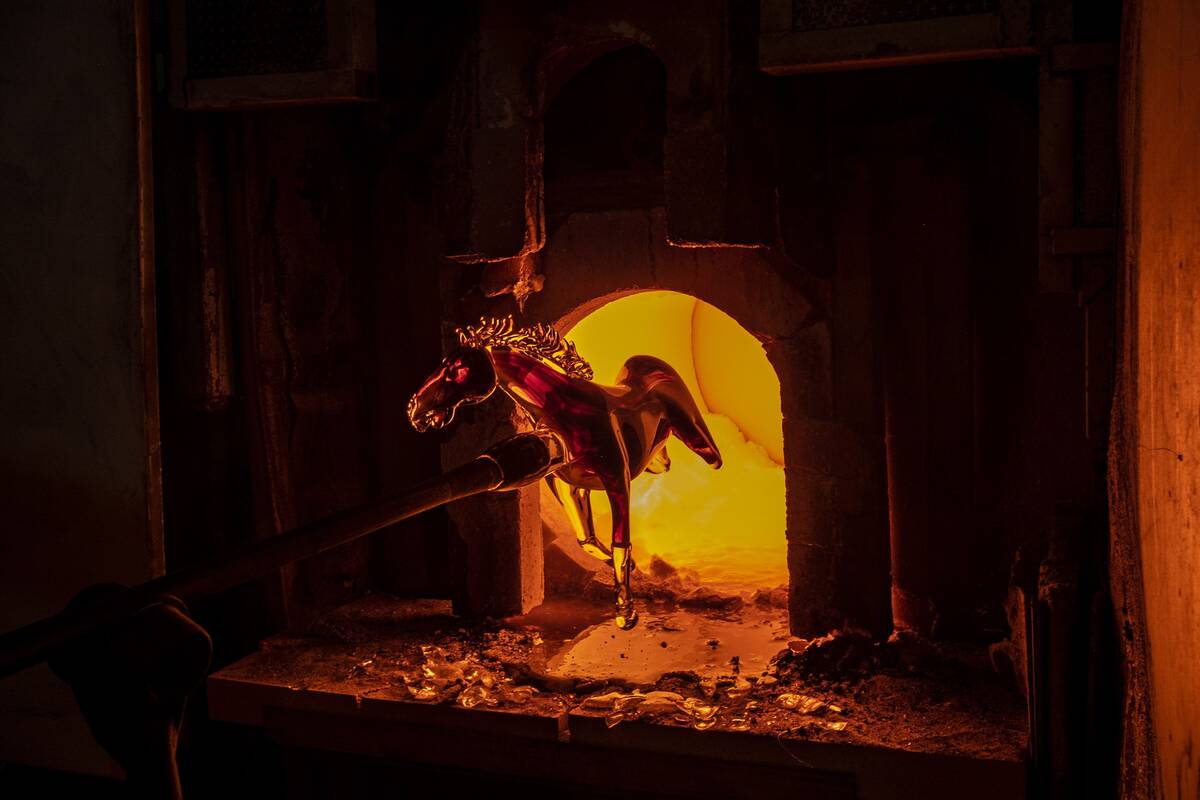 A horse figure at the Zanetti glass factory in Murano, Italy, in 2020. (Francesca Volpi for The Washington Post) | | | For eight centuries, the world-renowned glass factories on the Venetian island of Murano have churned out ornate creations. But the European energy crisis is causing an eerie silence inside the factories, as the glassmakers face a 400 percent increase in natural gas bills, The Post's Stefano Pitrelli reports. The crisis, which stems from a variety of factors, could get even worse: Russia has threatened to cut off the gas flowing into Europe if it is sanctioned for aggression against Ukraine. | | |  | Viral | | | Penguin populations may be declining because of climate change, but two male Humboldt penguins are doing a "great job" fostering a chick at a New York zoo, The Post's Jennifer Hassan reports. 🐧 |  | | | | |