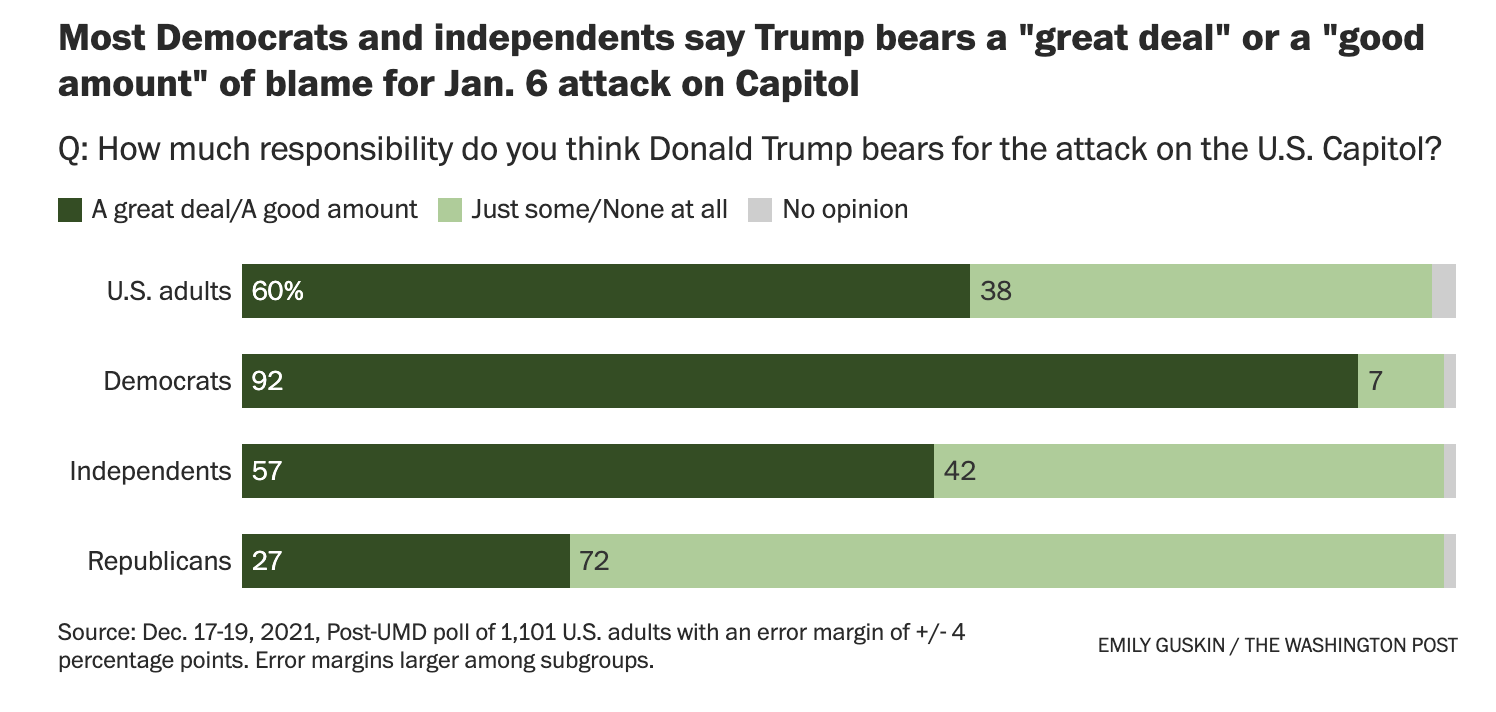
| We're coming up on the anniversary of one of the most significant events in American history: the Jan. 6 attack on the Capitol. Outgoing President Donald Trump urged his supporters to help him overturn his election loss, and many of them stormed Congress as lawmakers there confirmed President Biden's win. The attack led to the deaths of five people. Lawmakers, aides and overwhelmed Capitol police were terrorized, the Capitol was ransacked, and a year later, we're still trying to understand how this happened and what it means for American politics and society. There are two separate investigations into what happened 1. The law enforcement investigation 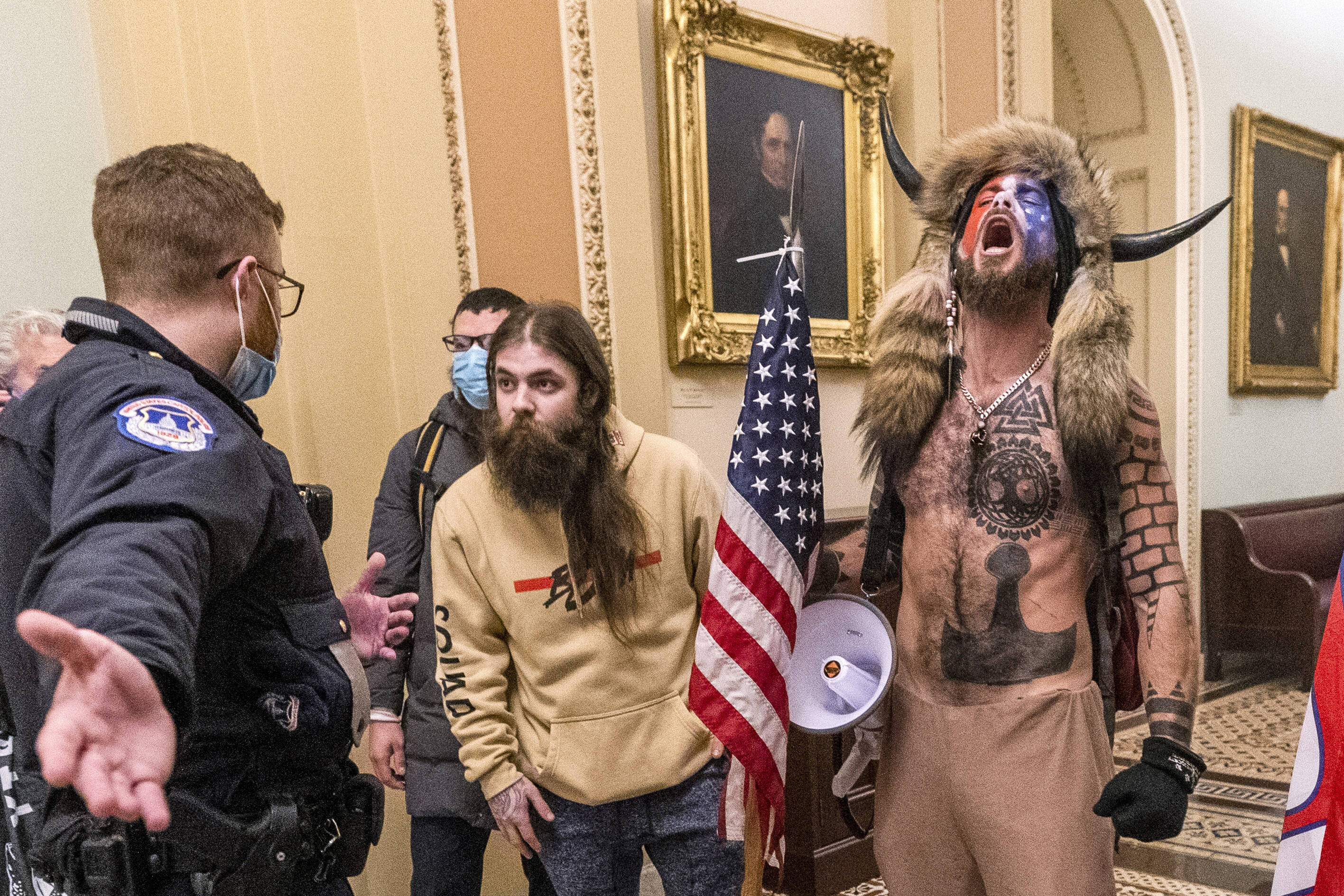 Jacob Chansley received 41 months in prison. (AP Photo/Manuel Balce Ceneta) | Hundreds of people participated in the attack that day. Many of them posted about it on social media. The Justice Department has taken the lead on prosecuting these people in what has become one of the largest federal criminal investigations ever. So far, 725 people have been charged, most of them with smaller crimes like trespassing or resisting arrest. Thirty-one people have received jail sentences, and the Justice Department is still trying to figure out what larger crimes to charge key attackers with: Treason? Obstruction of a congressional proceeding? There isn't an easy legal answer for something like this. Some have expressed contrition in the courtroom. "The hardest part about this is to know that I'm to blame," said Jacob Chansley, the so-called "QAnon Shaman." "To have to look in the mirror and know, you really messed up. Royally." Others, not so much. Some are trying to run for office. 2. The congressional investigation What the House Jan. 6 special committee finds will be the only official federal account of what happened, how much the president instigated it and how to prevent it from happening again. It has quietly interviewed hundreds of witnesses, received tens of thousands of pages of documents, has recommended to the Justice Department that two top Trump allies go to jail for not cooperating, and is trying to interview fellow members of Congress about their potential involvement in the attack and conversations they had that day with the president. "Our families, our districts and our country demand that we get as much of the causal effects of what occurred and come up with some recommendations for the House so that it won't ever happen again," Chairman Bennie G. Thompson (D-Miss.) told The Post. Committee members are racing to finish their work before this time next year, when it's very possible Republicans will take back control of the House and disband the panel. The committee plans to start sharing more publicly what it found. So far, the investigation has revealed a few things, including that Republicans — including Trump's children — reached out to Trump's chief of staff in a panic that day asking him to get the president to call off the rioters. For hours, the president didn't. Key questions the committee wants to answer include: How much did Trump institutionalize this violence? Who was funding these right-wing groups? How involved were Republican members of Congress? How Americans feel about what happened They're torn along partisan lines about how to remember Jan. 6. A new Washington Post-University of Maryland poll finds that just 26 percent of Republicans think the protesters who entered the Capitol were mostly violent; 72 percent of Republicans say Trump doesn't really bear responsibility for what happened; a majority of Republicans (58 percent) believe Biden's election wasn't legitimate; and 40 percent of Republicans and independents say violence against the government is sometimes justified. Most Democrats view what happened with the opposite lens. How Republican leaders are talking about this Largely by glossing over the attack and its aftermath, or outright lying about what happened. The status quo talking point is quickly becoming what Trump regularly says in statements: That the "real insurrection happened on Nov. 3," not Jan. 6. Huge media personalities on the right like Tucker Carlson on Fox News are openly spreading lies about who took part in it, trying to deny the very images the world saw unfold in real time. In Congress, rare is the Republican lawmaker who says the committee's work is valuable. (Senate Minority Leader Mitch McConnell recently did, raising eyebrows.) Instead, lawmakers downplay the attack and its importance. Former vice president Mike Pence, whose life was specifically threatened that day, said it was "just one day in January." As PolitiFact puts it, many of the leaders of the Republican Party during the attack are angling for a promotion: "Trump, acquitted in the Senate for a second time, may run again in 2024. [Rep. Kevin] McCarthy [R-Calif.] is angling to take back the speakership. Carlson remains one of the most-watched cable news hosts on TV." How Democrats are talking about this Well, they definitely aren't downplaying the severity of what happened. But they are torn about how much to talk about Jan. 6 going into the 2022 midterm elections, where their slim majorities in Congress are threatened, CNN reports. "I don't think we can ever talk too much about how vital it is that we protect our democracy and our freedoms," said Josh Kaul, the attorney general in Wisconsin. There aren't signs — at least not yet — that what happened a year ago could motivate the Democratic base, like the white supremacy rally in Charlottesville did before the 2018 midterm elections. Democracy activists say this hasn't resonated as a dinner-table conversation in America, like covid and the economy — which still poll as Americans' top issues. Can Democrats bring it to the forefront in 2022? | 



 Email
Email