| Did Baby New Year forward this to you? Sign up here. This is a time capsule. This email was written back in 2021, a different period in American history, with the aim of familiarizing those of you living in what is to me the future with life in our era. For the most part, Americans in the year 2021 were interested in charts. (This is the great thing about time capsules; the past becomes whatever we choose to include. History is written by the archivists.) Charts dominated the public's interest, and with good reason. Hopefully that's still true in your time — though that you're reading this suggests it is. The problem with time capsules, of course, is that they're one-directional. There's no way for me to know what's changed by the time you read this, what new experiences you might have had since the distant past when I'm writing. Like, for example, how many of you might have tried celebrating the dawn of the new year in each of the world's 24 time zones? If you did, perhaps you used as a reference an article I wrote a few years ago, back in yet another era of American history. If you didn't, well, here are some tips for next year. |
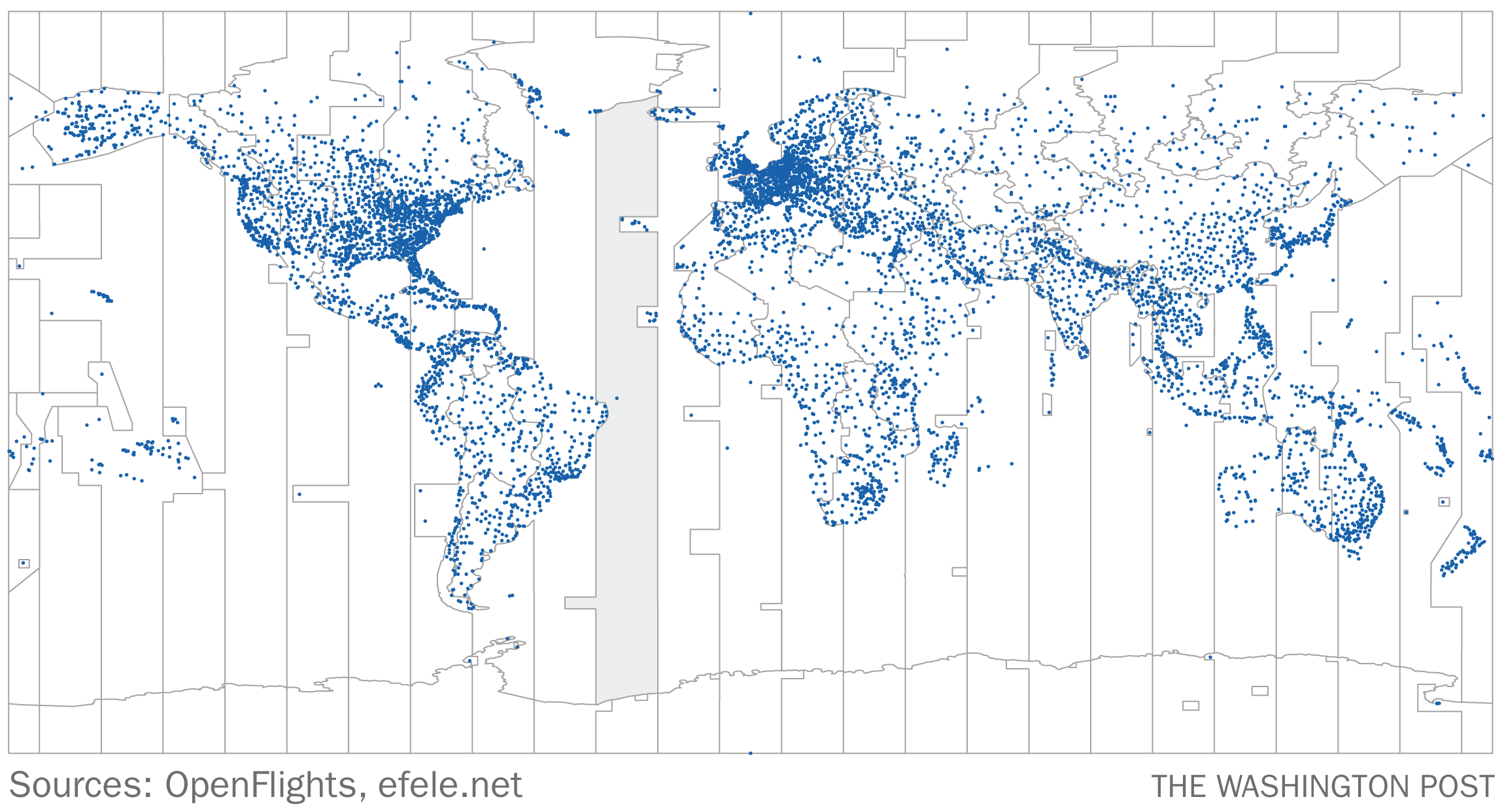
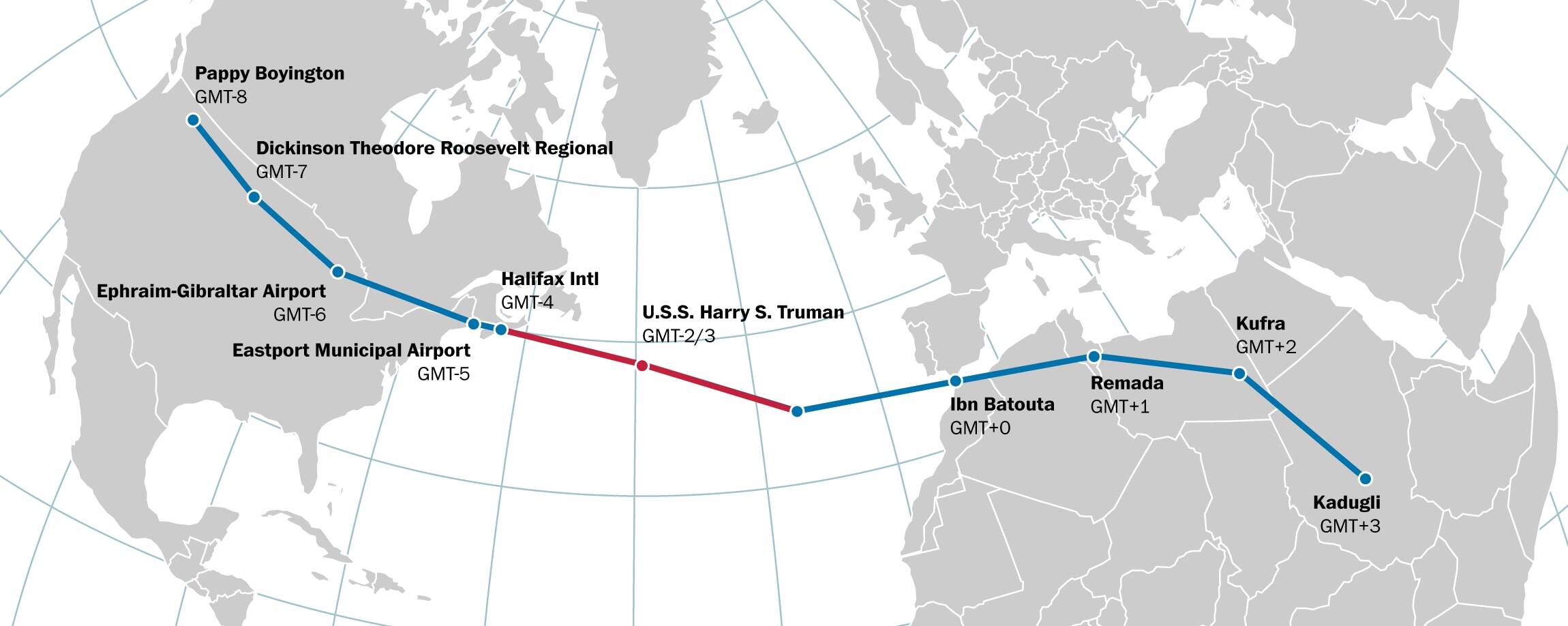
How to celebrate the new year in every time zone This is one of those questions that might occur to someone at some random point in time and which I, unlike people whose brains remain happily non-addled, decided to try to answer. Like, say, how many kids Santa needs to deliver presents to. There's an easy way to do it, of course. Fly to the South Pole and simply walk around it in a circle over the course of the day. Time zones, like lines of longitude, get narrower near the poles, so it's far easier to arrive in place for 24 consecutive midnights there than anywhere else. (Save the North Pole, of course, but since you're reading this in the distant future, I want to ensure there's actually something to stand on should you decided to put this plan into motion.) For a variety of reasons, though, this doesn't seem like it would be much fun. So, when I looked at this question in 2014, I set one ground rule: "celebrate" means "being able to stand still and have a glass of champagne," so no flying to the International Space Station and simply whipping around the Earth a dozen times. Beyond that, anything was game. Obviously, you're going to need an airplane, in order to move quickly from point to point. And once you have an airplane, you need an airport. Here, an interesting-though-predictable correlation emerges: there are more airports in places where people live, which tend to be places further from the poles, which means they tend to be further apart. There's a website, OpenFlights, that provides a crowd-sourced map of the world's airports. They're seen below, juxtaposed with the world's time zones. The problem arises in areas like the one indicated with gray shading. That time zone, two hours west of Greenwich Mean, has only a handful of airports, many south of the equator. So if you're flying from east to west, you need to either incorporate a gradual southern progression — adding more miles and, therefore, time to your flight — or you need some way of landing a plane in the middle of the ocean. My original article included details about the best possible strategy for celebrating the new year hour after hour around the globe, but I'll cut to the chase. Your best bet on aircraft, a former Air Force pilot suggested, was an F-22 Raptor, allowing both for mid-air refueling (which eliminates extended periods on the ground) and both takes off and lands quickly. Since we're assuming we have access to military aircraft and resources, we can then drop an aircraft carrier in that mid-Atlantic dead zone. Now we have a plan: we can get up to 12 consecutive midnight celebrations, starting at an airport in Kadugli, Sudan, progressing across the ocean and ending at Pappy Boyington Field in Coeur d'Alene, Idaho. (The first person to email with the error in the map above (beyond the lack of a label on the airport in the Azores) will get a shout-out in next week's email.) This is not particularly practical, I will admit. There are places where you could cover three time zones with a short car ride, which could be fun. Or, if you insist on confining yourself to planes you might actually be able to access, you could hop across the four zones in the continental U.S., landing in northern airports likely to be blanketed by snow. But the world is simply too big and our airplanes too slow for a full 24-hour circuit to work. Or, at least, it was in 2021. Who knows what the world is like in your time! |
Visualize this! I will admit that the past two newsletters have been somewhat chart-adjacent, focused mostly on maps showing imaginary global travel patterns. It's the holidays; I beg your forgiveness. But last week, as now, I would like to introduce a new, recurring section to the newsletter that is chart-specific. Presenting the inaugural "Visualize this!," a section where I look at an article that could have been improved with the addition of a chart. I came up with the name for this section off the cuff when we were first discussing this newsletter and I recognize that it's very dumb. But I have decided to lean into it, hanging the title around my neck like a stupidly named albatross. Barry the albatross. So. On Wednesday, Post opinion columnist Dana Milbank wrote about the dichotomy between economic indicators and public perceptions of the health of the economy. By most measures, the economy is doing well, but many Americans don't feel as though that's the case. In his column, Milbank pointed to an article I wrote last week, showing how views of the economy shift by party depending on who's running things. He very graciously credited my writing, but it's still probably the case that the point about how Republican views of current economic conditions have flipped since the start of the pandemic is better illustrated visually — and when put in context with the flip among Democrats. 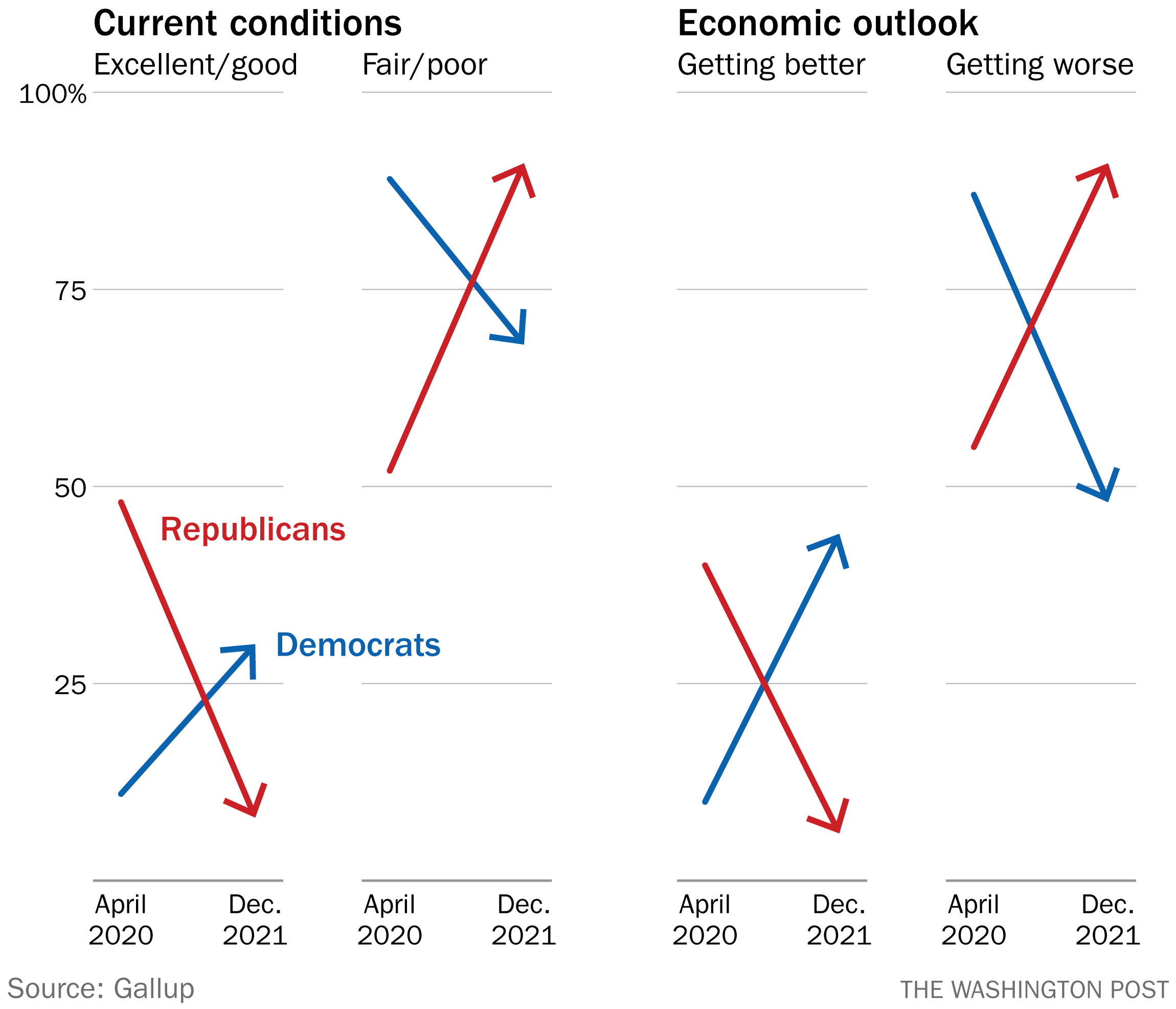 | This chart is fairly straightforward, showing the change by party in the percentages saying that the economy is doing well (excellent or good) or not well (fair or poor) in both April 2020 and recently, using Gallup polling. A lot has changed over the past 20 months, including the occupant of the White House. And, in parallel, views of the economy by party have also changed. Some of this is a function of the changes to the economy. Some, clearly, is a function of partisanship. I was going to conclude here with a joke about how in the future, when you're reading this, such partisanship will have evaporated. But even when making jokes, some things are simply too unlikely to consider. |




 Email
Email