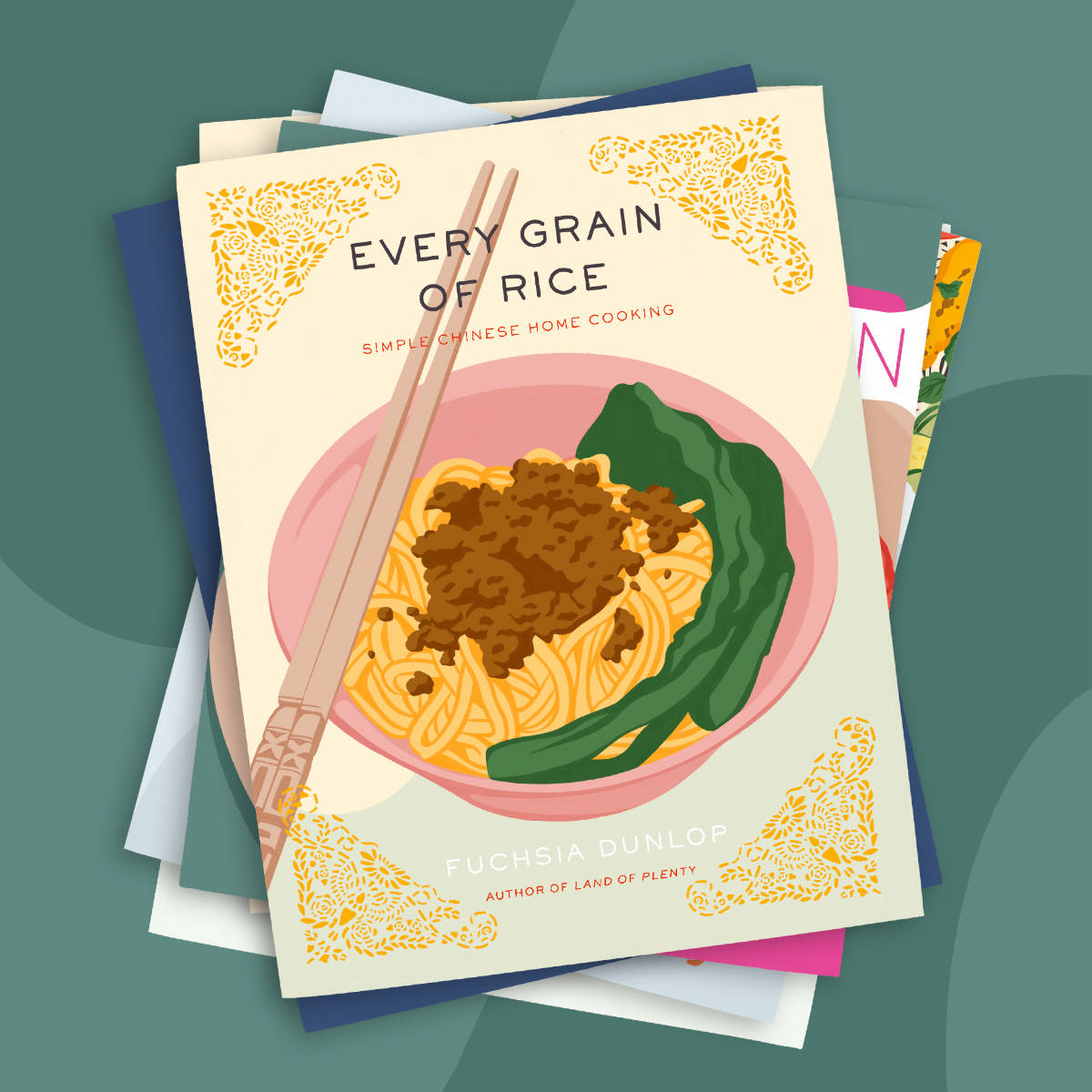
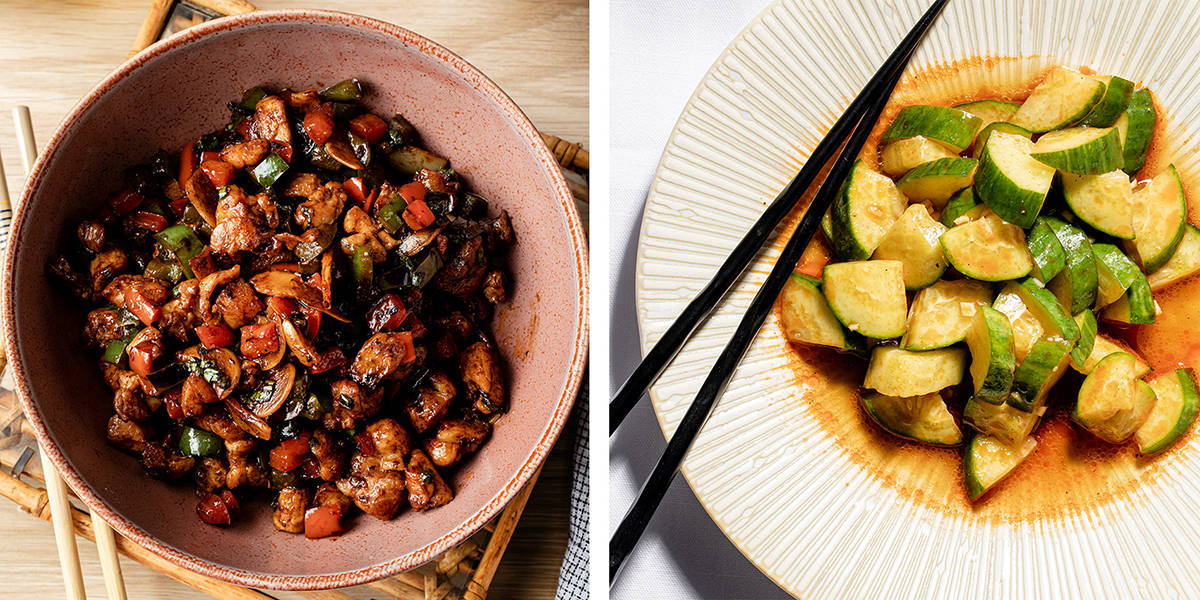
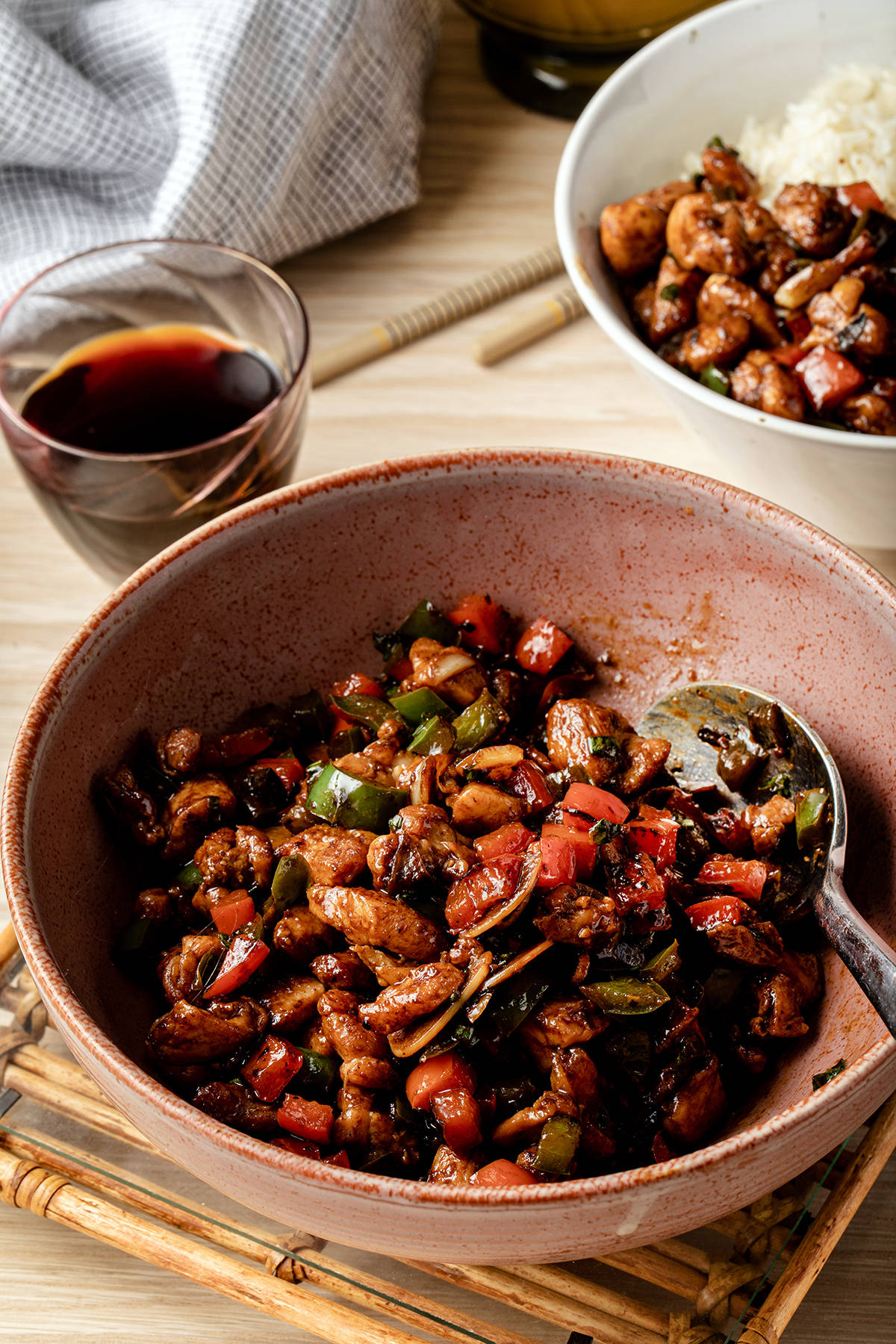
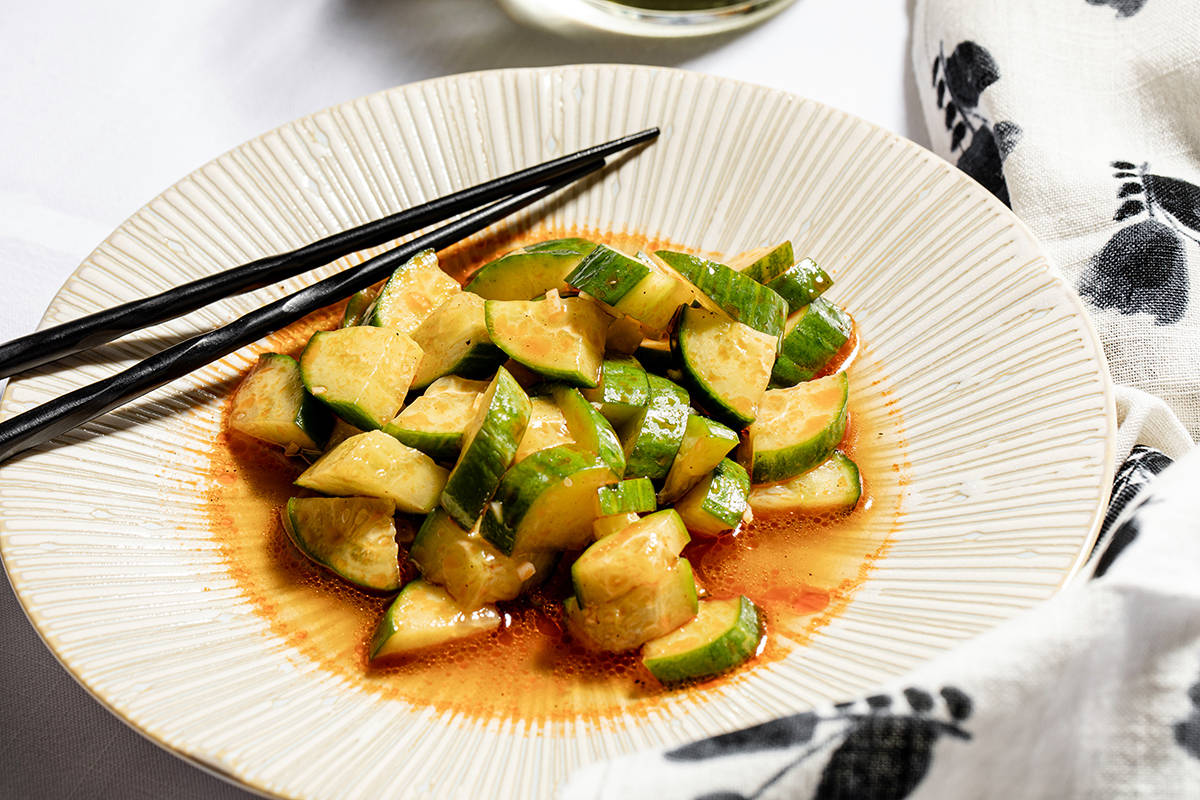
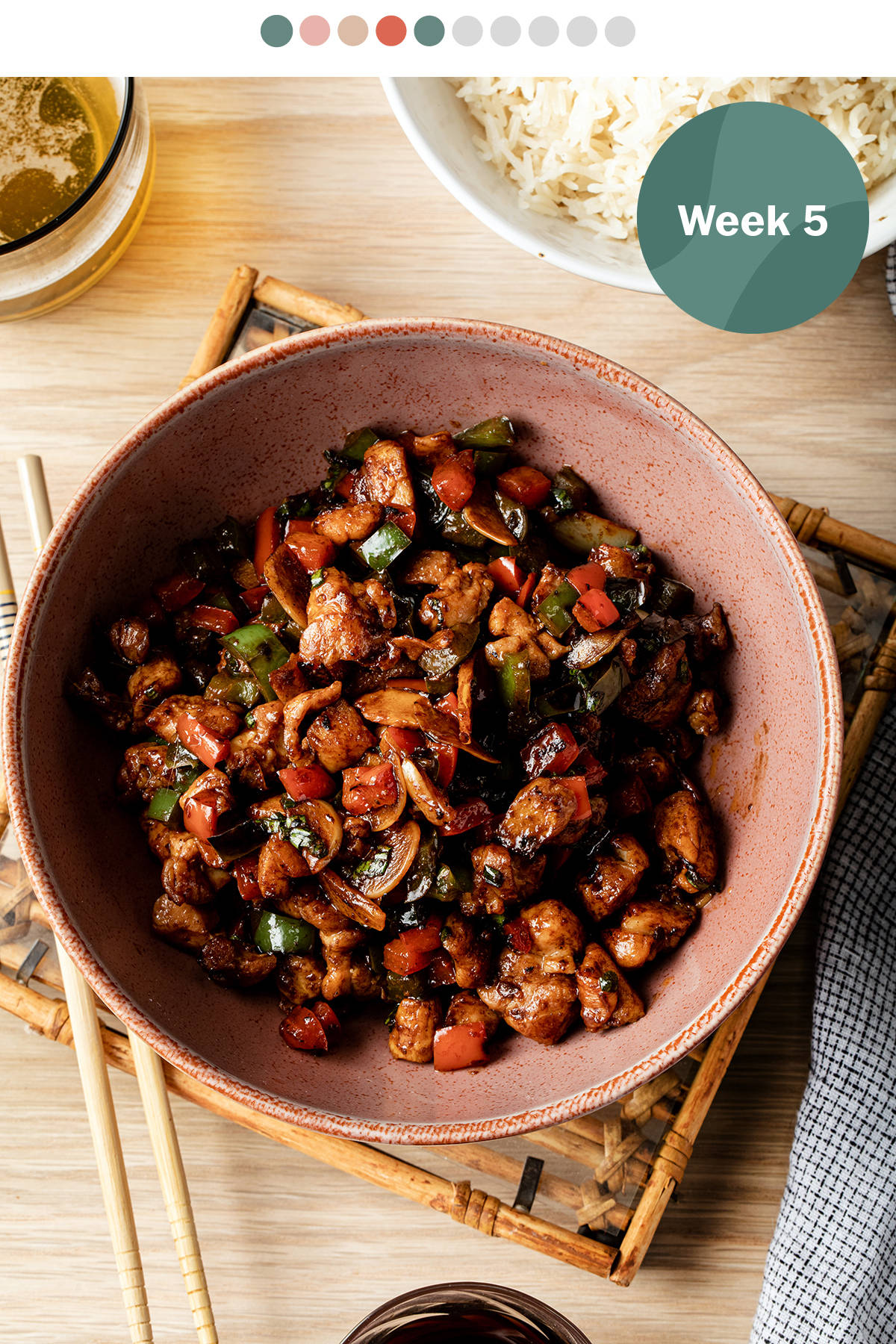
Fuchsia Dunlop's 'Every Grain of Rice'I owe my minimal ability to prepare Chinese food (I still have a long way to go) to Fuchsia Dunlop's "Every Grain of Rice." Familiarizing myself with the foundational techniques (wok cooking, with or without a wok, most of all) and flavor profiles has, like Madhur Jaffrey's tutorial on spices, helped me become a better cook, and a better-informed one. Standard bearers, past and present, who have written in-depth cookbooks dedicated to Chinese cuisine include Grace Young, Irene Kuo, Yan-kit So, Eileen Yin-Fei Lo, Kian Lam Kho, Barbara Tropp, Carolyn Phillips and Georgia Freedman. Dunlop, a British writer, is today's most frequently cited expert. That is not why her book is on this list. I chose it because, as its subtitle announces, it zeroes in on "Simple Chinese Home Cooking." So many Americans know so little about the pioneering methods and flavor-building tactics behind the real deal, which, by the way, have influenced countless countries' cuisines, in the West and beyond. The majority of us have a generic sense of Chinese food; we associate it with the takeout containers that show up at our doorsteps faster than ASAP, and whatever's in those paperboard oyster pails is a far cry from anything we would be likely to eat in China proper. That is starting to change, thank goodness. But we're still dealing with a lot of people who love what they believe to be Chinese food — along with some who love actual Chinese food; i.e. they love eating it but wouldn't think to cook it. Dunlop made me think to cook it. I had eaten a hot claypot full of chicken with chestnuts in Shanghai, hoarding it from the rest of my table when the lights in the restaurant went out. I never forgot it. Years later, I saw a recipe for it in Dunlop's book and couldn't not try it. That's how it started. While sharing the food traditionally made in Chinese homes (instead of restaurant kitchens or street vendor stalls), Dunlop considers the realities of home cooks in general. She selects for ease, safeguarding us against recipes with long ingredient lists or numerous specialty ingredients, showing us how to prepare things efficiently — and correctly, so we're able to pick up a beginner's knowledge of Chinese food and culture as we go. Just having the formula for suan ni wei, the Sichuanese combo of garlic, sugar, soy sauce, vinegar and chile oil that acts like a spark plug for smacked cucumbers or anything else you toss in it, will give you something close to SHAZAM status in the kitchen. Coincidentally, Dunlop shows us how much this style of cooking dovetails with many of our present-day priorities as eaters; it's economical, sustainable and — even if I think it's a turgid phrase — vegetable-forward. It is interesting to see how modern dietary advice often echoes the age-old precepts of the Chinese table: "Eat plenty of grains and vegetables and not much meat, reduce consumption of animal fats and eat very little sugar," she states in the early pages. Those of you philistines who don't care to find out what happens when you toss celery, macadamia nuts and lily bulbs in a ripping hot pan and came here for gong bao chicken, Fuchsia's got your gong bao — but this one's the O.G., the Chengdu version that dates to the Qin Dynasty and the governor of Sichuan, who liked it so much they put his name on it. It requires a pan heated well past blistering, too, and is further proof that the fastest way to dinner is a wok. If you're not pressed for time, there are sweet-and-spicy cold noodles to be slurped, red-braised pork suffused with star anise and cinnamon to be savored, and wontons to be boiled, plopped in a pool of chile oil and soy sauce and consumed immediately.  | Menu | Black Bean Chicken (Dou Chi Ji Ding) Experience the power of concentrated umami in the form of fermented black beans, which do all the heavy lifting in this quick, satisfying flash in your pan. Smacked Cucumber in Garlicky Sauce (Suan Ni Pai Huang Gua) There's no cooking required for this flavorful Sichuan vegetarian dish, only the mixing of a sauce and the beating of a cucumber.  | Focus on wok cooking | Before the actual cooking begins, Dunlop gets into the necessary equipment, spending most of her efforts on the wok — the different types and related accessories, along with instructions on how to care for your pot. She also breaks down the steps to proper stir-frying and steaming. That's where you'll find my favorite notes — the one where she shows you how to turn your wok into a steamer (no bamboo vessel required), and the one where she explains "Steaming without a steamer or wok." Please know, if you don't have a wok, you can still participate. Even she admits, "It's possible to rustle up a Chinese meal without one." A wok is best (those high sides make a difference), but a cast-iron skillet or frying pan will do.  | Recipes | Black Bean Chicken (Dou Chi Ji Ding)I'm amazed by what fermented black beans can do, and how easy they are to find. They carry this dish. (Honestly, I think the bird is negligible.) It comes from the Hunanese city Liuyang, which, Dunlop tells us, is known for its production of fireworks. If you ate it there, the chicken would be deep-fried. She has adapted it to a stir-fry to make it easier for home cooks. If you don't like fireworks going off in your mouth, skip the chiles. If it's a pyrotechnic spectacle you're after, increase the amount. For easy printing and scaling, view this recipe on our website at washingtonpost.com/recipes. IngredientsServings: 2
Total time: 30 minutes For the marinade:
1 tablespoon Shaoxing wine
1/4 teaspoon fine sea salt
1 1/2 teaspoons potato flour, or cornstarch (or potato starch)
1 teaspoon light soy sauce (not same as reduced-sodium soy sauce)
1 teaspoon dark soy sauce For the chicken:
8 ounces skinless, boneless chicken thighs (about 2 thighs)
1 small green bell pepper, or 1/2 each red and green bell pepper
3 tablespoons canola oil
3 garlic cloves, sliced
An equivalent amount of ginger, peeled and sliced
2 tablespoons fermented black beans, rinsed and drained
1 to 2 teaspoons ground chiles, to taste
Fine sea salt, to taste
2 tablespoons finely sliced scallions
1 teaspoon toasted sesame oil StepsStir together the marinade ingredients. Cut the chicken into 3/8- to 3/4-inch cubes and add it to marinade. Mix well. Cut the pepper(s) into small squares to match the chicken. Heat a wok over high heat, add 1 tablespoon of the oil, then the peppers, and stir-fry until hot and slightly cooked, but still crisp. Remove and set aside. Reheat the wok over high heat. Add the remaining oil, swirl it around, then add the marinated chicken and stir-fry to separate the pieces. When they have separated and are starting to become pale, add the garlic and ginger and stir-fry until they smell delicious. Add the black beans and stir a few times until you can smell them. Then add the ground chilies and return the peppers to the wok. Continue to stir-fry until the chicken is just cooked through and everything is sizzlingly delicious, seasoning with salt to taste. Then stir in the scallions and, off the heat, the sesame oil. Serve. Nutritional facts (per serving): Calories: 445; Protein: 26 g; Carbohydrates: 12 g; Fat: 34 g; Saturated Fat: 5 g; Cholesterol: 100 mg; Sodium: 1287 mg; Fiber: 2 g; Sugar: 5 g. Smacked Cucumber in Garlicky Sauce (Suan Ni Pai Huan Gua) Dunlop drives home the point that Chinese cuisine leads with vegetables, using meat, a less sustainable and more expensive resource, as a flavoring accent. This dead-simple recipe is so vegetable-forward it skips the part about meat entirely. It gets its strength of character from a Sichuan seasoning mixture known as suan ni wei ("garlic paste flavor") that's combined in a bowl and can be applied to any host of things, including boiled wontons or pork dumplings — or, my choice, cucumbers. I derive great satisfaction from banging the crap out of a cuke, and I bet I'm not alone. For easy printing and scaling, view this recipe on our website at washingtonpost.com/recipes. IngredientsServings: 2
Active time: 10 minutes
Total time: 20 minutes 1 cucumber (about 11 ounces)
1/2 teaspoon fine sea salt
1 tablespoon finely chopped garlic
1/2 teaspoon granulated sugar
2 teaspoon light soy sauce (not same as reduced-sodium soy sauce)
1/2 teaspoon Chinkiang vinegar
2 tablespoons chile oil
1 to 2 pinches ground roasted Sichuan pepper (optional) StepsLay the cucumber on a chopping board and smack it hard a few times with the flat blade of a Chinese cleaver or with a rolling pin. Then cut it, lengthways, into four pieces. Hold your knife at an angle to the chopping board and cut the cucumber on the diagonal into 1/8- to 3/8-inch slices. Place in a bowl with the salt, mix well and set aside for about 10 minutes. Combine all the other ingredients in a small bowl. Drain the cucumber, pour the sauce over them, stir well and serve. Nutritional facts (per serving): Calories: 152; Protein: 2 g; Carbohydrates: 9 g; Fat: 12 g; Saturated Fat: 2 g; Cholesterol: 0 mg; Sodium: 745 mg; Fiber: 1 g; Sugar: 4 g. Join our virtual cookbook club! Chat about the books, ask questions and share your creations by joining the Essential Cookbooks Facebook group here, and show others you've joined the club by posting your recipe photos on Instagram using #voraciouslycookbooks. Have a question?Email us at voraciously@washpost.com or message @eatvoraciously on Instagram. Charlotte Druckman is a journalist and food writer. She conceived and edited the collection "Women on Food" and is the author of "Skirt Steak: Women Chefs on Standing the Heat" and "Staying in the Kitchen." In addition, she has written two cookbooks — "Stir, Sizzle, Bake: Recipes for Your Cast-Iron Skillet" and "Kitchen Remix: 75 Recipes for Making the Most of Your Ingredients," and co-wrote chef Anita Lo's "Cooking Without Borders." She lives in New York City. Find her on Instagram (@chardrucks) or Twitter (@cettedrucks). Photos by Justin Tsucalas; food styling by Nichole Bryant; props by Limonata Creative; illustrations by Louisa Cannell, all for The Washington Post. | 



 Email
Email