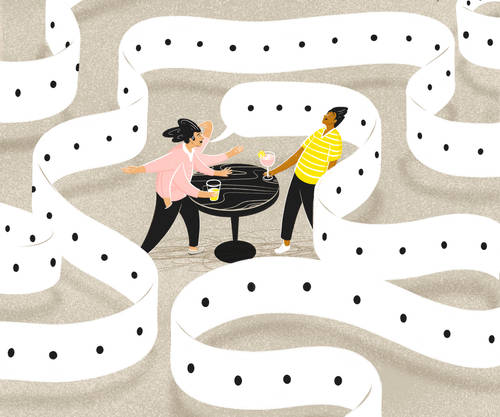
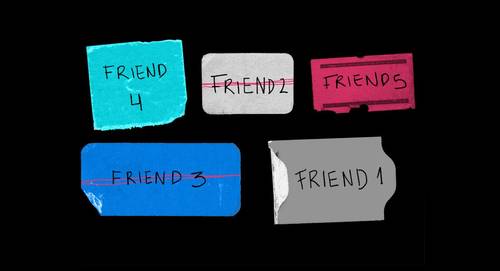
| Whenever I think about the challenge of making plans, this tweet comes to mind: I've let my fair share of friendships dissolve into an endless series of "we should grab a bite soon" texts. I used to think technology could help on that front, but 2020 taught me about the realities of video call fatigue. But finding time for friends doesn't have to be a hassle. Welcome to Day 2 of A Better Week. The benefits of socializing are clear. It doesn't just improve our mood; studies have shown it can impact our long-term health, suggesting a strong connection between social relationships and expected life-span. A 2015 analysis of more than 3.4 million people across 70 studies found that the absence of social connections carried the same risk as smoking up to 15 cigarettes a day. It can be tempting to look back fondly at our early friendships. Those relationships took much less effort to maintain — hanging out was built-in to our schedules through playdates, sports and school. The closest adult version of this dynamic is the workplace friendship. We consistently interact with our colleagues during the day, which would often naturally segue into eating lunch together or grabbing a post-work drink. The pandemic paused many of those friendships for a while, leaving many of us lonelier than ever. So what happens with friendships that require more effort?  (Jennifer Tapias Derch for The Post) | Studies have shown that social circles tend to peak in our mid-20s. As our friend groups shrink, making new friends in our 30s can feel more challenging. I wanted to be more proactive in how I approach my friendships, so I spoke with Laura Vanderkam, an author of several time management and productivity books. "Scheduling stuff is this huge barrier often to seeing friends," Vanderkam said. "The best way to ensure you're going to see them is to have some sort of recurring event that's kind of built into your life." Vanderkam suggested scheduling a consistent activity with your friends, such as a weekly workout class or monthly book club. These activities can also be virtual, like pegging a recurring phone call to a long walk. "When these things are built into our schedules, then they happen," she added. It also doesn't need to be a productive activity. Vanderkam used the example of a weekly happy hour. Setting it up on the same day every week allows you to plan around it. Your friends can also incorporate it into their routines. Most importantly, you avoid the vague "let's grab a drink sometime" now that you have a day set aside for those plans. I don't have any children, and neither do most of my friends, so dedicating an evening every week made sense for my schedule. I settled on Thursdays, as it allows me the flexibility to make plans earlier in the week. My goal was to spend that evening with friends I don't work with and don't see as often as I'd like to. I realize that this approach isn't necessarily tenable for everyone, particularly for those with young children, so another option is setting up a shared calendar with your friends. This can also be effective for scheduling phone calls with long-distance pals in different time zones. I made it official by blocking out two hours of my evening, 6 to 8 p.m., on my calendar app with a simple, broad description: "Seeing a friend," which may sound like I'm having an affair. I should probably find a better title. I set it so that the meeting recurred every week. The following Monday, I made plans to catch up with a pal that Thursday. Unfortunately, by the time the day came around, he was under the weather, so he asked if we could reschedule. In the past, this would have probably meant an indefinite future date, but following my new strategy, I simply moved it back a week to the following Thursday. I kept the recurring event on my calendar, and even as normal life was completely upended, the "seeing a friend" notification reminded me to set aside time to regularly check-in with friends and family. Your turn: Try blocking off a few hours on your calendar this week to set aside for a friend, then make plans. No more vague texts. Coming tomorrow: Buying back your time | 



 Email
Email